

Report
Mr. Husain Haqqani, Ashley J. Tellis
{
  "authors": [
    "Husain Haqqani"
  ],
  "type": "legacyinthemedia",
  "centerAffiliationAll": "dc",
  "centers": [
    "Carnegie Endowment for International Peace"
  ],
  "collections": [],
  "englishNewsletterAll": "ctw",
  "nonEnglishNewsletterAll": "",
  "primaryCenter": "Carnegie Endowment for International Peace",
  "programAffiliation": "russia",
  "programs": [
    "Russia and Eurasia"
  ],
  "projects": [],
  "regions": [
    "South Asia",
    "Pakistan"
  ],
  "topics": []
}
REQUIRED IMAGE
Source: Carnegie
Originally published in Indian Express, Gulf News, and Nation (Islamabad), June 26, 2002
General Pervez Musharraf has unveiled his plan for what he describes as Pakistan’s return to democracy. He will hold parliamentary elections in October to meet the deadline for polls set by the Supreme Court while conditionally endorsing his October 1999 coup d’etat. But he will retain the power to dismiss the Prime Minister, his cabinet and the national assembly. ‘‘Unless there is unity of command, unless there is one man in charge on top, it will never function,’’ he said recently, outlining his view of government. ‘‘Too many cooks spoil the broth.’’
What General Musharraf describes as ‘‘unity of command’’ is known in political science as dictatorship. Pakistan’s mainstream political parties, bar associations and leading civil society organisations are already questioning General Musharraf’s right to arbitrarily alter the constitution. Pressure from the mainstream will make him vulnerable to the covert moves of militant Islamists.
As a key ally of the United States after September 11, General Musharraf is hoping that his plan to rule Pakistan with a veneer of elected, albeit powerless, institutions will be enough to confer legitimacy on his military regime. The US depends upon other undemocratic regimes in the Middle East and Central Asia in its war against terrorism. Why should Pakistan be different?
Unlike most Arab and Central Asian states, which have never seen democracy, Pakistan has aspired for democratic rule since its inception. Power has alternated between civilian-democratic dispensations and military rulers claiming to control institutional decline and chaos and economic disarray. When General Musharraf took power he promised to restore democracy within three years, after creating institutional checks and balances and introducing reforms that would forever end the alteration of power between authoritarian military rulers and ineffective elected civilians.
Even before he achieved the status of a US ally, General Musharraf had started espousing political ideas that rested on his continuation in office rather than on the effectiveness of institutions such as an independent judiciary or a government truly accountable to parliament. Now, with international sanctions usually applied to military regimes having been lifted in return for his support in the anti-terrorism effort, his desire to perpetuate his power without real reform has become all too obvious.
General Musharraf’s plans for controlled democracy will not solve Pakistan’s problems. Civilians will continue to snipe at a regime lacking legitimacy.
To the rescue, alas
Pakistan has been down this road before. Field Marshal Muhammad Ayub Khan ruled for a decade from 1958-1969, backed by the west for his participation in anti-communist regional treaties. General Ziaul Haq presided over the country from 1979 to his death in 1988, benefiting from Pakistan’s role as the frontline state in the anti-Soviet resistance in Afghanistan. Ayub wrote his own constitution while Zia revised the existing constitution to suit himself. Like Musharraf, they established ‘‘unity of command’’, which led to social unrest, corruption and eventual economic stagnation.
All of Pakistan’s military rulers have thought of themselves as saviours of the nation. Their scheme of power has depended on their own central role and the exclusion from the political arena of politicians they took over from. General Musharraf, too, has declared that he will not allow Nawaz Sharif and Benazir Bhutto to participate in the October elections. Instead of changing the constitution or excluding leaders from the race, he should try to change the way politics is practised in the country.
Pakistani politicians look upon politics as an arrangement for the distribution of patronage rather than a process of formulating policy. To be able to rob the exchequer themselves, they invite others to share the spoils. Political loyalties are bought by doling out favours. They try and accumulate more and more power instead of exercising the authority vested in them by law. They victimise their opponents with the intention of eliminating them from politics.
Once in power, Pakistani politicians start planning to perpetuate their rule. They tinker with institutions without thinking of the day when they themselves might need the protection from those very institutions. Instead of allowing civil servants, soldiers and judges to do their job, most powerful civilians seek the promotion and appointment of family retainers and personal loyalists.
Pakistan’s political parties behave like warring tribes. Differences in opinion are described as betrayal. Refusal to toe the line is treated as a declaration of war. Disagreement with mutual respect is an important ingredient of democracy. But it is a trait uncommon to those who have entered the political fray in Pakistan. What Pakistan needs to change this is not a general acting, in General Musharraf’s words, as ‘‘over-watch’’. It requires a compact among the major politicians that ensures their adherence to democratic ethics.
Losing office while respecting dissent and accepting the role of national institutions is not so bad as risking everything. Instead of trying to impose reform from above, and creating new polarisation, General Musharraf should sit down with major political leaders, including Sharif and Bhutto, and secure an agreement that they will not pursue vendettas against each other. There should also be consensus on non-interference with judicial appointments or independence of the judiciary as well as on amendments in Pakistan’s constitution.
In the past, a party with two-thirds majority in parliament managed to push through self-serving constitutional amendments without debate. During Sharif’s last tenure, two constitutional amendments were rushed through parliament in a record 12 minutes. If General Musharraf wants Pakistan’s future politicians to behave differently from the politicians of the past, he should himself act differently from previous military rulers. Pakistan’s problem is not that it does not have a good constitution or a good set of laws. The country’s greatest weakness lies in the fact that the constitution and law are subject to the whims of rulers, who change the rules when these do not suit them.
(Husain Haqqani is currently a visiting scholar at the Carnegie Endowment for International Peace in Washington. He served as adviser to prime ministers Nawaz Sharif and Benazir Bhutto and as Ambassador to Sri Lanka)
URL: http://www.indian-express.com/full_story.php?content_id=4930
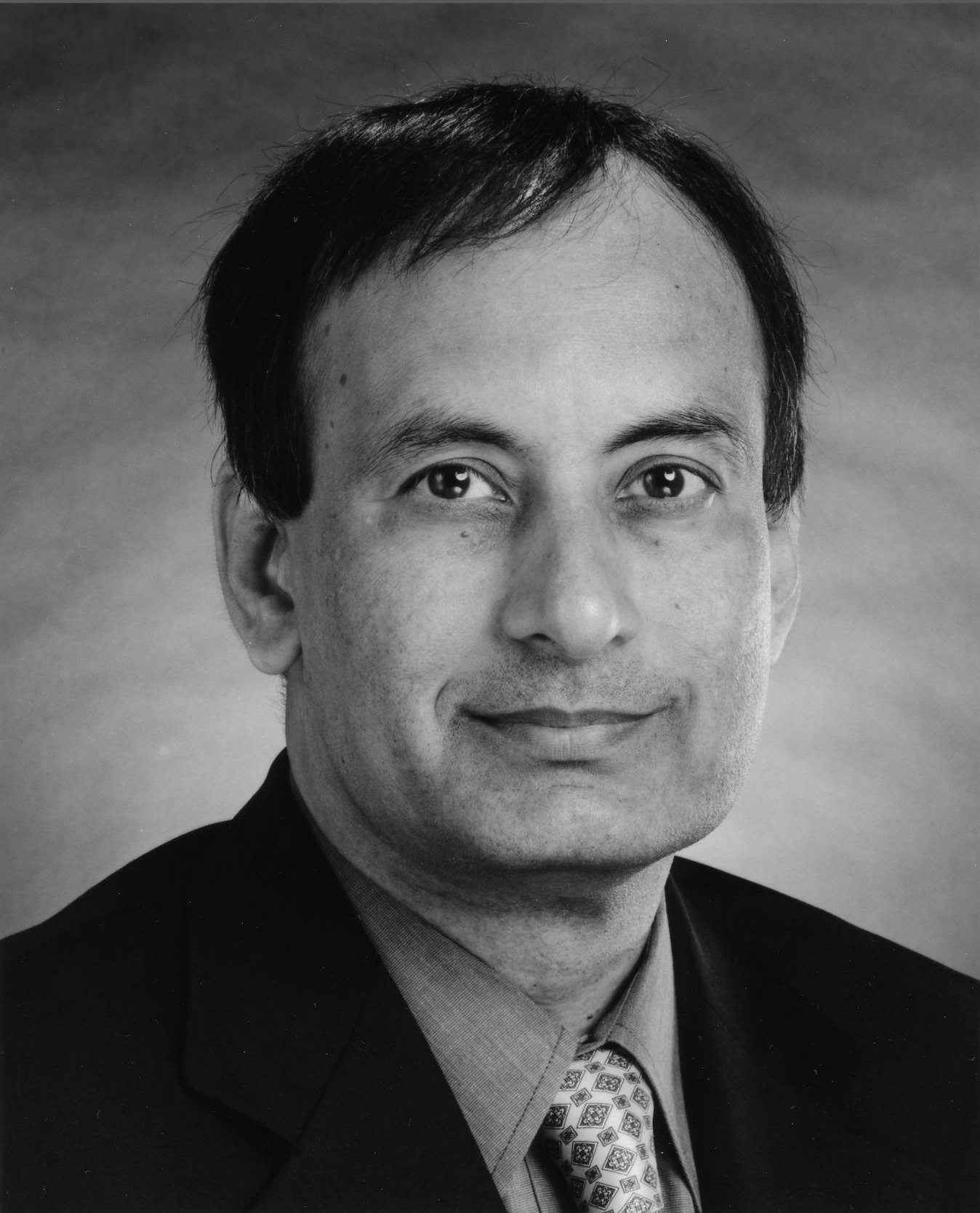
Former Visiting Scholar
Recent Work
Mr. Husain Haqqani, Ashley J. Tellis
Mr. Husain Haqqani
Carnegie does not take institutional positions on public policy issues; the views represented herein are those of the author(s) and do not necessarily reflect the views of Carnegie, its staff, or its trustees.
Bangladesh’s February 2026 elections were the most credible in nearly two decades. But within weeks of the BNP’s return to power, the fundamental characteristics of the country’s political economy threaten to pull it back toward continuity rather than change.
Avinash Paliwal
“Central Asia” as an analytical category is itself part of the problem. The term is a Soviet administrative inheritance, drawn along lines that served the convenience of Moscow. The Central Asian states the Soviets named no longer see themselves through this category alone and are not aligning across political blocs but are instead building external partnerships sector by sector, assigning different partners to different functions.

Jennifer B. Murtazashvili
The battle over representation and regional power has been delayed—not resolved—and will shape the future of India’s federal balance.

Louise Tillin, Milan Vaishnav, Andy Robaina
The regime bets that international legitimacy can be translated into domestic stability. But that depends upon whether it can leverage international goodwill to manage grievances and the economy at home.
Zoha Waseem, Yasser Kureshi
India’s demographic transition is underway, but its economic payoff remains far from guaranteed.
Apoorva Jadhav