

Report
Mr. Husain Haqqani, Ashley J. Tellis
{
  "authors": [
    "Husain Haqqani"
  ],
  "type": "legacyinthemedia",
  "centerAffiliationAll": "dc",
  "centers": [
    "Carnegie Endowment for International Peace"
  ],
  "collections": [],
  "englishNewsletterAll": "ctw",
  "nonEnglishNewsletterAll": "",
  "primaryCenter": "Carnegie Endowment for International Peace",
  "programAffiliation": "russia",
  "programs": [
    "Russia and Eurasia"
  ],
  "projects": [],
  "regions": [
    "South Asia",
    "Pakistan"
  ],
  "topics": [
    "Political Reform",
    "Democracy",
    "Foreign Policy"
  ]
}
REQUIRED IMAGE
Source: Carnegie
Originally appeared in the International
Herald Tribune, Wednesday, September 4, 2002
A key ally of the United States in the war against terrorism, is scheduled to
hold parliamentary elections on Oct. 10. By current indications it is unlikely
that the polls will be free or fair.
I am one of several hundred thousand eligible voters whose name has not been included in the electoral register. Ten million eligible voters have not been issued a national identity card, which registered voters must have. Such massive disenfranchisement is probably the result of bureaucratic incompetence, but it could also be part of a deliberate policy to contain the influence of the two major political parties led by former Prime Ministers Benazir Bhutto and Nawaz Sharif.
This past Sunday officials rejected two final nominations for Bhutto to run in the elections. Sharif's nomination papers had earlier been accepted. But, in a demonstration of solidarity with Bhutto, he said that he would not be a candidate.
Pakistan's military ruler, General Pervez Musharraf, has made it clear that he will not allow the two former leaders to return to office. Several decrees have been issued to exclude Bhutto and Sharif from the election. Disenfranchising voters in districts considered their traditional strongholds could be an added precaution.
Musharraf, who assumed power in a bloodless coup in 1999, has already amended the country's constitution by decree. He appointed himself president after a one-sided referendum in April that was widely considered fraudulent. Now he is hoping to hold a strictly controlled election to a weak Parliament. Even after parliamentary elections, Musharraf and the military will retain effective control of key policy spheres through a military-dominated National Security Council.
For now, Musharraf appears firmly in control and wields effective power. The only reason he is going through the motions of democracy is to secure legitimacy that he lacks as a military ruler. The United States looked the other way over the fraud in the referendum. It should not do the same if the October elections fail to meet the standards of a free and fair poll.
Musharraf hopes to change the label on his military regime, redefining it as a democracy without altering its substance. That would leave the Bush administration dealing with him and the complexities of military-dominated politics in Pakistan. Having a military dictator in charge may be good for the current phase of the Afghan war, although even that is debatable. But it does not transform Pakistan into the stable ally that Washington is seeking.
The United States should publicly declare that it does not approve of Musharraf's attempts to rewrite Pakistan's constitution by decree. Such criticism would bolster the morale of Pakistan's judiciary and political parties. It might force Musharraf to reconsider his arbitrary constitutional plans.
The United States owes him a debt of gratitude for his support in the war effort since Sept. 11. One way to repay this debt would be to advise him against self-destructive actions.
Although more than half of Pakistan's life as an independent nation has been spent under military rule, military governments have never been able to achieve moral authority. A regime that draws power from the military, and not from a popular mandate, could be rendered ineffective at any stage. Pakistani democracy has a mixed track record. No elected leader in the country has been able to complete the term of office. Recent civilian prime ministers were removed through palace coups amid accusations of widespread corruption and incompetence.
The problem is partly linked to the pervasive role of the military in decision-making. Pakistan's intelligence services play a behind-the-scenes role even when civilians are visibly in charge. Even now, covert efforts are afoot to support an alliance of minor parties to offset support for the major political groupings.
The Bush administration has been hesitant to criticize Musharraf publicly. But any impression that the United States supports a military-controlled polity will turn Pakistan's civilian leaders against Washington. They would be tempted to cooperate with Musharraf's Islamic critics in street protests that would probably be driven by anti-Americanism.
Instead of appearing to condone Musharraf's disregard for democracy, Washington could impress upon him the destabilizing effect that civil-military divisions are having on Pakistan.
Two years ago, then President Bill Clinton told the Pakistani people: "Clearly the absence of democracy makes it harder, not easier, for people to move ahead. The answer to flawed democracy is not to end democracy but to improve it." Instead of reversing that position, the Bush administration should make restoration of democracy in Pakistan its priority.
Greater U.S. activism in promoting democracy in Pakistan would help Pakistan achieve a degree of political maturity and stability. It would also help avoid the anti-American backlash that has characterized every round of close ties with Pakistan in the past. The credibility of the October elections will depend on the findings of international observers. The European Union and the Commonwealth will be sending observer missions. It is crucial that the poll monitors not limit themselves to officially guided tours.
They should examine and question the overall environment in which the elections
are being held. Efforts to deny mainstream political parties and leaders the
right to contest should not be condoned. If they are, Pakistan will end up with
another ineffective civilian government under the shadow of a pervasive military.
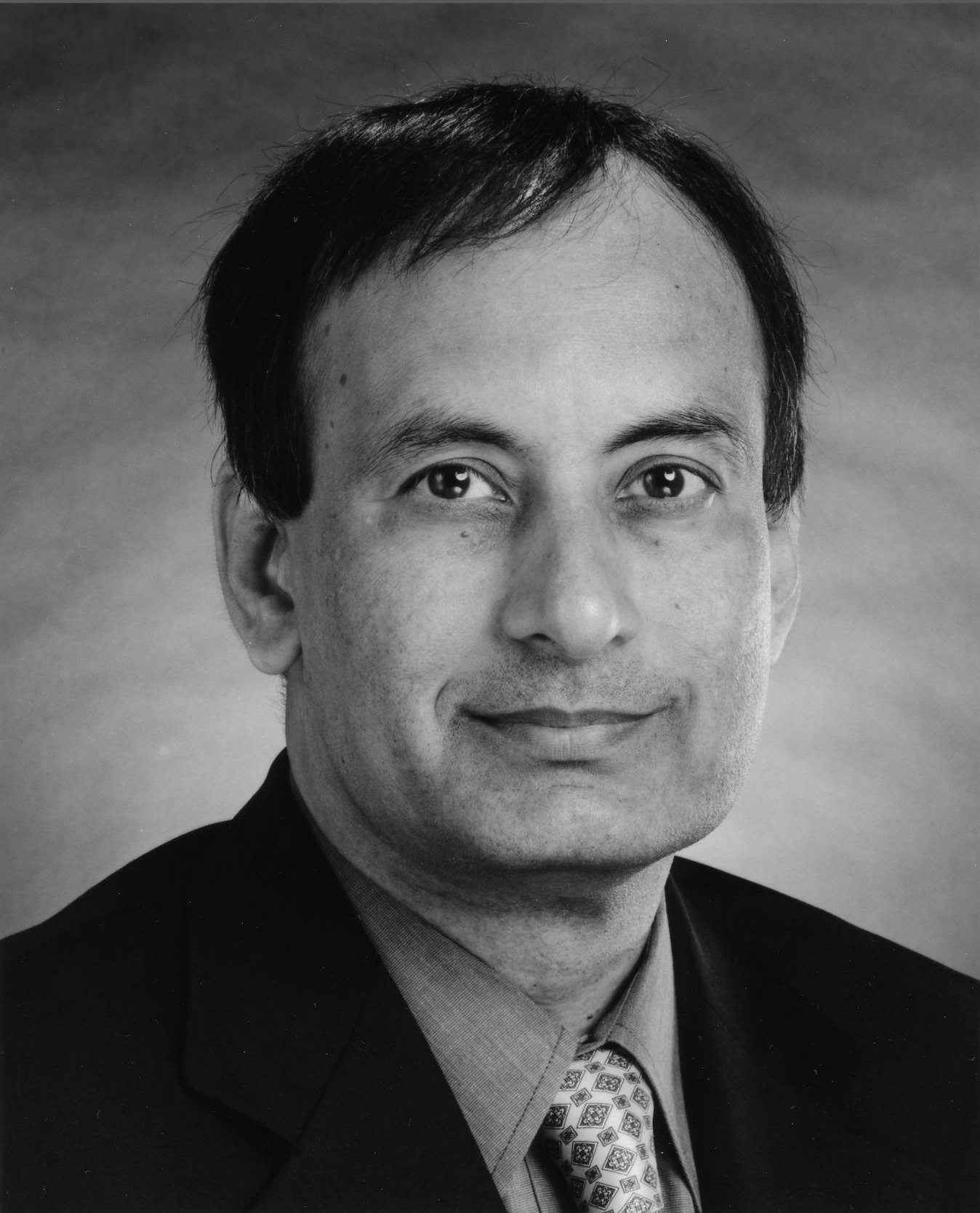
Former Visiting Scholar
Recent Work
Mr. Husain Haqqani, Ashley J. Tellis
Mr. Husain Haqqani
Carnegie does not take institutional positions on public policy issues; the views represented herein are those of the author(s) and do not necessarily reflect the views of Carnegie, its staff, or its trustees.

In an interview, Ian Lustick and Eli Clifton discuss their new book on why a prominent ally has so much influence in America.

Michael Young
Germany, India, and other middle powers can’t build frontier AI alone, and they risk being cut off if they depend on the United States or China. The way through is to build the capacity for a frontier sprint while hoping never to use it.
Anton Leicht, Sam Winter-Levy

Sergei Kiriyenko used Russia’s parliamentary vote to further hone his strategy of corporate mobilization that is designed to maximize votes for United Russia.

Andrey Pertsev

Before the next wave of EU enlargement takes place, the union needs to grapple with thorny questions of how power is distributed among its members.


Emil Sondaj Hansen, Ditte Brasso Sørensen

The real test may come after the leaders leave the room.



Sheena Chestnut Greitens, Oriana Skylar Mastro, Yukon Huang, …