
• Research
  • Emissary
  • About
  • Experts
Carnegie Global logoCarnegie lettermark logo
DemocracyIran
  • Donate
{
  "authors": [
    "Jessica Tuchman Mathews"
  ],
  "type": "legacyinthemedia",
  "centerAffiliationAll": "",
  "centers": [
    "Carnegie Endowment for International Peace"
  ],
  "collections": [],
  "englishNewsletterAll": "",
  "nonEnglishNewsletterAll": "",
  "primaryCenter": "Carnegie Endowment for International Peace",
  "programAffiliation": "",
  "programs": [],
  "projects": [],
  "regions": [
    "North America",
    "United States",
    "Middle East",
    "Iraq"
  ],
  "topics": [
    "Foreign Policy",
    "Nuclear Policy"
  ]
}
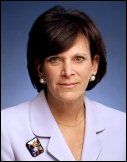
Source: Getty

In The Media

An Interview with Jessica Mathews and Charles Boyd about Iraq

Link Copied
By Jessica Tuchman Mathews
Published on Oct 11, 2002

Source: The Charlie Rose Show

On October 11, Jessica Mathews, president of the Carnegie Endowment for International Peace, and General Charles Boyd joined Charlie Rose in a discussion about the standoff with Iraq over continued weapons inspections, President Bush's call for a final ultimatum, and the possibility the U.S. will consent to sending in a new inspection force to assess the status of Iraqi arms.

Click here to view video of the broadcast.

About the Author

Jessica Tuchman Mathews

Distinguished Fellow

Mathews is a distinguished fellow at the Carnegie Endowment for International Peace. She served as Carnegie’s president for 18 years.

    Recent Work

  • In The Media
    Washington Already Knows How to Deal with North Korea

      Jessica Tuchman Mathews

  • Commentary
    Trump Wins—and Now?

      Jessica Tuchman Mathews

Jessica Tuchman Mathews
Distinguished Fellow
Jessica Tuchman Mathews
Foreign PolicyNuclear PolicyNorth AmericaUnited StatesMiddle EastIraq

Carnegie does not take institutional positions on public policy issues; the views represented herein are those of the author(s) and do not necessarily reflect the views of Carnegie, its staff, or its trustees.
More Work from Carnegie Endowment for International Peace

  • Two men sitting on a stage and speaking
    Commentary
    Emissary
    What Would Need to Happen to Slow AI Development?

    AI capabilities are moving fast. Most institutions—including governments—can’t keep up.

      • Anton Leicht

      Anton Leicht, Scott Singer

  • hands holding semiconductors in production
    Commentary
    BIS in the New Age of Import Controls

    The Bureau of Industry and Security needs to adjust its focus and practices to maintain its position as the U.S. government’s primary champion of international technological competition.

      • Geoffrey Irving

      Geoffrey Irving

  • Commentary
    Strategic Europe
    The Speech Ursula von der Leyen Can’t Deliver

    European Commission President Ursula von der Leyen is about to give her annual address on the state of the EU. Here’s what she won’t—but should—say.

      • Rym Momtaz

      Rym Momtaz

  • Photo of black smoke rising from an Iranian oil facility after an airstrike.
    Article
    The Iran War’s Climate, Environmental, and Human Security Fallout

    Understanding the climatic pain points is necessary for policymakers hoping to minimize the war’s negative environmental consequences.


      • Alejandro Rodriguez
      • Joy Arkeh
      • Sarah Yerkes

      Alejandro Martin Rodriguez, Joy Arkeh, Sarah Yerkes

  • Commentary
    Diwan
    On AI, Cairo Plays China and the U.S. Off Against Each Other

    Huawei pushed hard to enter the Egyptian data centers market, until the Americans made a better offer.

      • Angie Omar

      Angie Omar

Get more news and analysis from
Carnegie Endowment for International Peace
Carnegie global logo, stacked
1779 Massachusetts Avenue NWWashington, DC, 20036-2103Phone: 202 483 7600
  • Research
  • Emissary
  • About
  • Experts
  • Donate
  • Programs
  • Events
  • Blogs
  • Podcasts
  • Contact
  • Annual Reports
  • Careers
  • Privacy
  • For Media
  • Government Resources
Get more news and analysis from
Carnegie Endowment for International Peace
© 2026 Carnegie Endowment for International Peace. All rights reserved.





