• Research
  • Emissary
  • About
  • Experts
Carnegie Global logoCarnegie lettermark logo
DemocracyIran
  • Donate
{
  "authors": [
    "Jessica Tuchman Mathews"
  ],
  "type": "legacyinthemedia",
  "centerAffiliationAll": "",
  "centers": [
    "Carnegie Endowment for International Peace"
  ],
  "collections": [],
  "englishNewsletterAll": "",
  "nonEnglishNewsletterAll": "",
  "primaryCenter": "Carnegie Endowment for International Peace",
  "programAffiliation": "",
  "programs": [],
  "projects": [],
  "regions": [
    "North America",
    "United States",
    "Middle East",
    "Iraq"
  ],
  "topics": [
    "Foreign Policy",
    "Nuclear Policy"
  ]
}
Source: Getty

In The Media

A Conversation about Weapons Inspections in Iraq

Link Copied
By Jessica Tuchman Mathews
Published on Dec 4, 2002

Source: The Charlie Rose Show

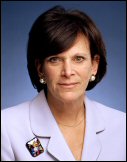
Carnegie President Jessica Mathews assessed the work and findings of the nuclear weapons inspection team in Iraq and offered her outlook for the conclusion of their mission during an appearance on The Charlie Rose Show on December 4.  She discussed the prospects of finding Hussein, who wants the inspections to succeed, and what war would look like if inspections fail and it does occur.

Click here for video of the broadcast.

About the Author

Jessica Tuchman Mathews

Distinguished Fellow

Mathews is a distinguished fellow at the Carnegie Endowment for International Peace. She served as Carnegie’s president for 18 years.

    Recent Work

  • In The Media
    Washington Already Knows How to Deal with North Korea

      Jessica Tuchman Mathews

  • Commentary
    Trump Wins—and Now?

      Jessica Tuchman Mathews

Jessica Tuchman Mathews
Distinguished Fellow
Jessica Tuchman Mathews
Foreign PolicyNuclear PolicyNorth AmericaUnited StatesMiddle EastIraq

Carnegie does not take institutional positions on public policy issues; the views represented herein are those of the author(s) and do not necessarily reflect the views of Carnegie, its staff, or its trustees.

More Work from Carnegie Endowment for International Peace

  • Commentary
    Diwan
    Pushing Beirut into an Armed Conflict With Hezbollah Is Insane

    The party’s domestic and regional roles have changed, so Lebanon should devise a disarmament strategy that encompasses this.

      Michael Young

  • Article
    Continental Asia and the Rise of Portfolio Politics

    “Central Asia” as an analytical category is itself part of the problem. The term is a Soviet administrative inheritance, drawn along lines that served the convenience of Moscow. The Central Asian states the Soviets named no longer see themselves through this category alone and are not aligning across political blocs but are instead building external partnerships sector by sector, assigning different partners to different functions.

      Jennifer B. Murtazashvili

  • Article
    Palestine’s Climate Change Planning Faces Its Limits

    Barriers ranging from weak legal frameworks to ongoing, occupation-related limitations are constraining Palestine from achieving its ambitious climate targets.

      Joy Arkeh, Nabil Nasser

  • San Francisco Skyline
    Paper
    California’s Global Trade Cities: Driving Local and National Outcomes

    Cities across the United States facilitate investment in American communities. Yet, because global attention remains focused on U.S. trade policy, their distinctive and bold local approaches to international trade and investment promotion are often underappreciated.

      • Wyatt Frank
      • Marissa Jordan

      Wyatt Frank, Marissa Jordan

  • Commentary
    The Unresolved Challenges in U.S.–India Semiconductor Cooperation

    The U.S.–India semiconductor cooperation story is well-stocked with top-level strategic intent. What remains unresolved, however, are some underlying challenges that will determine whether the cooperation actually functions. Three such friction points stand out.

      Shruti Mittal

Get more news and analysis from
Carnegie Endowment for International Peace
Carnegie global logo, stacked
1779 Massachusetts Avenue NWWashington, DC, 20036-2103Phone: 202 483 7600
  • Research
  • Emissary
  • About
  • Experts
  • Donate
  • Programs
  • Events
  • Blogs
  • Podcasts
  • Contact
  • Annual Reports
  • Careers
  • Privacy
  • For Media
  • Government Resources
Get more news and analysis from
Carnegie Endowment for International Peace
© 2026 Carnegie Endowment for International Peace. All rights reserved.