

Report
Mr. Husain Haqqani, Ashley J. Tellis
{
  "authors": [
    "Husain Haqqani"
  ],
  "type": "legacyinthemedia",
  "centerAffiliationAll": "dc",
  "centers": [
    "Carnegie Endowment for International Peace"
  ],
  "collections": [],
  "englishNewsletterAll": "ctw",
  "nonEnglishNewsletterAll": "",
  "primaryCenter": "Carnegie Endowment for International Peace",
  "programAffiliation": "russia",
  "programs": [
    "Russia and Eurasia"
  ],
  "projects": [],
  "regions": [
    "North America",
    "United States",
    "Middle East",
    "North Africa",
    "Iraq"
  ],
  "topics": [
    "Political Reform",
    "Democracy",
    "Foreign Policy"
  ]
}
REQUIRED IMAGE
The United States’ policy of ignoring popular sentiment and depending on friendly iron men in the Muslim world might have worked until now. But with Al Qaeda and its ilk talking of a conflict that will last for generations, the United States needs to do more to win Muslim hearts and minds than it has done so far.
Source: Carnegie
Originally appeared in the International Herald Tribune, February 28, 2003
Although there have been massive demonstrations recently in many major cities worldwide against a possible war with Iraq, Islamic capitals have been a conspicuous exception. Decades of authoritarian rule have eroded the spirit of peaceful dissent in almost all of the 57 countries with a Muslim majority population.
The absence of protesters in the Muslim street does not mean, however, that anti-Americanism is weaker there than in Europe. It only means that the Muslim masses consider protest futile. This stokes the kind of frustration that men of violence, such as Osama bin Laden, hope to exploit. As authoritarian rulers keep public places clear of political dissent, they also pave the way for extremists to operate from their hiding places.
Anti-American sentiment is widespread in large parts of the Islamic world. U.S. policies are often blamed for Muslim rage. Reaction to support for Israel at the expense of Palestinians is often cited as its major cause and it is certainly a factor.
The policy that provides the most fuel for such sentiment, however, is the U.S. decision to continue supporting unpopular authoritarian regimes in most Muslim countries. At least some of these regimes also invoke anti-Americanism as a strategy to seek higher rent for their continued alliance with Washington. U.S. decisionmakers know this, which explains their tendency to ignore adverse public opinion in countries whose governments depend on U.S. military and economic aid.
Successive American administrations have ignored the Muslim street, from Morocco to Indonesia, seeing it as a minor irritant that does not impinge on U.S. alliance with friendly potentates and dictators.
In more than half a century of American involvement in the Muslim world, only once have street protests led to a revolution that eroded U.S. influence over an entire country, and that was in Iran. Washington has been complacent about public opinion in the Muslim world because, by and large, it has managed to get its way, notwithstanding genuine as well as manipulated manifestations of anti-American sentiment.
U.S. policy would be more effective if it did not ignore Muslim sentiment. In the case of Iraq, for example, the Bush administration made its preference for war against Saddam Hussein obvious long before Secretary of State Colin Powell was called upon to present evidence justifying military action. This allowed Muslim skeptics to argue that the evidence had been tailored to justify a war instead of the decision for war depending on the evidence.
If Muslim public opinion had not been such a low priority in the U.S. government's scheme of things, discussion of evidence of Saddam's conduct earlier might have left him few friends among the world's Muslims, in view of his own repression of Islam in Iraq.
Demonstrations in Cairo, Amman or Karachi that fall short of overthrowing a sitting king or dictator do not seem to have any significance for Washington's strategic planning. U.S. decisionmakers see them as the passing phenomenon they were during the 1991 Gulf War and the Afghan war in 2001.
However, such analysis ignores the significance of anti-American sentiment as a weapon of recruitment and motivation for extremist groups.
The policy of ignoring popular sentiment and depending on friendly iron men might have worked until now. But with Al Qaeda and its ilk talking of a conflict that will last for generations, the United States needs to do more to win Muslim hearts and minds than it has done so far.

Former Visiting Scholar
Recent Work
Mr. Husain Haqqani, Ashley J. Tellis
Mr. Husain Haqqani
Carnegie does not take institutional positions on public policy issues; the views represented herein are those of the author(s) and do not necessarily reflect the views of Carnegie, its staff, or its trustees.

The European far right might fail to steer EU policy in the direction Russia wants, but they will create enough chaos inside Europe to benefit the Kremlin.

Dimitar Bechev

The nuclear relationship between China and the United States is increasingly shaped by widening perception gaps rather than deliberate strategic design.

Tong Zhao
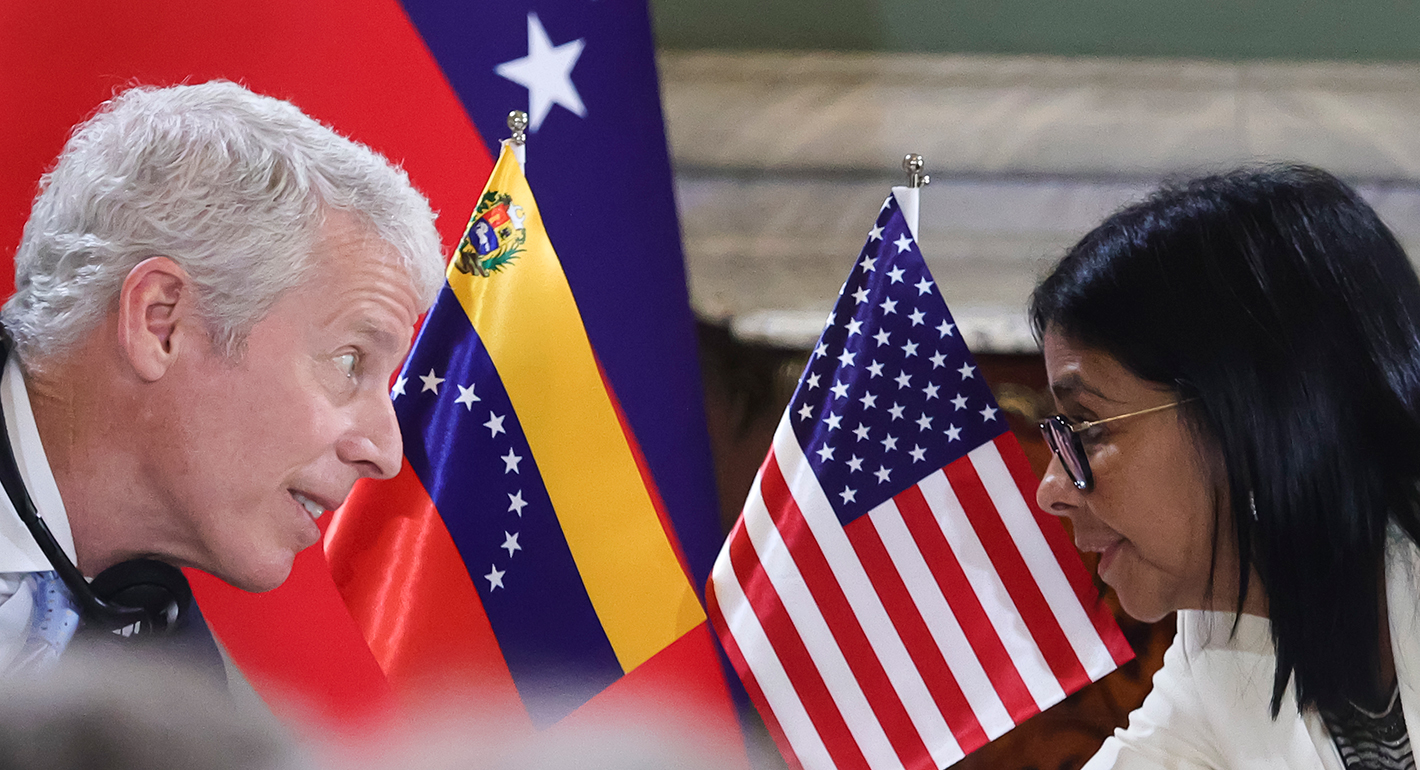
Washington needs to recognize that influence in the Western Hemisphere comes from presence, delivery, and reliability. It also must recognize that while the United States remains the key external actor, it no longer operates in a permissive environment and cannot presume deference from regional players who have other options, namely China.
Juan S. Gonzalez

Minsk clearly expected the dialogue with Washington to yield more results, in particular the lifting of EU sanctions and permission to export potash.

Artyom Shraibman

A summer of escalation in the Black Sea has hurt Ukraine economically and is exacerbating world food security. A truce is needed—as is a broader reframing of Europe’s Ukraine strategy.

Thomas de Waal