• Research
  • Emissary
  • About
  • Experts
Carnegie Global logoCarnegie lettermark logo
DemocracyIran
  • Donate
{
  "authors": [
    "Mei Ying Gechlik (Veron Hung)"
  ],
  "type": "legacyinthemedia",
  "centerAffiliationAll": "dc",
  "centers": [
    "Carnegie Endowment for International Peace"
  ],
  "collections": [],
  "englishNewsletterAll": "asia",
  "nonEnglishNewsletterAll": "",
  "primaryCenter": "Carnegie Endowment for International Peace",
  "programAffiliation": "AP",
  "programs": [
    "Asia"
  ],
  "projects": [],
  "regions": [
    "China"
  ],
  "topics": [
    "Political Reform"
  ]
}
REQUIRED IMAGE

REQUIRED IMAGE

In The Media

Improving Human Rights in China: Should Re-Education Through Labor be Abolished?

Link Copied
By Mei Ying Gechlik (Veron Hung)
Published on Mar 10, 2003
Program mobile hero image

Program

Asia

The Asia Program in Washington studies disruptive security, governance, and technological risks that threaten peace, growth, and opportunity in the Asia-Pacific region, including a focus on China, Japan, and the Korean peninsula.

Learn More

Source: Carnegie

41 Columbia Journal of Transnational Law 303, (2003).

Please click here to read the article in PDF format.

About the Author

Mei Ying Gechlik (Veron Hung)

Former Non-Resident Associate

    Recent Work

  • Paper
    Protecting Intellectual Property Rights in Chinese Courts: An Analysis of Recent Patent Judgments

      Mei Ying Gechlik (Veron Hung)

  • Paper
    Judicial Reform in China: Lessons from Shanghai

      Mei Ying Gechlik (Veron Hung)

Mei Ying Gechlik (Veron Hung)
Former Non-Resident Associate
Mei Ying Gechlik (Veron Hung)
Political ReformChina

Carnegie does not take institutional positions on public policy issues; the views represented herein are those of the author(s) and do not necessarily reflect the views of Carnegie, its staff, or its trustees.

More Work from Carnegie Endowment for International Peace

  • Two men speaking
    Commentary
    Emissary
    Who Puts Guardrails on AI?

    Why governance of rapidly evolving technology will be distributed and complex.

      Stewart Patrick, Scott Singer
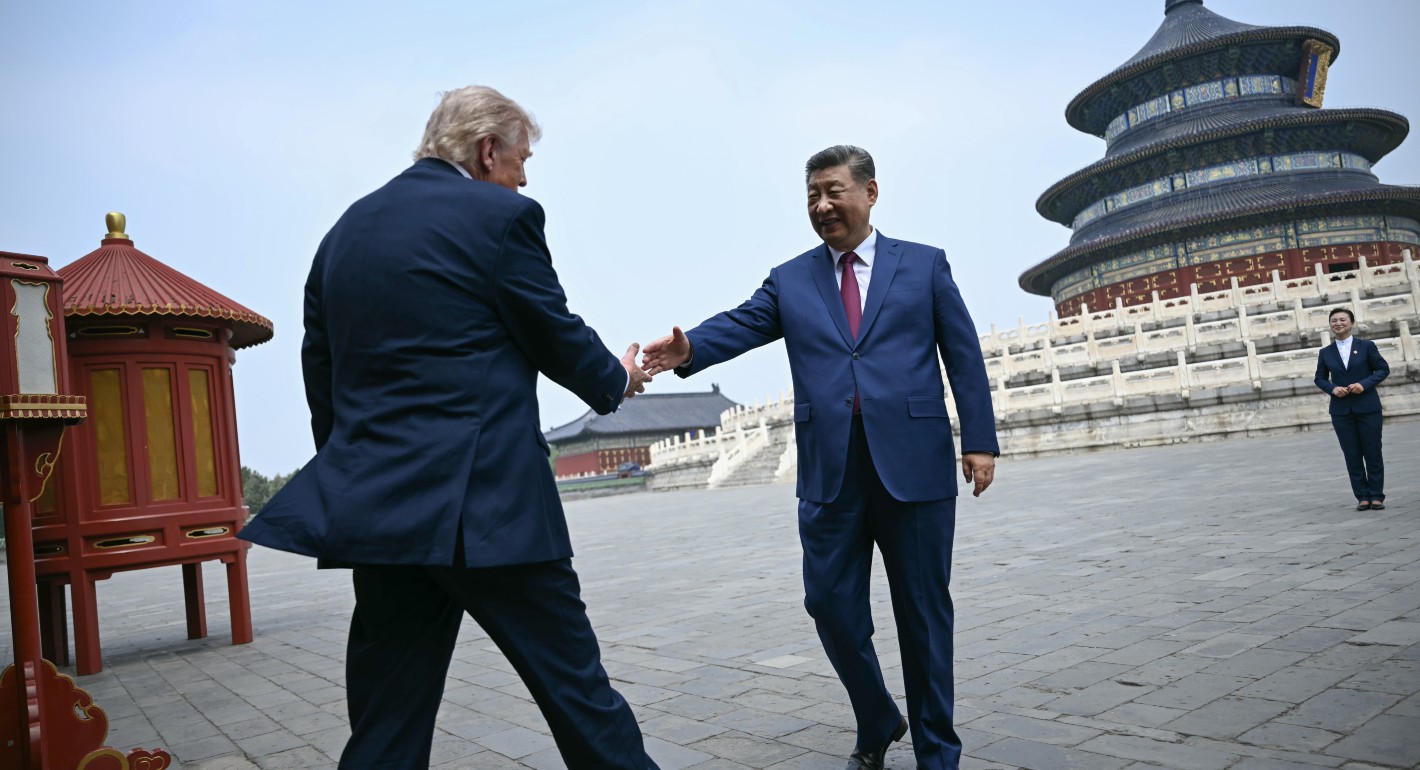
  • Trump walking toward Xi, both with arms extended to shake hands
    Commentary
    Emissary
    The U.S. and China Need an AI Hotline. Here’s How to Build It.

    It should address the shortcomings of previous crisis communication efforts and adapt to the demands of frontier AI.

      • Lucy Luo

      Lucy Luo

  • Commentary
    Carnegie Politika
    Leaving Russian-Speakers Without Representation Is a Risk for Latvia

    If the Russian-speaking community in Latvia cannot articulate their interests without being seen as disloyal, they could end up embracing a pro-Kremlin agenda.

      Sergejs Potapkins

  • Commentary
    Carnegie Politika
    Putin Has Been a Hindrance, Not a Help, to United Russia’s Election Campaign

    Russia’s ruling party would have benefited from Putin appearing as its distant patron, but as an active frontman imposing his views on the public, he has done nothing but harm both the party’s election campaign and the ruling system overall.

      Andrey Pertsev

  • Research
    China’s Construction of Police Training Facilities in Global South Likely to Expand Global Security Leadership

    China’s police training infrastructure construction projects provide benefits to recipient countries, promote China’s image as a major global security provider, and are likely to reinforce alignment between Beijing’s security priorities and those of countries in the Global South.


      • Sheena Chestnut Greitens
      • +2

      Cameron Waltz, Sheena Chestnut Greitens, Kim Nguyen, …

Get more news and analysis from
Carnegie Endowment for International Peace
Carnegie global logo, stacked
1779 Massachusetts Avenue NWWashington, DC, 20036-2103Phone: 202 483 7600
  • Research
  • Emissary
  • About
  • Experts
  • Donate
  • Programs
  • Events
  • Blogs
  • Podcasts
  • Contact
  • Annual Reports
  • Careers
  • Privacy
  • For Media
  • Government Resources
Get more news and analysis from
Carnegie Endowment for International Peace
© 2026 Carnegie Endowment for International Peace. All rights reserved.