

Report
Mr. Husain Haqqani, Ashley J. Tellis
{
  "authors": [
    "Husain Haqqani"
  ],
  "type": "legacyinthemedia",
  "centerAffiliationAll": "dc",
  "centers": [
    "Carnegie Endowment for International Peace"
  ],
  "collections": [],
  "englishNewsletterAll": "ctw",
  "nonEnglishNewsletterAll": "",
  "primaryCenter": "Carnegie Endowment for International Peace",
  "programAffiliation": "russia",
  "programs": [
    "Russia and Eurasia"
  ],
  "projects": [],
  "regions": [
    "South Asia",
    "India",
    "Pakistan"
  ],
  "topics": [
    "Political Reform",
    "Security"
  ]
}
REQUIRED IMAGE
Source: Carnegie
Originally appeared in the Indian Express, March 5, 2003
In an age of unipolarity, Non-Aligned summits are hardly significant. Even
with international attention focused on Iraq, the recent NAM summit in Kuala
Lumpur would have been less newsworthy without the spat between Indian Prime
Minister Atal Behari Vajpayee and Pakistani President General Pervez Musharraf.
The verbal sparring gained nothing for either side. General Musharraf scored
points against domestic critics who accuse him of compromising Pakistan’s
stand on Jammu and Kashmir under US pressure. Vajpayee knocked the General with
allegations of supporting terrorism, albeit with greater passion and considerable
anger. Rancour is not considered a quality in international diplomacy. By reacting
to General Musharraf’s reference to Kashmir and Palestine issues in one
sentence the way he did, Vajpayee did not impress many world leaders. He also
exacerbated the fears of some Pakistani hardliners who hold the belief that
India wants the world to forget Kashmir and that to avert that possibility Pakistan
must keep up some kind of pressure on India.
Since the NAM summit, there have been other verbal duels between Islamabad and New Delhi. In a media interview, General Musharraf referred to claims about US pressure on Pakistan to control militancy in Kashmir as ‘‘humbug’’. An Indian spokesman described his calls for dialogue as ‘‘hackneyed’’. Over the last few days, Indian leaders have also complained about ‘‘US weakness’’ in dealing with Pakistan. The harshness of the two sides’ language towards each other is depressing for those who seek accommodation between the nuclear-armed South Asian antagonists. There seems no willingness in New Delhi to take even baby steps in the direction of reducing hostilities and resuming dialogue. Islamabad, on the other hand, does not see the need to review its own strategy towards its now increasingly richer and more powerful neighbour.
There are signs that the India-Pakistan rivalry is about to be played out once again by proxy in Afghanistan. And Pakistani intelligence is beginning to complain that India is trying to subvert Pakistan through ethnic and religious terrorists (especially in Sindh) in retaliation for what Indians see as Pakistani support for Kashmiri insurgents. Despite India’s numerous historic, political, economic and strategic advantages, the ongoing lukewarm war with Pakistan remains a stalemate. Pakistan has created a situation that ties down India to South Asia, limiting its potential as a player on the world stage. Of course Pakistan is paying a heavy price but it can gain some comfort from inserting a hyphen in India’s international relations.
The world’s sole superpower, the United States, and other major powers all talk about India-Pakistan issues, diminishing India’s size and stature. During a recent visit to Washington the Indian Foreign Secretary ended up spending much of his time talking about Pakistan even after saying he did not want Pakistan to be the focus of his conversation. India has a strategic partnership with the United States, forged through high technology exchanges, burgeoning trade, and expanding military cooperation. But Pakistan’s recently revived alliance with the US — symbolised last week by the capture of Al-Qaeda’s brain, Khalid Shaikh Mohammed — is having a disproportionate disruptive effect on the India-US partnership.
Much can be said on both sides about who is wrong, where and how much but neither India nor Pakistan is posting any practical gains from their unending bitter exchanges. Assuming that in politics every action is part of a strategy, one cannot discern what strategic advantage India hopes to secure by responding cynically to every Pakistani comment or step. And it also does not make sense for Pakistan to use international forums only to talk to itself. While mention of Kashmir internationally is popular in Pakistan, there has been no shift in international opinion that can be construed as amounting to substantive internationalisation of the dispute. Both India and Pakistan need to change their approach o each other. India, in the words of Congress leader and former diplomat Mani Shankar Aiyar, must recognise that ‘‘you cannot kick Pakistan out of this subcontinent. Peace has to be made here’’. Pakistan, too, must take account the fatigue and exhaustion of the international community with the intractable nature of India-Pakistan relations.
Just days before General Musharraf was invited for the Agra summit in 2001, India had adopted a stance similar to its current policy of not talking to Pakistan. On that occasion Aiyar, who had served in Pakistan as Consul-General in Karachi, wrote: ‘‘The end of the Lahore process (was) written into its beginning. Lahore was not diplomacy; it was poetry. Vajpayee is a poet, not a diplomat. Hence his repeated blunderings in foreign policy, his consistent inconsistency. Today, he makes great play of not talking to a military dictator. When he was External Affairs Minister, 1977-79, he prided himself on being the first External Affairs Minister ever to visit Pakistan (Nehru had gone as Prime Minister, not External Affairs Minister).’’
Another Indian intellectual, Inder Malhotra, had argued at the time, ‘‘There is no doubt that the Vajpayee Government’s policy of not talking to the Musharraf regime in Pakistan has widespread public support. Also, there is logic in the stand that after the perfidy of Kargil and Kandahar, the Lahore process cannot be revived until Pakistan ends cross-border terrorism. Even so, an inflexible refusal to communicate with a neighbour, especially when armed with nuclear weapons, can be sterile, even counter-productive.’’
Malhotra had lamented that the policy of refusing to talk would have a negative effect on international opinion ‘‘that is at last changing in India’s favour after a long spell of Pavlovian support to Pakistan over Kashmir. During his visit to the subcontinent, President Clinton did concede at one stage that talks between India and Pakistan could not go on if ‘violence in Kashmir continued’. But throughout his five-day sojourn he never let upon his demand for parleys between New Delhi and Islamabad. Resumption of the ruptured dialogue was one of his famous four R’s.’’ Malhotra used an interesting argument to support India-Pakistan dialogue. He felt that India’s interests would be better served by agreeing to talk to Pakistan, if only to appease the international community. Heeding the advice of people like Aiyar and Malhotra, Vajpayee invited Musharraf to Agra in the summer of 2001. But instead of bringing the two nations closer, the summit ended without agreement.
Pakistan’s revived relationship with the US after 9/11 has generated a misplaced confidence among Pakistani decision-makers about how they can stay their course in domestic and regional politics. India’s leaders are also failing to show statesmanship. Anti-Pakistan sentiment in India has increased manifold since the December 13, 2001 attack on the Indian Parliament and subsequent developments. India-Pakistan relations have become stuck in a familiar pattern. Musharraf is making repeated offers of unconditional talks with India without substantive actions that would make such talks fruitful. India’s refusal to talk at all, accompanied by dismissive comments about Pakistan’s intentions does little to break the impasse. Will the two nations have to wait for a new set of leaders to transcend the unbearable bitterness that has crept in into their feelings towards one another?
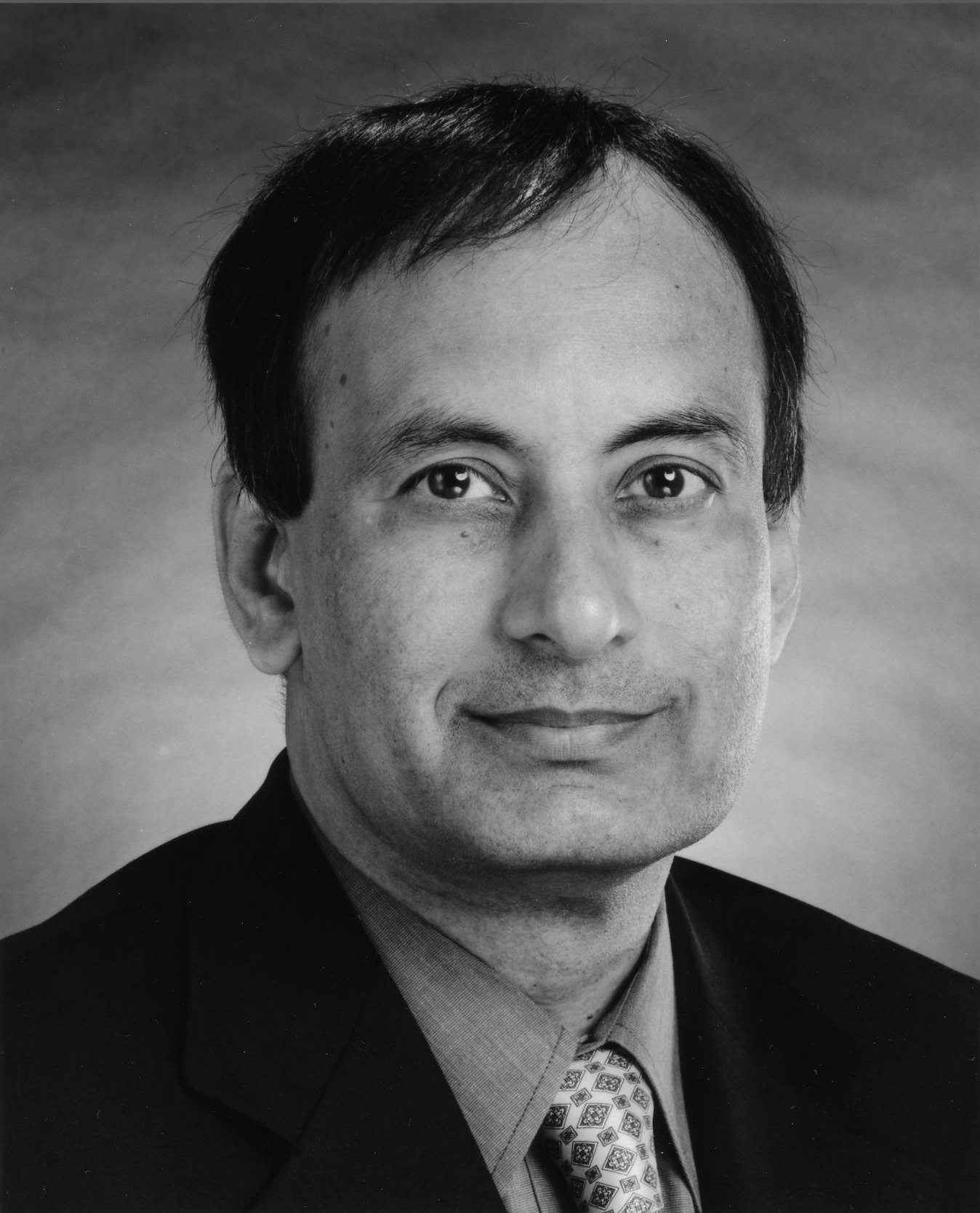
Former Visiting Scholar
Recent Work
Mr. Husain Haqqani, Ashley J. Tellis
Mr. Husain Haqqani
Carnegie does not take institutional positions on public policy issues; the views represented herein are those of the author(s) and do not necessarily reflect the views of Carnegie, its staff, or its trustees.

Sergei Kiriyenko used Russia’s parliamentary vote to further hone his strategy of corporate mobilization that is designed to maximize votes for United Russia.

Andrey Pertsev

Before the next wave of EU enlargement takes place, the union needs to grapple with thorny questions of how power is distributed among its members.


Emil Sondaj Hansen, Ditte Brasso Sørensen

The Horn of Africa countries are among those facing a new security calculus.


Andrew Leber, Lesley Anne Warner

The European far right might fail to steer EU policy in the direction Russia wants, but they will create enough chaos inside Europe to benefit the Kremlin.

Dimitar Bechev

The new U.S.–Denmark–Greenland agreement will help Washington exert political, economic, and financial dominance under the guise of security. Yet, it acknowledged Copenhagen’s and Nuuk’s sovereignty on the island.

Marc Pierini