

Article
Леонид Гозман, Michael McFaul
{
  "authors": [
    "Michael McFaul"
  ],
  "type": "legacyinthemedia",
  "centerAffiliationAll": "dc",
  "centers": [
    "Carnegie Endowment for International Peace"
  ],
  "collections": [],
  "englishNewsletterAll": "ctw",
  "nonEnglishNewsletterAll": "",
  "primaryCenter": "Carnegie Endowment for International Peace",
  "programAffiliation": "russia",
  "programs": [
    "Russia and Eurasia"
  ],
  "projects": [],
  "regions": [
    "Middle East",
    "Iraq",
    "Afghanistan"
  ],
  "topics": [
    "Political Reform",
    "Democracy",
    "Foreign Policy"
  ]
}
REQUIRED IMAGE
Source: Carnegie
Wrong Time to 'Stay the Course'Originally published in The
Washington Post on August 24, 2003.
Last week was a tragic setback for those committed to promoting regime change
in the greater Middle East. Terrorists slaughtered dozens of innocents in Iraq,
Israel and Afghanistan. In the wake of the carnage, expressing hope for democracy
in Palestine, Iraq and Afghanistan sounds naïve. Even the prospect of stable,
effective government in these places seems remote.
Reflexively, Bush administration officials and their supporters reacted to these horrors by reaffirming the need to "stay the course." If offered only two choices -- stay the course or turn back -- then Bush and his team are most certainly right. Quitting Iraq, Afghanistan or the road map would produce greater chaos in these places and eventually new security threats to the United States.
But why must this debate be confined to two choices? Now more than ever the search for third ways demands more attention and resources. The current polarized, simplistic debate is getting in the way of creative thinking and effective policymaking. The Bush administration, especially as the presidential election draws nearer, is playing defense precisely when innovation is needed.
The call for "staying the course" is even more indefensible when one tries to find it. What course are we staying on in Iraq or Afghanistan? The president has boldly outlined the objective or endpoint of our policy: democratic regime change in the greater Middle East. But the president has never articulated or written down the strategy for getting there. Without a plan in hand, the Bush administration instead is compelled to move reactively from crisis to crisis, making up "the course" as it goes along.
Compare the debates and tools developed by those working on economic reform to those developed by social scientists and government officials working on political reform. When the moment came for promoting economic transformation in the former Communist world in 1989 and 1991, Western economists developed theories for how change could occur, proposed specific policies for creating capitalism and suggested very concrete tools to be used by outsiders for facilitating market reform. The evidence of sound theory and well-articulated arguments was the emergence of alternative hypotheses that could be tested in the real world. There were well-defined objectives, clearly defined strategies for achieving these goals, and critics of both.
A parallel body of knowledge regarding regime change or political reform or state building does not exist. Nor is a compelling blueprint for bringing about democratic regime change sitting on the shelf of a policy planning staffer, a Stanford professor or a former government official/think tanker. It is time for us all to confess that our understanding of regime change and the role that outside actors can play in fostering it is frightfully underdeveloped and poorly accumulated. Government officials and outside analysts roll out their favorite analogies -- postwar Germany today, East Timor tomorrow. Practitioners who have worked in countries undergoing regime change have a wealth of on-the-ground experiences. But this mishmash of metaphors and anecdotes has not added up to a model for how to change regimes effectively.
The list of immediate amendments to the course in Iraq (and Afghanistan) is obvious -- more American troops, faster deployments of newly trained Iraqi forces, more money for the reconstruction effort and a new United Nations resolution to help bring in soldiers from other countries. But these reactive corrections do not substitute for fundamental rethinking of our grand strategy.
The Bush administration must become proactive in filling this void of ideas. Most immediately, it must speak honestly about the need to refine the present course and engage those who reject retreat but who also have alternative ideas for improving the present course. Intellectually exhausted and politically challenged, Bush and his closest advisers have circled the wagons to defend the status quo. They cannot remain insulated and in the bunkers for two more years. Democrats in turn must do their part to engage in and not simply politicize this debate. Too many innocent people are dying every day to put the search for new ideas on hold until November 2004.
To help articulate and execute a refined course, President Bush should create a Department of Democratic Regime Change headed by a Cabinet-level official -- the offensive equivalent of the defense-oriented Department of Homeland Security. The State Department's mission is diplomacy between states, not the creation of new states. The Pentagon's mission should remain regime destruction; its formidable capacities for regime construction should be moved into a new agency, which would also appropriate resources from the Agency for International Development (particularly the Office of Transitional Initiatives), the State Department, Treasury, Commerce, Justice and Energy. This new department must include an office for grand strategy on democratic regime change and be endowed with prestige, talented people, and above all else resources. Our capacity to help build new states must be as great as our capacity to destroy them. (It is telling that the top position at AID is called "administrator," hardly the equivalent of a secretary of defense.) Radical? Yes. Unprecedented? No. It is exactly what leaders with vision undertook after World War II as a way for dealing with the new threat of communism. Their creations included the CIA, the National Security Council, Radio Free Europe and a bipartisan commitment to the grand strategy of containment as the guiding doctrine of American foreign policy. By comparison, it is striking how little institutional change has occurred or how little bipartisan agreement has emerged to address our new security needs.
The same can be said of institutional innovation at the international level. In the wake of World War II, the United Nations, the International Monetary Fund, the World Bank, NATO, the precursor to the European Union and many other new bodies all got their start. Since Sept. 11, 2001, not one new major international organization has been formed. Instead of citing the real flaws in existing international institutions as an excuse for unilateralism, the Bush administration should take the lead in creating new organizations for promoting democratic regime change. For instance, what about creating an Organization for International Trusteeships? Founding countries would offer assistance in governing failed or new states (Palestine, Liberia, maybe even Iraq) in return for leverage over "sovereign" decisions in these places -- a kind of IMF with guns and a focus on state building rather than economic reform. As a representative organ of all states, with a commitment to neutrality and a focus on diplomacy between states, the United Nations cannot effectively undertake such missions.
In the private sector, organizations form and dissolve all the time to respond to changing market conditions. Government institutions must do the same.
Reorganization or shifting resources does not substitute for new ideas but may help to generate them. Maintaining the status quo is no longer an option.
The writer is Hoover fellow and professor of political science at Stanford University and a senior associate at the Carnegie Endowment for International Peace.
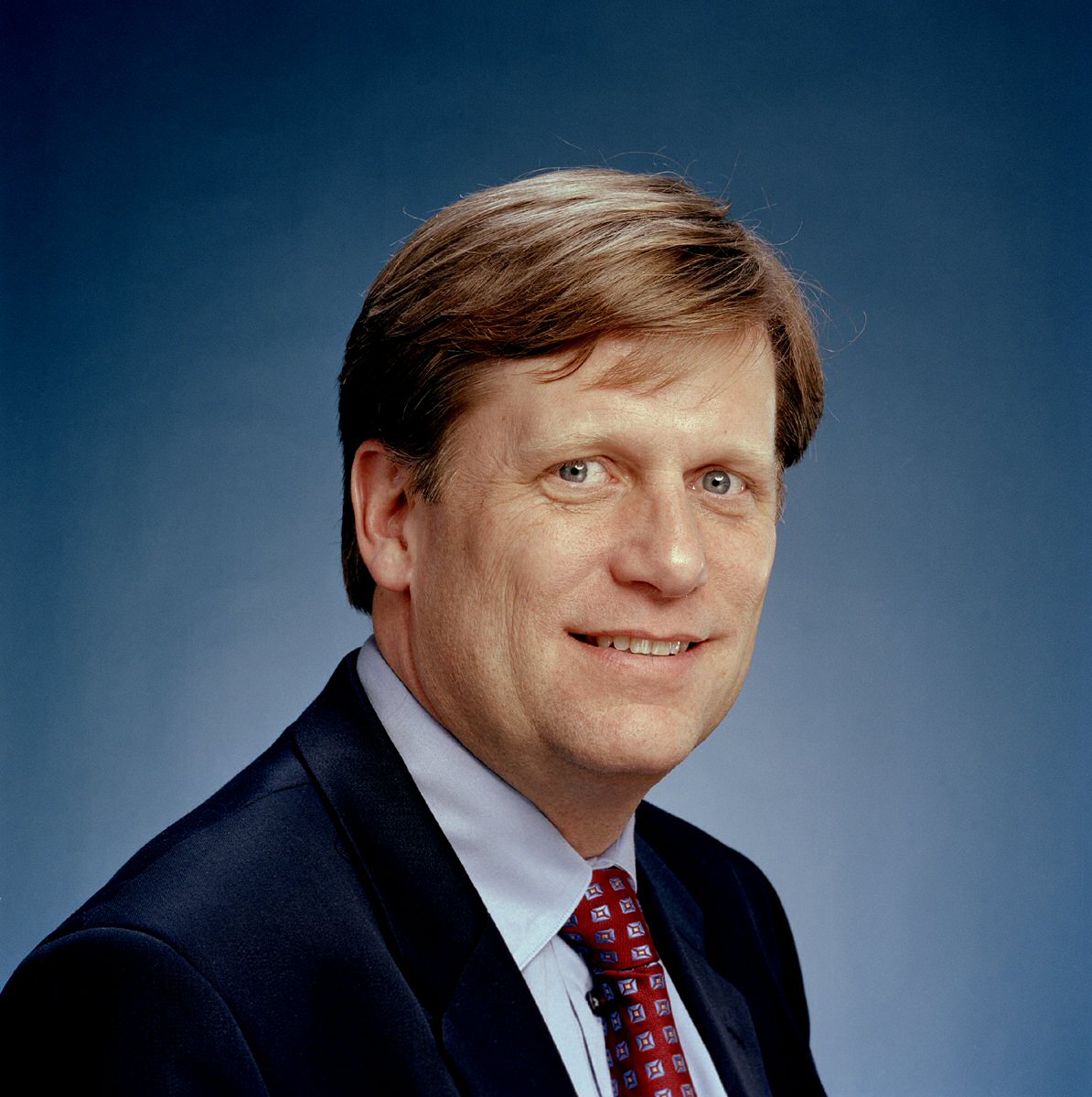
Former Senior Associate
In addition to his role at Carnegie, McFaul is Peter and Helen Bing Senior Fellow at the Hoover Institution and associate professor of political science at Stanford University.
Recent Work
Леонид Гозман, Michael McFaul
Michael McFaul, Sanja Tatic
Carnegie does not take institutional positions on public policy issues; the views represented herein are those of the author(s) and do not necessarily reflect the views of Carnegie, its staff, or its trustees.

A review of a detailed account of how antipathy toward Tehran has assumed a life and logic of its own in Washington, DC.

Jane Darby Menton
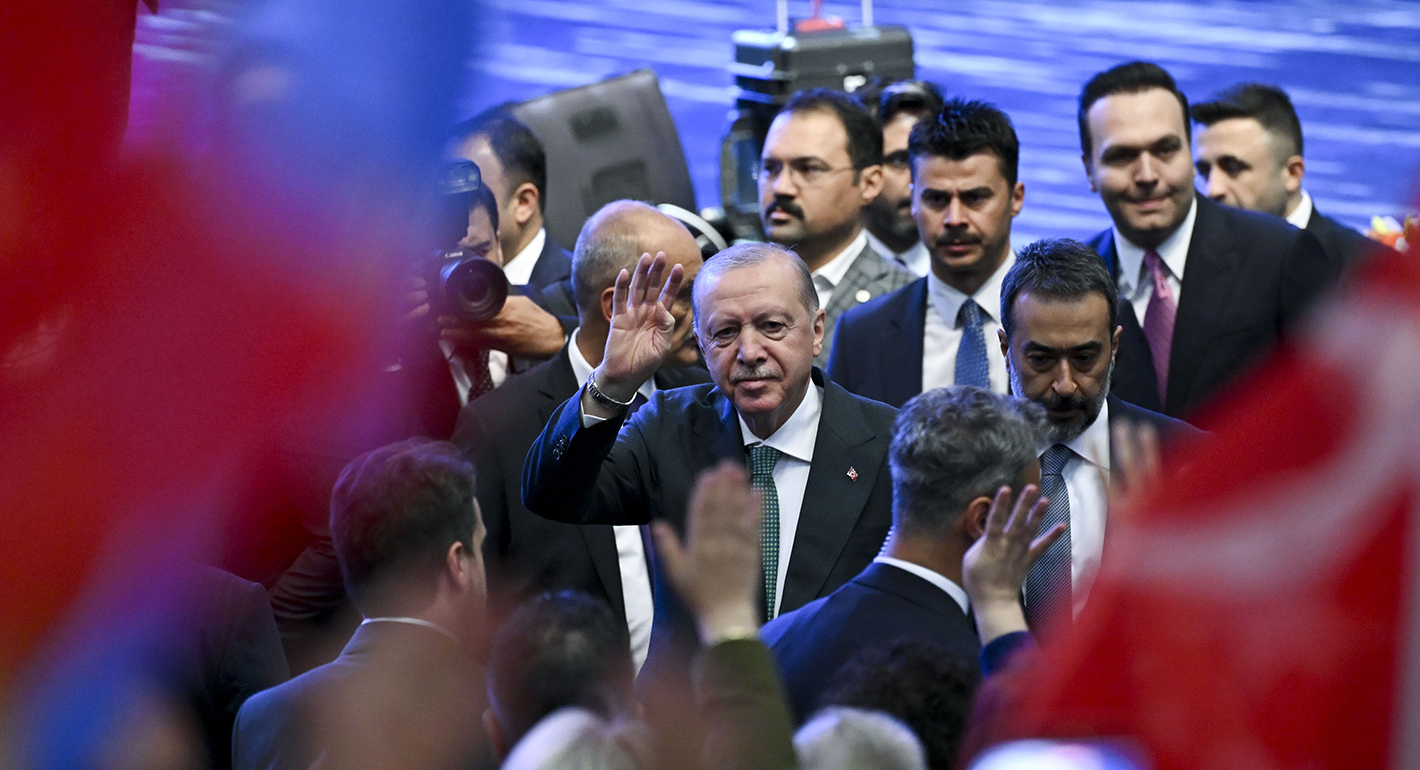
Turkish right-wing populists have been trying to advance the country’s middle-power goals based on perceptions of what the public wants, but they have been doing so in ways that reinforce their project of autocratic political consolidation.
Murat Somer

In Colombia and elsewhere in the region, the United States is trying to shape election outcomes—but at what cost?
Oliver Stuenkel, Adrian Feinberg
The world’s climate adaptation funds must adapt to address the ways that climate change is deepening state fragility.
Ray Salvatore Jennings, Paul Andrew Mayewski
Russia looks set to reap economic benefits from closer ties with Southeast Asian countries that are keen to find reliable energy suppliers and diversify trade ties.

Alexander Gabuev