

Article
Understanding the climatic pain points is necessary for policymakers hoping to minimize the war’s negative environmental consequences.
Alejandro Martin Rodriguez, Joy Arkeh, Sarah Yerkes
{
  "authors": [
    "Minxin Pei",
    "Samia Amin",
    "Seth Garz"
  ],
  "type": "legacyinthemedia",
  "centerAffiliationAll": "dc",
  "centers": [
    "Carnegie Endowment for International Peace"
  ],
  "collections": [],
  "englishNewsletterAll": "asia",
  "nonEnglishNewsletterAll": "",
  "primaryCenter": "Carnegie Endowment for International Peace",
  "programAffiliation": "AP",
  "programs": [
    "Asia"
  ],
  "projects": [],
  "regions": [
    "Middle East",
    "Iraq"
  ],
  "topics": [
    "Democracy"
  ]
}
REQUIRED IMAGE
Source: Carnegie
International Herald Tribune, March 17, 2004
Despite the recent passage of an interim constitution for Iraq, America's democracy project in Iraq is likely to encounter even more difficult tests in the medium term.
The history of past American attempts at nation-building in developing countries shows that the most lethal threat to Washington's undertaking tends to rise about four to six years after the end of American military intervention. The U.S.-sponsored political institutions begin to unravel when the United States, distracted or discouraged, allows political elites in the target countries to change the rules of the game to gain electoral dominance.
To be sure, building democracy has never been easy. According to Polity, a database on democracy in the world, most of the countries where the United States intervened militarily either failed to democratize or became more authoritarian within the decade of the end of the American intervention. Of the 14 such cases, the level of democracy remained high in only three (Japan and West Germany after World War II, and Panama after 1989).
Democratization failed to emerge in four cases (Cuba in 1902 and in 1909, Panama in 1936, and the Dominican Republic in 1966). In half of the cases, the political system actually grew more autocratic (Nicaragua in 1933, Cuba in 1922, Haiti in 1934 and 1994, the Dominican Republic in 1924, South Vietnam in 1973 and Cambodia in 1973).
Except for Vietnam and Cambodia, where Communist victories made democracy impossible, all the other cases of the mid-course collapse of nation-building were caused by elites who changed the rules of the game to establish permanent dominance. In the Dominican Republic, Horacio Vásquez Lajara was elected president on the eve of the departure of American forces in 1924. But Vásquez's decision to prolong his term from four to six years derailed that country's democratization. His disregard for constitutional term limits provided an excuse for the military to stage a coup and establish autocratic rule for the next three decades.
The example of Haiti after the American-led intervention in 1994 offers a similar lesson. Haiti's first post-intervention elections in 1996 resulted in a peaceful power transfer from President Jean-Bertrand Aristide to his successor, René Préval. But to gain political dominance, Aristide and his loyalists rigged the legislative elections in April 1997. Three years later, Aristide's party again used fraudulent methods to win local and senate elections, prompting the opposition to boycott subsequent presidential elections.
These examples show that the long-term success of American democracy-building efforts depends on Washington's willingness to act as a strict enforcer of fair electoral rules over the medium term. Rule enforcement is especially important during the second election cycle, about four to six years into the democracy-building process. In consolidating democracy, the most crucial test is the so-called second turn-over principle, whereby a new democracy passes its survival test when power is transferred, via elections, from the incumbent to the opposition.
In many cases, the second turn-over cannot happen without outside, especially American, intervention. For example, immediately after the 1965-1966 American intervention in the Dominican Republic, Washington was able to ensure the election of the pro-American candidate Joaquin Balaguer in a clean presidential race. But Balaguer won subsequent re-elections in 1970 and 1974 - four and eight years after U.S. departure - through intimidation of his opponents. The main opposition party boycotted both elections. Democratization in the Dominican Republic did not resume until 1978, when the United States belatedly forced Balaguer to honor the results of a fair presidential election that transferred power to the opposition.
Historical experience suggests that the United States must commit itself to the enforcement of the basic rules of democracy in target nations. In some cases, this commitment needs to supersede American desire for retaining friendly governments. The benefits of sustaining democratization over the long term outweigh the risks of having democratically elected, albeit unfriendly, governments in power.
In Panama, for example, four years after the American invasion in 1989, the Democratic Revolutionary Party, or PRD - the military's political arm during the Noriega years - won the presidential elections on an anti-U.S. platform. Neither the United States nor the pro-American incumbent government impeded the PRD victory. The peaceful transfer of power - the second turn-over - bolstered Panama's democracy. Despite its nationalist agenda, the PRD government has since adopted a pragmatic policy toward the United States.
To avoid repeating past mistakes, the United States must pursue a strategy both of activism and of restraint. Washington must prepare to intervene again in Iraq's political process if some of its elites attempt to rewrite the rules of the game to seize power. On the other hand, the United States must have the fortitude to stomach the possible electoral victory of an anti-American party if it plays by the rules.

Former Adjunct Senior Associate, Asia Program
Pei is Tom and Margot Pritzker ‘72 Professor of Government and the director of the Keck Center for International and Strategic Studies at Claremont McKenna College.
Samia Amin
Seth Garz
Carnegie does not take institutional positions on public policy issues; the views represented herein are those of the author(s) and do not necessarily reflect the views of Carnegie, its staff, or its trustees.
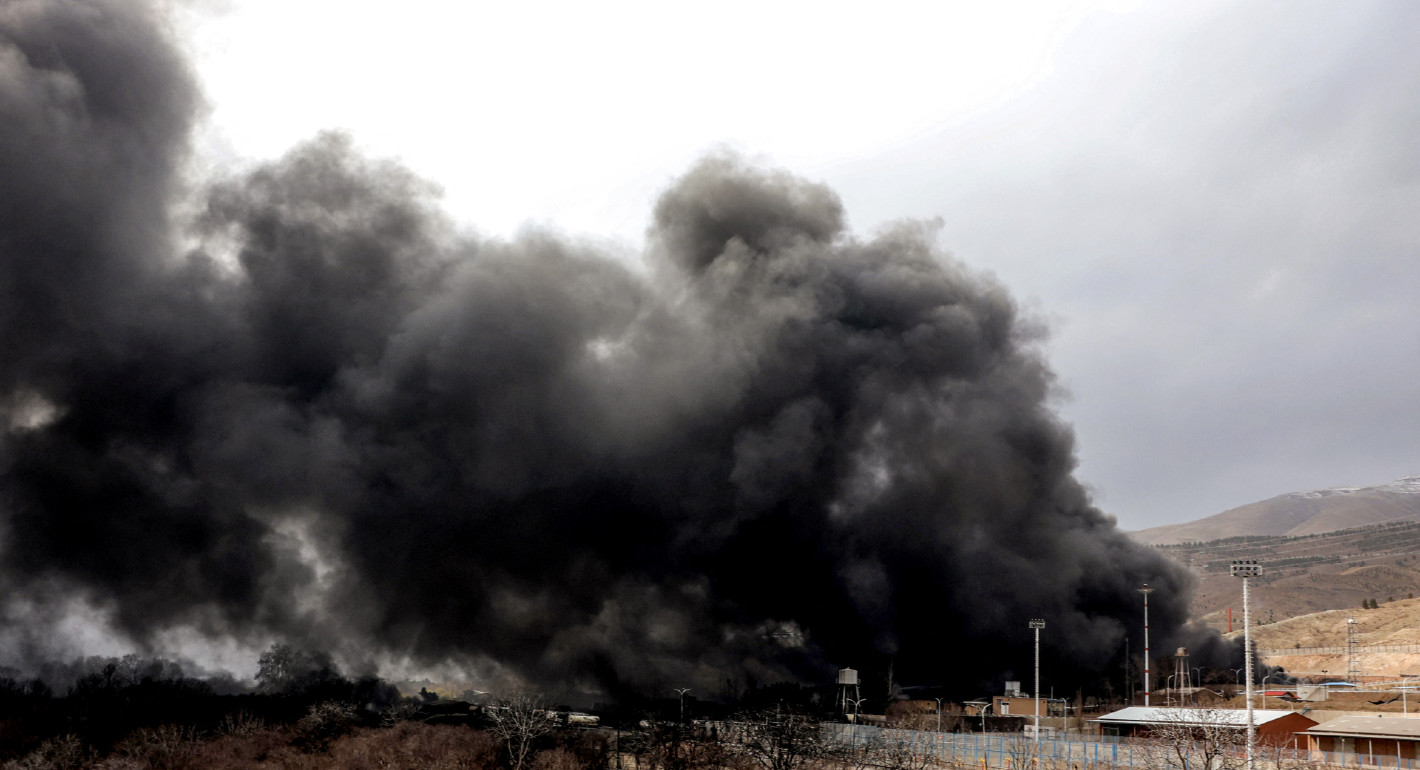
Understanding the climatic pain points is necessary for policymakers hoping to minimize the war’s negative environmental consequences.



Alejandro Martin Rodriguez, Joy Arkeh, Sarah Yerkes

Huawei pushed hard to enter the Egyptian data centers market, until the Americans made a better offer.

Angie Omar

Radical-right parties are expected to do well in upcoming elections in four of the EU's biggest member states. If successful, they could prevent the union from addressing key challenges ahead.

Stefan Lehne

The books, podcasts, and films that explain the world it made.

Andrew Leber
By abandoning past U.S. pro-democracy policies and adopting several lines of pro-autocratic action, the Trump administration has fundamentally repositioned the United States vis-à-vis democracy in the world.

Thomas Carothers