

In The Media
Minxin Pei
{
  "authors": [
    "Minxin Pei"
  ],
  "type": "legacyinthemedia",
  "centerAffiliationAll": "dc",
  "centers": [
    "Carnegie Endowment for International Peace"
  ],
  "collections": [],
  "englishNewsletterAll": "asia",
  "nonEnglishNewsletterAll": "",
  "primaryCenter": "Carnegie Endowment for International Peace",
  "programAffiliation": "AP",
  "programs": [
    "Asia",
    "Democracy, Conflict, and Governance"
  ],
  "projects": [],
  "regions": [
    "North America",
    "United States",
    "China"
  ],
  "topics": [
    "Political Reform",
    "Economy",
    "Foreign Policy"
  ]
}
REQUIRED IMAGE
Source: Financial Times
Anomalies abound when we think about China’s economic transition. How, for example, has it achieved record-beating growth while lagging badly on institutional reforms? Although an initial pioneer in embracing market reforms, China today has fallen behind most former Soviet bloc countries, its large developing country peers (Mexico, Brazil and India) and most of its east Asian neighbours in terms of privatisation, regulation and the rule of law.
China’s movement towards democracy is even more disheartening. Since its transition began in 1979, per capita income has increased 10 times and foreign trade has exploded from $20bn in 1978 to $1,000bn in 2005; but growth and globalisation have not brought democracy. Instead of liberalising the political system, the ruling Communist party has vowed never to adopt “western-style” democracy. Even as China enters the information age, Beijing is busy closing outspoken newspapers, jailing dissidents and coercing Google and Yahoo to help police the internet.
These two anomalies – faltering institutional reforms and political stagnation – are central to understanding a “trapped transition”, a transformative phase in which half-finished reforms have transferred power to new, affluent elites who know better than their Little Red Book-waving predecessors how to resuscitate moribund communism with crony capitalism. Partial reforms have thus created a hybrid, albeit state-centred, system that allows these elites to perpetuate their privileges. In China, mixing command and control with embryonic market forces enables the Communist party to tap efficiency gains from limited reforms to sustain the unreconstructed core of the old command economy – the economic foundation of its political supremacy.
In a “trapped transition”, the ruling elites have little interest in real reforms. They may pledge reforms, but most such pledges are lip service or tactical adjustments aimed at maintaining the status quo. In economic reform, after making an excellent start in de-collectivising agriculture and privatising small state-owned enterprises, momentum has stalled. The state still owns nearly 60 per cent of fixed assets and dominates vital industrial sectors, from financial services to energy. Today, Beijing’s guiding principle is not to exit these Leninist “commanding heights” but to strengthen their control. The private sector remains hobbled by onerous government restrictions and discrimination.
Nowhere is Beijing’s tight grip on the economy more visible than in its banking reforms. Wrecked by politicisation and mismanagement, the state-owned banks have cost China nearly 30 per cent of gross domestic product in loan write-offs and capital injections. Yet, the most ambitious reform package to date still guarantees the state’s majority control of these banks and limits foreign ownership to 25 per cent. Notably, the party retains power to appoint managers and operate its organisational cells in the restructured banks. Foreign capital and expertise are welcome – but only if they help strengthen Beijing’s financial management and respect the party’s authority.
The “trapped transition” logic also explains China’s failure in political reform. In the 1980s, the party undertook some promising initiatives, especially legal reform and village elections. It welcomed talented professionals. But once these limited measures stabilised elite politics and improved economic management, the party lost appetite for real democratic reforms.
China has fallen into this transition trap largely because the political momentum that launched its economic reform has dissipated. Nearly 30 years ago, awakened by the Cultural Revolution nightmare, both the elites and the public rallied behind Deng Xiaoping’s “second revolution”. Today, those horrific memories have faded. The party, no longer imperilled, is smug and complacent. The broad political coalition that propelled the transition in the 1980s has crumbled. With rising inequality, endemic corruption and unrelenting authoritarian rule, segments of society have become disenchanted with the regime and its policies. Without a national reformist ethos or visionary reformers, China seems to be on a Long March to nowhere. China’s continuing economic growth merely vindicates the current policies and disproves the need for change, perpetuating the trap. Riding this momentum, the party may muddle along for some time but it is hard to imagine that China can evolve into a market democracy without a cataclysmic mid-course correction.
The writer is the Senior Associate at the Carnegie Endowment for International Peace and the author of China’s Trapped Transition (Harvard University Press 2006).
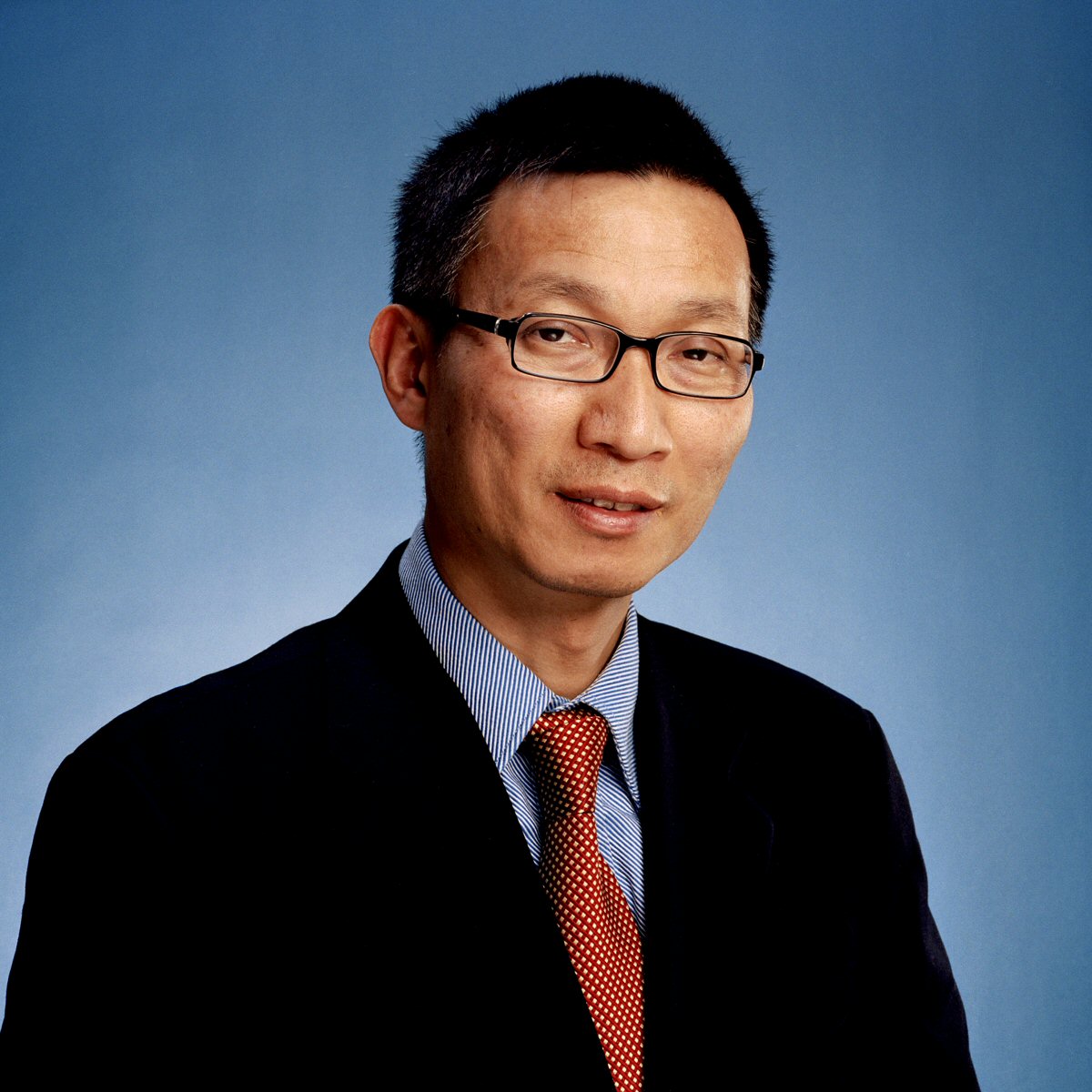
Former Adjunct Senior Associate, Asia Program
Pei is Tom and Margot Pritzker ‘72 Professor of Government and the director of the Keck Center for International and Strategic Studies at Claremont McKenna College.
Recent Work
Minxin Pei
Minxin Pei
Carnegie does not take institutional positions on public policy issues; the views represented herein are those of the author(s) and do not necessarily reflect the views of Carnegie, its staff, or its trustees.

It should address the shortcomings of previous crisis communication efforts and adapt to the demands of frontier AI.

Lucy Luo

If the Russian-speaking community in Latvia cannot articulate their interests without being seen as disloyal, they could end up embracing a pro-Kremlin agenda.

Sergejs Potapkins
Washington’s decision to support some UN functions while letting others wither is pulling the organization apart at the seams.

Stewart Patrick, Theodore Zaritsky

While there are notable demographic, economic, and geographic divides over AI, there is also substantial alignment between Republicans and Democrats.



Ian Klaus, Mark Baldassare, Rachel George, …

Are Germany’s economic, industrial, and political struggles becoming a liability for the EU’s ability to rise to the geopolitical moment?

Rym Momtaz, ed.