

In The Media
Minxin Pei
{
  "authors": [
    "Minxin Pei"
  ],
  "type": "legacyinthemedia",
  "centerAffiliationAll": "dc",
  "centers": [
    "Carnegie Endowment for International Peace"
  ],
  "collections": [],
  "englishNewsletterAll": "asia",
  "nonEnglishNewsletterAll": "",
  "primaryCenter": "Carnegie Endowment for International Peace",
  "programAffiliation": "AP",
  "programs": [
    "Asia"
  ],
  "projects": [],
  "regions": [
    "China"
  ],
  "topics": [
    "Economy"
  ]
}
REQUIRED IMAGE
The revelation shows that half-hearted reforms have addressed merely the symptoms of China’s financial fragility. Poor business practices are blamed for NPLs but the real source is political. As long as the ruling Communist party relies on state-controlled banks to maintain an unreformed core of a command economy, Chinese banks will generate more bad loans.
Source: Financial Times
Estimates of the growing pile of non-performing loans (NPLs) in China appear to have caught many by surprise, especially because Beijing’s efforts to clean up its rickety state-owned banks were thought to have greatly reduced NPLs and the risk of a full-blown financial crisis. But according to Ernst & Young, the accounting firm, bad loans in the Chinese financial system have reached a staggering $911bn (including $225bn in potential future NPLs in the four largest state-owned banks).
This equals 40 per cent of gross domestic product – China has already spent the equivalent of 25–30 per cent of GDP in previous bank bail-outs.
The revelation shows that half-hearted reforms have addressed merely the symptoms of China’s financial fragility. Poor business practices are blamed for NPLs but the real source is political. As long as the ruling Communist party relies on state-controlled banks to maintain an unreformed core of a command economy, Chinese banks will generate more bad loans.
Systemic economic waste, bank lending practices, political patronage and the survival of a one-party state are inseparably intertwined in China. The party can no longer secure the loyalty of its 70m members through ideological indoctrination but through material perks and careers in the government and state-owned enterprises (SOEs). That is why, after nearly 30 years of economic reform, the state still owns 56 per cent of the fixed capital stock. The unreformed core of the economy is the foundation of political patronage.
Government figures show that, in 2003, 5.3m party officials held executive positions in SOEs. The party appoints about 80 per cent of the chief executives in SOEs and 56 per cent of all senior corporate executives. Recent corporate governance reforms, western-style on paper but not in substance, have made no difference. At 70 per cent of the large and medium-sized SOEs ostensibly restructured into western-style companies, members of party committees were appointed to the boards. Painful restructuring appears to have spared this elite. China has shed more than 30m industrial jobs since the late 1990s but few party officials have become unemployed.
The economic costs of maintaining this patronage system are not limited to perks for individual party members. Since these members are expected to prove their managerial competence, they must deliver or appear to deliver economic results. This in turn requires the party to provide access to capital, chiefly bank loans, even if these officials undertake non-viable projects.
The result is systemic waste. In particular, because mid-level Chinese officials are under pressure to hit fixed growth targets quickly (the average tenure of a mayor is about three years), they favour projects that may embellish their short-term performance but have dubious long-term value.
The proportion of misguided investment is considerable. The World Bank estimated that in the 1990s about one-third of fixed investments made in China were wasted. The Chinese central bank reported that during 2000-01 politically directed lending accounted for 60 per cent of NPLs. Such disregard for economic efficiency has bred a culture of irresponsibility and unaccountability in Chinese banks. In a survey of 3,500 bank employees in 2002, 20 per cent reported that no action was taken against managers even when their mistakes resulted in NPLs; an additional 46 per cent said their banks made no efforts to uncover bad loans. More than 80 per cent said corruption in their branches was either “prevalent” or took place “quite often”.
Banking reform of the past few years has failed to address these flaws. Its five main features – write-off of NPLs, capital injection, flotation in Hong Kong, minority stakes for western strategic investors and improvement of corporate governance at headquarters – do not alter the defining characteristics of China’s capital allocation system. Nearly all senior bank executives are appointed by the party, which maintains an extensive organisational network within the financial system. That is why an International Monetary Fund study finds no evidence that these reforms have improved risk management and credit allocation by banks.
But such disappointments are hardly surprising – Beijing permitted these quick fixes mainly because they were not politically painful. Unless the government begins to dismantle its patronage system, inefficient use of capital, reflected in huge and rising NPLs, will be a drag on growth.
The writer, author of China’s Trapped Transition (Harvard 2006), is a senior associate at the Carnegie Endowment for International Peace in Washington
Originally published in the Financial Times, May 7, 2006.
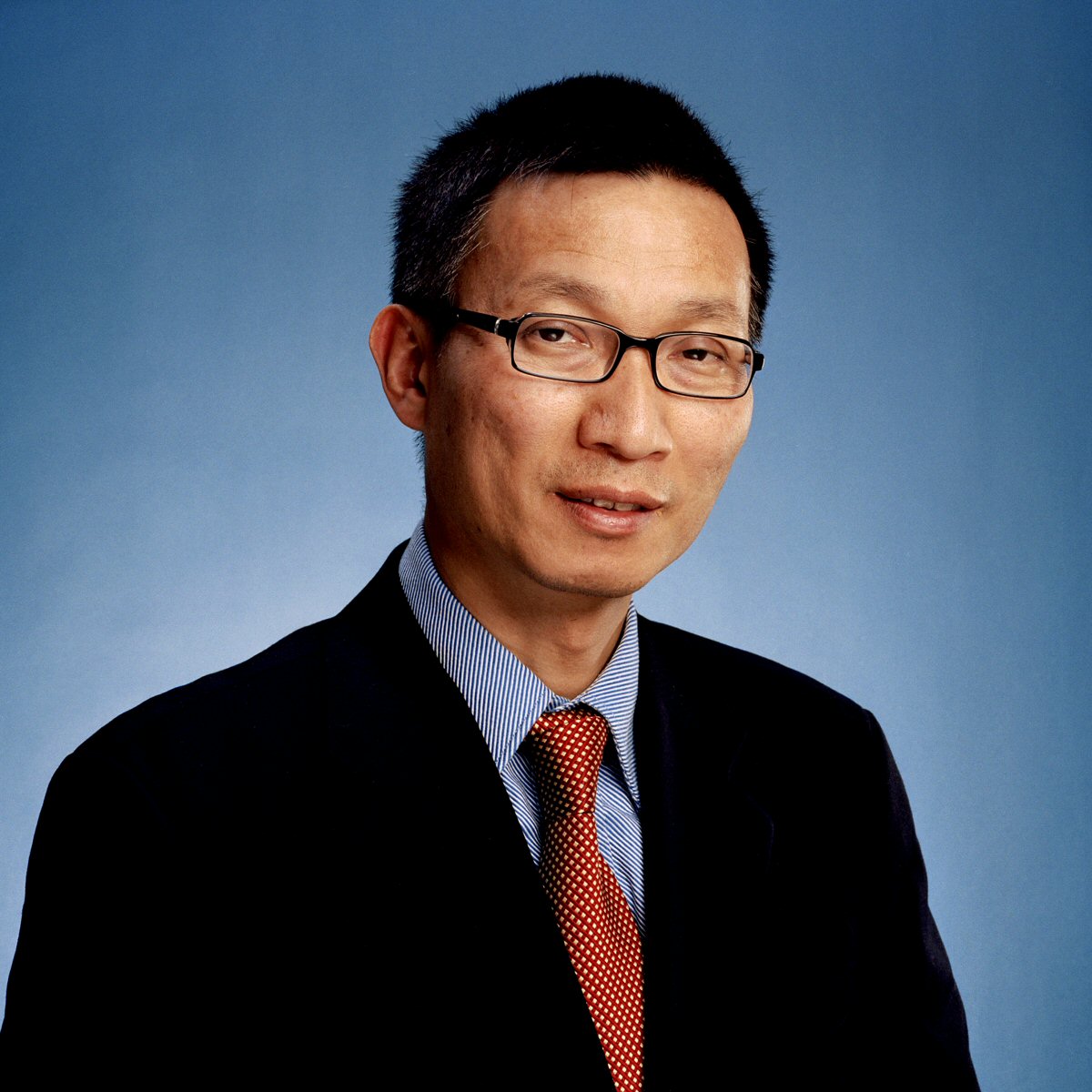
Former Adjunct Senior Associate, Asia Program
Pei is Tom and Margot Pritzker ‘72 Professor of Government and the director of the Keck Center for International and Strategic Studies at Claremont McKenna College.
Recent Work
Minxin Pei
Minxin Pei

Despite public disputes over trade and immigration, the strategic partnership’s foundations remain sturdy.

Sameer Lalwani

With its public finances in shambles, the far right polling at 35 percent ahead of the 2027 presidential election, and a growing protest movement, is France’s crisis a threat to the EU’s geopolitical awakening?

Rym Momtaz, ed.

Russian strikes are weakening the economy sustaining Ukraine’s war effort. Closing the growing funding gap will require more European support and politically contentious reforms in Kyiv.

Balázs Jarábik

While the EU and European governments are embracing the much-lauded middle-power moment, this entails three difficult conundrums.

Richard Youngs

Europe is facing rising populism internally as well as external pressures from Russia, China, Turkey, and the United States.

Dimitar Bechev