

In The Media
Michele Dunne, Robert Kagan
{
  "authors": [
    "Robert Kagan"
  ],
  "type": "legacyinthemedia",
  "centerAffiliationAll": "",
  "centers": [
    "Carnegie Endowment for International Peace"
  ],
  "collections": [],
  "englishNewsletterAll": "",
  "nonEnglishNewsletterAll": "",
  "primaryCenter": "Carnegie Endowment for International Peace",
  "programAffiliation": "",
  "programs": [],
  "projects": [],
  "regions": [
    "North America",
    "United States",
    "Middle East",
    "Iraq"
  ],
  "topics": [
    "Foreign Policy"
  ]
}
REQUIRED IMAGE
Source: The Washington Post
As Americans struggle to find an answer to the serious problems in Iraq, larger and broader questions beckon. How did we wind up in Iraq in the first place? Some argue that we were too aggressive and self-righteous in promoting our principles, too meddlesome, too arrogant in seeking to transform the world, too quick to intervene militarily in crises far from our shores and remote from our interests. If the United States would only change its approach to the world, if it understood the virtues of limits, modesty and humility, we could avoid foreign policy debacles and the world would be a safer place.
This is actually a very old debate, which Americans have thrashed out in every generation. The expansive, idealistic, interventionist approach to the world has deep roots in the American character, going back to the nation's founding and the universal principles of liberalism embedded in the Declaration of Independence. As George Will once put it, the "messianic impulse" has been "a constant of America's national character, and a component of American patriotism."
But no less constant has been opposition to this grand vision, which critics since the nation's founding era have regarded as a recipe for endless war abroad and the undoing of American democracy at home.
The fight began at the beginning, in the ratification debates over the Constitution. Supporters such as George Washington, Alexander Hamilton, Benjamin Franklin and James Madison insisted that a strong central government was vital if the United States was to become a world power capable of shouldering its international responsibilities. The young United States was the "embryo of a great empire," Hamilton proclaimed. Patrick Henry, in turn, accused supporters of the Constitution of trying to "convert this country into a powerful and mighty empire," thereby betraying the nation's purpose. "When the American spirit was in its youth, the language of America was different: liberty, sir, was then the primary object."
John Quincy Adams took both sides of the struggle, warning in 1821 against idealistic ventures abroad "in search of monsters to destroy" but a few years later insisting Americans had a duty "to take a conspicuous and leading" role in the world on behalf of their "principles and morals."
In the last decades of the 19th century, Lincoln's Republican Party widened this expansive and interventionist view, celebrating "the future greatness and destiny of the United States" and its pivotal role "in the improvement of the world." Democrat Grover Cleveland's secretary of state, Walter Q. Gresham, in response, warned against the nation's natural "impulse to rush into difficulties that do not concern it, except in a highly imaginary way." To restrain this "indulgence" was "a duty we owe to the world as an example of the strength, the moderation, and the beneficence of popular government."
Robert A. Taft continued the battle against the ambitious, world-transforming policies of FDR, Harry Truman and Dean Acheson. "We should not undertake to defend the ideals of democracy in foreign countries," the influential Republican senator cautioned, lest the United States become a "meddlesome Mattie" with "our fingers in every pie." He warned against the arrogance and temptations of dominant power, for such power "over other nations, however benevolent its purpose, leads inevitably to imperialism." Truman and Acheson rejected this advice and instead pursued a preponderance of global power, "situations of strength" around the globe, and an ideology-laden strategy of containment that theoretically could lead America to war anywhere on the planet, as it did in Vietnam.
Today Taft is in bad odor in polite society, but his arguments against American overseas adventurism have been picked up again by the latest critics of our expansive foreign policy tradition. The old argument continues.
The problem for those who have tried to steer the United States away from its long history of expansiveness, then and now, is that Americans' belief in the possibility of global transformation -- the "messianic" impulse -- is and always has been the more dominant strain in the nation's character. It is rooted in the nation's founding principles and is the hearty offspring of the marriage between Americans' driving ambitions and their overpowering sense of righteousness.
Critics have occasionally succeeded in checking these tendencies, temporarily. Failures of world-transforming efforts overseas have also had their effect, but only briefly. Five years after the end of the Vietnam War, which seemed to many to presage the rejection of Achesonian principles of power and ideological triumphalism, Americans elected Ronald Reagan, who took up those principles again with a vengeance.
Today many hope and believe that the difficulties in Iraq will turn Americans once and for all against ambition and messianism in the world. History is not on their side.
Robert Kagan writes a monthly column for The Post. His most recent book is "Dangerous Nation," a history of American foreign policy.

Former Senior Associate
Kagan, author of the recent book, The Return of History and the End of Dreams (Knopf 2008), writes a monthly column on world affairs for the Washington Post and is a contributing editor at both the Weekly Standard and the New Republic.
Recent Work

Michele Dunne, Robert Kagan
Robert Kagan, Michele Dunne
Carnegie does not take institutional positions on public policy issues; the views represented herein are those of the author(s) and do not necessarily reflect the views of Carnegie, its staff, or its trustees.

It should address the shortcomings of previous crisis communication efforts and adapt to the demands of frontier AI.

Lucy Luo
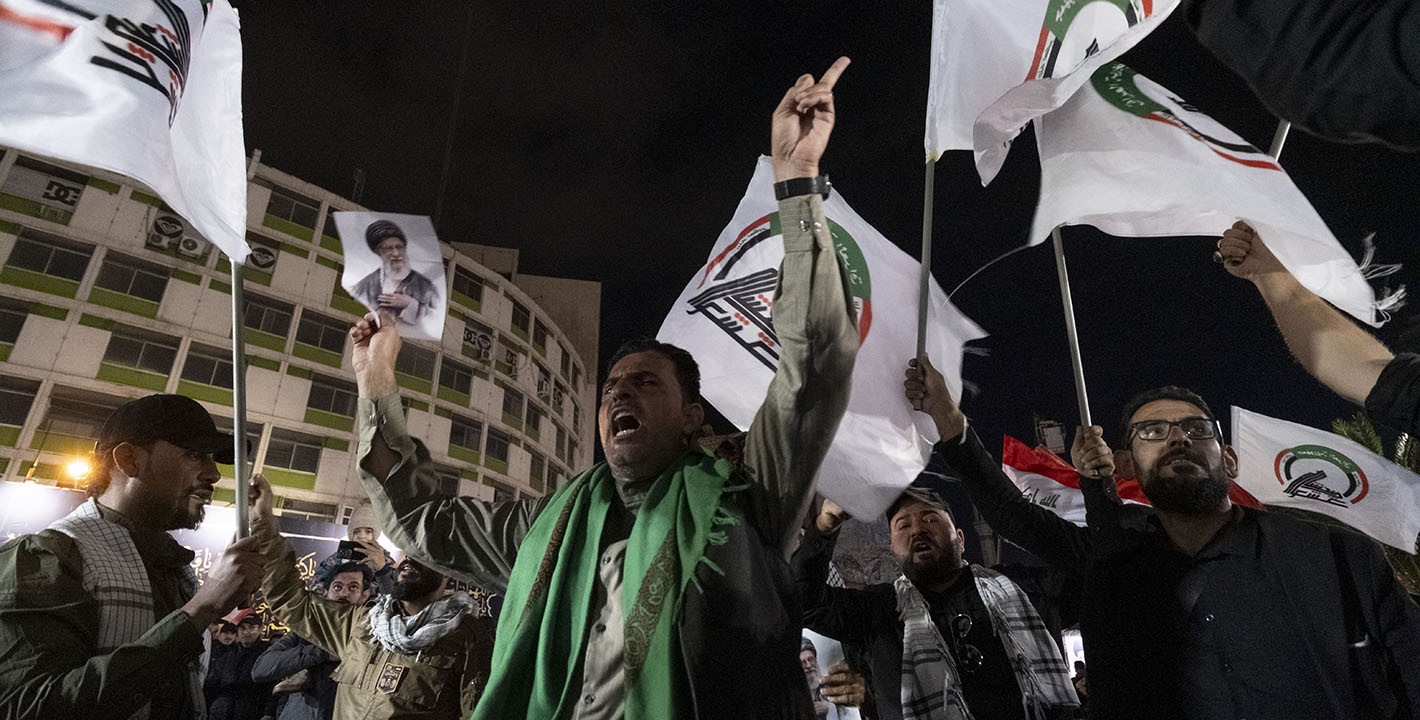
The Zaidi government’s objective to collect weapons is constrained by regional conflict, but it can take certain measures at home.
Ali Al-Mawlawi

Washington’s decision to support some UN functions while letting others wither is pulling the organization apart at the seams.

Stewart Patrick, Theodore Zaritsky

While there are notable demographic, economic, and geographic divides over AI, there is also substantial alignment between Republicans and Democrats.


Ian Klaus, Mark Baldassare, Rachel George, …

Are Germany’s economic, industrial, and political struggles becoming a liability for the EU’s ability to rise to the geopolitical moment?

Rym Momtaz, ed.