• Research
  • Emissary
  • About
  • Experts
Carnegie Global logoCarnegie lettermark logo
DemocracyIran
  • Donate
{
  "authors": [
    "Amr Hamzawy"
  ],
  "type": "legacyinthemedia",
  "centerAffiliationAll": "dc",
  "centers": [
    "Carnegie Endowment for International Peace"
  ],
  "collections": [],
  "englishNewsletterAll": "democracy",
  "nonEnglishNewsletterAll": "",
  "primaryCenter": "Carnegie Endowment for International Peace",
  "programAffiliation": "DCG",
  "programs": [
    "Democracy, Conflict, and Governance",
    "Middle East"
  ],
  "projects": [],
  "regions": [
    "Middle East",
    "Egypt"
  ],
  "topics": [
    "Political Reform",
    "Democracy",
    "Foreign Policy"
  ]
}
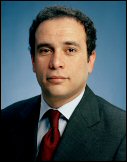
Source: Getty

In The Media

Understanding Moderate Islamist Movements

Link Copied
By Amr Hamzawy
Published on Mar 14, 2007
Program mobile hero image

Program

Democracy, Conflict, and Governance

The Democracy, Conflict, and Governance Program is a leading source of independent policy research, writing, and outreach on global democracy, conflict, and governance. It analyzes and seeks to improve international efforts to reduce democratic backsliding, mitigate conflict and violence, overcome political polarization, promote gender equality, and advance pro-democratic uses of new technologies.

Learn More
Program mobile hero image

Program

Middle East

The Middle East Program in Washington combines in-depth regional knowledge with incisive comparative analysis to provide deeply informed recommendations. With expertise in the Gulf, North Africa, Iran, and Israel/Palestine, we examine crosscutting themes of political, economic, and social change in both English and Arabic.

Learn More

Source: Chicago Public Radio

Amr Hamzawy talks with Chicago Public Radio about Islamist parties and their compatibility with democracy.

Click here to listen to the radio broadcast.

About the Author

Amr Hamzawy

Director, Middle East Program

Amr Hamzawy is a senior fellow and the director of the Carnegie Middle East Program. His research and writings focus on governance in the Middle East and North Africa, social vulnerability, and the different roles of governments and civil societies in the region.

    Recent Work

  • Commentary
    Iran Is Pushing Its Neighbors Toward the United States

      Amr Hamzawy

  • Paper
    U.S. Peace Mediation in the Middle East: Lessons for the Gaza Peace Plan
      • Sarah Yerkes

      Amr Hamzawy, Sarah Yerkes, Kathryn Selfe

Amr Hamzawy
Director, Middle East Program
Amr Hamzawy
Political ReformDemocracyForeign PolicyMiddle EastEgypt

Carnegie does not take institutional positions on public policy issues; the views represented herein are those of the author(s) and do not necessarily reflect the views of Carnegie, its staff, or its trustees.
More Work from Carnegie Endowment for International Peace

  • Commentary
    Strategic Europe
    Europe and the Arab Gulf Must Come Together

    The war in Iran proves the United States is now a destabilizing actor for Europe and the Arab Gulf. From protect their economies and energy supplies to safeguarding their territorial integrity, both regions have much to gain from forming a new kind of partnership together.

      • Rym Momtaz

      Rym Momtaz

  • Commentary
    Carnegie Politika
    Why Has Kazakhstan Started Deporting Political Activists?

    The current U.S. indifference to human rights means Astana no longer has any incentive to refuse extradition requests from its authoritarian neighbors—including Russia.

      Temur Umarov

  • people walking with suitcases
    Commentary
    Emissary
    Iran’s Northern Neighbors Are Facing Fallout From the War, Too

    The conflict is threatening stability in Armenia and Azerbaijan.

      Zaur Shiriyev

  • US President Donald Trump presides over the inaugural meeting of the âBoard of Peace,❠a newly established body focused on efforts for Gaza, at the US Institute of Peace in Washington, DC, United States, on February 19, 2026.
    Article
    The Board of Peace and Funding for Gaza Reconstruction: On Whose Account?

    Stakeholders must demand major restructuring of the Board of Peace and robust oversight and transparency before engaging with it. Until then, rights-respecting existing platforms and mechanisms for multilateral peacemaking should be supported.

      Zaha Hassan, Charles H. Johnson

  • City at night
    Commentary
    Emissary
    The Iran War Is Also Now a Semiconductor Problem

    The conflict is exposing the deep energy vulnerabilities of Korea’s chip industry.

      Darcie Draudt-Véjares, Tim Sahay

Get more news and analysis from
Carnegie Endowment for International Peace
Carnegie global logo, stacked
1779 Massachusetts Avenue NWWashington, DC, 20036-2103Phone: 202 483 7600Fax: 202 483 1840
  • Research
  • Emissary
  • About
  • Experts
  • Donate
  • Programs
  • Events
  • Blogs
  • Podcasts
  • Contact
  • Annual Reports
  • Careers
  • Privacy
  • For Media
  • Government Resources
Get more news and analysis from
Carnegie Endowment for International Peace
© 2026 Carnegie Endowment for International Peace. All rights reserved.