

Paper
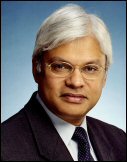
Ashley J. Tellis
{
  "authors": [
    "Ashley J. Tellis"
  ],
  "type": "legacyinthemedia",
  "centerAffiliationAll": "dc",
  "centers": [
    "Carnegie Endowment for International Peace"
  ],
  "collections": [],
  "englishNewsletterAll": "ctw",
  "nonEnglishNewsletterAll": "",
  "primaryCenter": "Carnegie Endowment for International Peace",
  "programAffiliation": "SAP",
  "programs": [
    "South Asia"
  ],
  "projects": [],
  "regions": [
    "North America",
    "United States",
    "South Asia",
    "India",
    "East Asia",
    "China"
  ],
  "topics": [
    "Economy",
    "Security",
    "Military",
    "Foreign Policy"
  ]
}
Source: Getty
India, like the United States, is entering a complex geopolitical environment that is likely to survive for at least another two decades. This environment will be characterised by the continuing dominance of the United States in the global system.
Source: The Tribune

However, the center of gravity in international politics, which is certain to shift from Europe to Asia, will produce at least four candidate great powers that could challenge Washington over time: Russia, Japan, China, and India. From this list, however, only China-for various reasons explored in the lecture-is likely, not certain, to materialise as a peer competitor to the United States in the future.
The American response to this possibility currently does not comport with either the classical Realist, the conventional Realist, or the Liberal internationalist prescriptions in their pure form: The United States rejected the option of preventive war that would be advocated by classical Realism.
It has also demurred from implementing a containment strategy that would be advocated by conventional Realism. And, it is uncertain whether the solutions of democratising China or tightly increasing economic interdependence with Beijing-the solutions issuing from Liberal internationalism-would prevent future geopolitical rivalry between the two countries.
Washington’s current approach to the emerging challenge of Asian geopolitics, therefore, reflects its own heritage of American exceptionalism, which combines elements from both the Realist and the Liberal traditions.
First, it emphasises not constraining Beijing but engaging it, while simultaneously increasing the strength of other states on China’s periphery.
Second, it seeks to protect the American capacity for sustained
innovation.
Third, it continues to invest in the technological bases for ensuring military superiority and uninterrupted access to the Asian continent.
Fourth, and finally, it endeavors to adapt its existing alliances to meet future challenges, while concurrently building new strategic partnerships
in Asia.
This multifaceted strategy is driven fundamentally by the conviction that the emerging Asian geopolitical environment will not be characterized solely by strategic rivalry - as was the case with the Soviet Union - but rather by different kinds of security competition that will coexist with deepening economic interdependence.
The presence of growing economic interdependence among states that might otherwise be political rivals implies that a country will aid its competitors in producing the very national power that may be used against itself, just as its competitors, in turn, would contribute to the production of that very national power which could be used against themselves as well.
This peculiar reality implies that India, like the United States, has to cope with a new Asian geopolitical universe where strategic threats are diffuse and attenuated, but never disappear and, more importantly, where the very forces that increase one’s prosperity also contribute to the increase in the dangers confronting oneself.
In such circumstances, New Delhi will be confronted by three unsettling certainties. First, India, like the United States, will not have the freedom to pursue simple and clear strategic policies, but only complex and ambiguous ones that will leave no single constituency – foreign or domestic – fully satisfied.
Second, India, like the United States, will have to perform a delicate juggling act which involves developing deep and collaborative bonds-political, economic, strategic-with a set of friends that are likely to be of greatest assistance to it (in relative terms), even as it seeks to pursue deepened interdependence with its prospective competitors.
Third, and finally, India, like the United States, will have to develop the organisational and psychological capacity for diplomatic, political, and strategic agility because of the perpetual course correction that will be essential for geopolitical success in a globalised world.
This is a summary of the writer’s address delivered after receiving the Professor M.L. Sondhi Prize for International Politics for 2006. This article originally appeared in The Tribune on May 5, 2007.
Former Senior Fellow
Ashley J. Tellis was a senior fellow at the Carnegie Endowment for International Peace.
Recent Work
Ashley J. Tellis
Ashley J. Tellis
Carnegie does not take institutional positions on public policy issues; the views represented herein are those of the author(s) and do not necessarily reflect the views of Carnegie, its staff, or its trustees.
Congress should ask tough questions about the agreement’s more unique features and whether they advance U.S. interests or compromise them.

Jane Darby Menton

To remain effective, organizations need to master new media and legitimacy markers to make a once-in-a-century shift.


Renée DiResta, Rachel Kleinfeld, Margot Treadwell

Congress needs to step up and make EXIM a low-carbon financing powerhouse.

Jesse Young
The ninety-three-year-old Biya’s absence and refusal to name a vice president threaten to upend domestic and regional stability.

Lesley Anne Warner

With the growth in points of friction between the great powers, organizations like the SCO will continue to play a role in the strategic adaptation of the smaller powers caught between them.

Temur Umarov