
• Research
  • Emissary
  • About
  • Experts
Carnegie Global logoCarnegie lettermark logo
DemocracyIran
  • Donate
{
  "authors": [],
  "type": "pressRelease",
  "centerAffiliationAll": "dc",
  "centers": [
    "Carnegie Endowment for International Peace"
  ],
  "collections": [],
  "englishNewsletterAll": "ctw",
  "nonEnglishNewsletterAll": "",
  "primaryCenter": "Carnegie Endowment for International Peace",
  "programAffiliation": "russia",
  "programs": [
    "Russia and Eurasia"
  ],
  "projects": [],
  "regions": [
    "Central Asia"
  ],
  "topics": [
    "Security"
  ]
}
REQUIRED IMAGE

REQUIRED IMAGE

Press Release

Press Release: Sufism in Central Asia - Force for Moderation or a Cause of Politicization?

WASHINGTON, June 7--Sufism—a mystical form of Islam that has flourished in the Muslim world for centuries—has enjoyed a strong revival in Central Asia.

Link Copied
Published on Jun 7, 2007
Program mobile hero image

Program

Russia and Eurasia

The Russia and Eurasia Program continues Carnegie’s long tradition of independent research on major political, societal, and security trends in and U.S. policy toward a region that has been upended by Russia’s war against Ukraine.  Leaders regularly turn to our work for clear-eyed, relevant analyses on the region to inform their policy decisions.

Learn More

FOR IMMEDIATE RELEASE: June 7, 2007


- NEWS RELEASE -


WASHINGTON, June 7--Sufism—a mystical form of Islam that has flourished in the Muslim world for centuries—has enjoyed a strong revival in Central Asia.  In a new Carnegie Paper, Sufism in Central Asia: A Force for Moderation or a Cause of Politicization? , Martha Brill Olcott explores Sufism’s potential to become a political movement in Central Asia by analyzing the movement’s history and current leaders in Central Asia, particularly Uzbekistan.

The future role Sufism will play in Central Asia is dependent on both secular and religious circumstances.  Olcott contends that political leaders will require a political subtlety that has been lacking in recent decades in order to construct a reasonable balance between Sufis and fundamentalists.

Olcott also argues that while Sufism currently poses little threat to the secular ideology of Central Asian states, there is potential for a dangerous backlash if governments openly try to use Sufi ideology as a way to gain support.

Notes:

  1. To read this Carnegie Paper, go to www.centralasianvoices.org/research-analysis-archives.cfm  
    Direct link to the PDF:
    http://www.carnegieendowment.org/files/cp84_olcott_final2.pdf 
  2. Martha Brill Olcott is a senior associate in the Russian and Eurasian Program at the Carnegie Endowment, directs the Central Asian Voices website, and co-directs the Carnegie Moscow Center Project on Religion, Society, and Security in the former Soviet Union. She specializes in Central Asia and the Caucasus and is the author of Central Asia’s Second Chance (Carnegie, 2005). 
  3. Sufism in Central Asia: A Force for Moderation or a Cause of Politicization? , is the third paper in an ongoing project for a forthcoming book on Islam in Central Asia. 
  4. For more information about the Carnegie Endowment’s Russian and Eurasian Program, visit: www.carnegieendowment.org/Russia   
  5. The Central Asian Voices Portal is a multilingual website featuring timely analysis of regional issues and a forum enabling the exchange of ideas among policy makers, analysts, journalists, bloggers, and informed readers across the globe www.centralasianvoices.org 
  6. Press Contact: Jessica Jennings, 202/939-2265, jjennings@ceip.org   

The Carnegie Endowment for International Peace is a private, nonprofit organization dedicated to advancing cooperation between nations and promoting active international engagement by the United States. Founded in 1910, its work is nonpartisan and dedicated to achieving practical results.

###

SecurityCentral Asia

Carnegie does not take institutional positions on public policy issues; the views represented herein are those of the author(s) and do not necessarily reflect the views of Carnegie, its staff, or its trustees.
More Work from Carnegie Endowment for International Peace

  • circles of chairs in a large, formal room
    Commentary
    Emissary
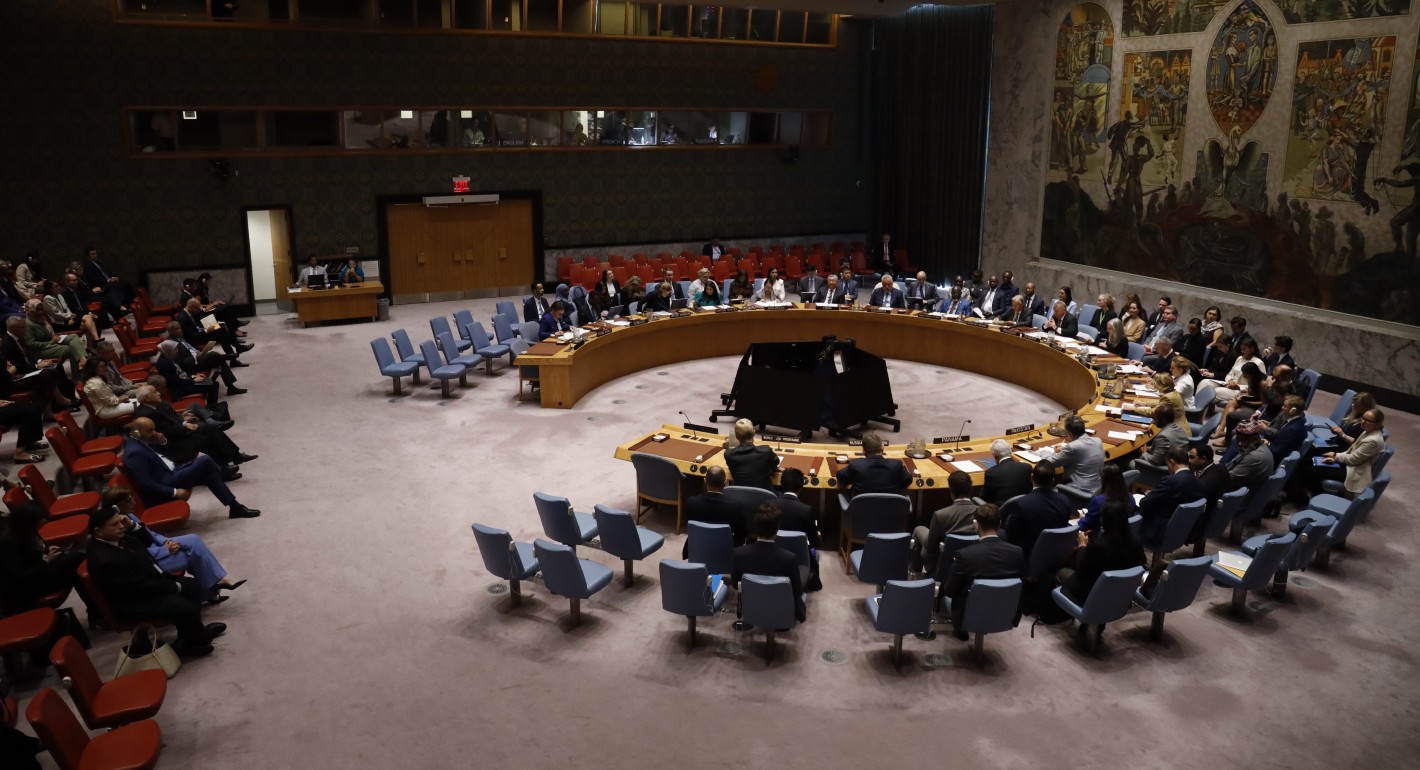
    The UN Security Council Is Deadlocked on Climate. New Members Have a Path Forward.

    They face an uphill climb, but they could draw on a strategy that other diplomats have used in the past.


      • Shana Tabak headshot
      • Alejandro Rodriguez

      Shana Tabak, Alejandro Martin Rodriguez

  • Photo of black smoke rising from an Iranian oil facility after an airstrike.
    Article
    The Iran War’s Climate, Environmental, and Human Security Fallout

    Understanding the climatic pain points is necessary for policymakers hoping to minimize the war’s negative environmental consequences.


      • Alejandro Rodriguez
      • Joy Arkeh
      • Sarah Yerkes

      Alejandro Martin Rodriguez, Joy Arkeh, Sarah Yerkes

  • silhouetted figure watching a row of TVs.
    Commentary
    Emissary
    9/11 at 25: A Reading List for Understanding the War on Terror

    The books, podcasts, and films that explain the world it made.

      • Andrew Leber

      Andrew Leber

  • Commentary
    Carnegie Politika
    Ten Years After Karimov’s Death, How Much Has Uzbekistan Really Changed?

    In the tenth year of his presidency, President Mirziyoyev’s system is becoming even more personalized than that of his predecessor Karimov.

      Galiya Ibragimova

  • Commentary
    Carnegie Politika
    As It Turns 25, the Shanghai Cooperation Organization Reflects the New World Order

    With the growth in points of friction between the great powers, organizations like the SCO will continue to play a role in the strategic adaptation of the smaller powers caught between them.

      Temur Umarov

Get more news and analysis from
Carnegie Endowment for International Peace
Carnegie global logo, stacked
1779 Massachusetts Avenue NWWashington, DC, 20036-2103Phone: 202 483 7600
  • Research
  • Emissary
  • About
  • Experts
  • Donate
  • Programs
  • Events
  • Blogs
  • Podcasts
  • Contact
  • Annual Reports
  • Careers
  • Privacy
  • For Media
  • Government Resources
Get more news and analysis from
Carnegie Endowment for International Peace
© 2026 Carnegie Endowment for International Peace. All rights reserved.
