

Commentary
Closer EU-UK ties could help address urgent European concerns. But is the EU ready for rapprochement with the United Kingdom?
Rym Momtaz, ed.
{
  "authors": [
    "Robert Kagan",
    "Ivo H. H. Daalder"
  ],
  "type": "legacyinthemedia",
  "centerAffiliationAll": "",
  "centers": [
    "Carnegie Endowment for International Peace"
  ],
  "collections": [],
  "englishNewsletterAll": "",
  "nonEnglishNewsletterAll": "",
  "primaryCenter": "Carnegie Endowment for International Peace",
  "programAffiliation": "",
  "programs": [],
  "projects": [],
  "regions": [
    "North America",
    "United States"
  ],
  "topics": [
    "Military",
    "Foreign Policy"
  ]
}
REQUIRED IMAGE
Is the United States out of the intervention business for a while? With two difficult wars in Iraq and Afghanistan and a divided public, the conventional answer is that it will be a long time before any American president, Democrat or Republican, again dispatches troops into conflict overseas. As usual, though, the conventional wisdom is almost certainly wrong.
Source: The Washington Post
Is the United States out of the intervention business for a while? With two difficult wars in Iraq and Afghanistan and a divided public, the conventional answer is that it will be a long time before any American president, Democrat or Republican, again dispatches troops into conflict overseas.
As usual, though, the conventional wisdom is almost certainly wrong. Throughout its history, America has frequently used force on behalf of principles and tangible interests, and that is not likely to change. Despite the difficulties in Iraq and Afghanistan, America remains the world's dominant military power, spends half a trillion dollars a year on defense and faces no peer strong enough to deter it if it chooses to act. Between 1989 and 2001, Americans intervened with significant military force on eight occasions -- once every 18 months. This interventionism has been bipartisan -- four interventions were launched by Republican administrations, four by Democratic administrations. Since Sept. 11, 2001, the situations in which an American president may have to use force have only grown, whether it is to respond to terrorist threats, to curb weapons proliferation, to prevent genocide or other human rights violations, or to respond to more traditional forms of aggression.
To sustain broad, bipartisan support for interventions requires that we rebuild a domestic consensus on a fundamental but elusive issue: the question of legitimacy. That consensus has been one of the casualties of the Iraq war. Many of President Bush's critics, at home and abroad, argued that the war lacked legitimacy because it did not receive the sanction of the U.N. Security Council. Many of Bush's supporters respond that it is not the opinions of other nations or institutions that provide legitimacy but the substance of the action itself. Toppling Saddam Hussein was a just act and therefore was inherently legitimate.
To forge a renewed political consensus on the use of force, we first need to recognize that international legitimacy does matter. It matters to Americans, who want to believe they are acting justly and are troubled if others accuse them of selfish, immoral or otherwise illegitimate behavior. It matters to our democratic friends and allies, whose support may attest to the justness of the cause and whose participation may often be necessary to turn a military victory into a lasting political success.
So how do we determine the legitimacy of armed force? First, substance does count. There is a difference between force used to enlarge one's territory and force aimed at alleviating a grievous harm done to others. A just cause, a clear strategy for success and a definitive threat to ourselves or to others whom we are obliged to protect all lend legitimacy to military action.
But substance alone is not always enough. Process matters, too. The critical question is who decides: Who decides whether a threat is sufficiently real or grave to warrant military action? Who decides whether the threat is directed against a specific state or whether it threatens regional or international security more broadly?
The traditional answer, the U.N. Security Council, no longer suffices, if it ever did. Under the United Nations Charter, states are prohibited from using force except in cases of self-defense or when explicitly authorized by the Security Council. But this presupposes that the members of the Security Council can agree on the threat and the appropriate response. From Rwanda to Kosovo to Darfur, however, and from Iraq to North Korea to Iran, the Security Council has not been able to agree and has failed to act decisively. Its permanent members are deeply divided by conflicting interests as well as by clashing beliefs about the nature of sovereignty and the right of the international community to intervene in the internal affairs of nations.
If not the Security Council, then who? The answer is the world's democracies, the United States and its democratic partners in Europe and Asia. As the war in Kosovo showed, democracies can agree and act effectively even when major non-democracies, such as Russia and China, do not. Because they share a common view of what constitutes a just order within states, they tend to agree on when the international community has an obligation to intervene. Shared principles provide the foundation for legitimacy.
A policy of seeking consensus among the world's great democratic nations can form the basis for a new domestic consensus on the use of force. It would not exclude efforts to win Security Council authorization. Nor would it preclude using force even when some of our democratic friends disagree. But the United States will be on stronger ground to launch and sustain interventions when it makes every effort to seek and win the approval of the democratic world.
Eventually, perhaps, these matters could be addressed and decided in a more formal arrangement, a Concert of Democracies, where the world's democracies could meet and cooperate in dealing with the many global challenges they confront. Until such a formal mechanism has been created, however, future presidents need to recognize that legitimacy matters, and that the most meaningful and potent form of legitimacy for a democracy such as the United States is the kind bestowed by fellow democrats around the world.
Ivo Daalder, a senior fellow at the Brookings Institution, is the author of "Beyond Preemption: Force and Legitimacy in a Changing World." He is an unpaid adviser to Barack Obama's campaign. A longer version of this column is part of the Stanley Foundation's "Bridging the Divide" Project. Robert Kagan, a senior associate at the Carnegie Endowment for International Peace and transatlantic fellow at the German Marshall Fund, writes a monthly column for The Post. He has been advising John McCain's presidential campaign on an informal and unpaid basis.

Former Senior Associate
Kagan, author of the recent book, The Return of History and the End of Dreams (Knopf 2008), writes a monthly column on world affairs for the Washington Post and is a contributing editor at both the Weekly Standard and the New Republic.
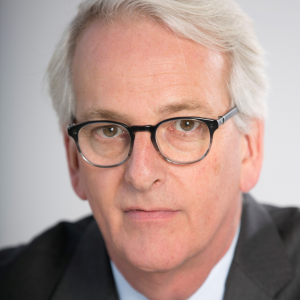
Ivo H. H. Daalder
The Brookings Institution
president of the Chicago Council on Global Affairs
Carnegie does not take institutional positions on public policy issues; the views represented herein are those of the author(s) and do not necessarily reflect the views of Carnegie, its staff, or its trustees.
Closer EU-UK ties could help address urgent European concerns. But is the EU ready for rapprochement with the United Kingdom?

Rym Momtaz, ed.
In an interview, Jim Lamson discusses the ongoing regional conflict and sees an unclear picture when it comes to winners and losers.

Michael Young

Our new report offers a path forward for local officials and future policymakers.



Joe McCannon, Jenny Keroack, Lauren Jensen, …

Present and future policymakers seeking to address climate-related health challenges can draw lessons from the successes and failures of the Biden administration.
Joe McCannon, Jenny Keroack, Lauren Jensen, …
In the Philippines, Duterte-era discourse emphasizing sovereignty, anti-Western skepticism, and strongman diplomacy mirrors tenets of populist foreign policy around the world.
Aries A. Arugay