

Paper
Ashley J. Tellis
{
  "authors": [
    "Ashley J. Tellis"
  ],
  "type": "legacyinthemedia",
  "centerAffiliationAll": "dc",
  "centers": [
    "Carnegie Endowment for International Peace"
  ],
  "collections": [],
  "englishNewsletterAll": "ctw",
  "nonEnglishNewsletterAll": "",
  "primaryCenter": "Carnegie Endowment for International Peace",
  "programAffiliation": "SAP",
  "programs": [
    "South Asia"
  ],
  "projects": [],
  "regions": [
    "South Asia",
    "Pakistan"
  ],
  "topics": [
    "Security"
  ]
}
Source: Getty
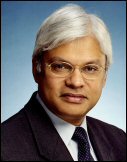
Ashley J. Tellis discussed the implications of Benazir Bhutto's assassination on CNN's Lou Dobbs Tonight. Below is an excerpt from the transcript; you can read the full transcript here.
KITTY PILGRIM: Tonight Pakistan stands on the brink of disaster after the assassination of Benazir Bhutto. Radical Islamic terrorists along the border with Afghanistan, Pakistan's arsenal of nuclear weapons potentially at risk. Joining me now is Christine Fair, senior political scientist at the Rand Corporation and Ashley Tellis, senior associate at Carnegie Endowment for International Peace. And thank you both for being with us this evening. Mr. Tellis, let me start with you. What do you believe this means for the political stability of Pakistan and the implications for U.S. policy?
ASHLEY TELLIS, CARNEGIE ENDOWMENT: I think what it does is it takes us further away from the normalcy that we would like to see returned to Pakistan. The distance from normalcy means that the war on terror is hampered and the kind of political transition that we would like to see towards a moderate regime becomes even more difficult.
PILGRIM: Christine, is this a setback for the Bush administration and their policy? They were, after all, hoping for some kind of a power sharing agreement with Bhutto and Musharraf and now that is dashed.
CHRISTINE FAIR, RAND CORPORATION: Well, to be clear, there was very little chance that Benazir Bhutto was going to emerge from that election as prime minister. I think the real objective was that Musharraf was hoping to have a reasonably fair and free election through which he could legitimize his government. A number of changes to the constitution was made. He really needed to do something to increase the patina, if you will, of the democracy so he could be emboldened in trying to fight the war on terror with a greater sense of popular support.
PILGRIM: President Musharraf had declared a state of emergency. There were some issues with his moving towards democracy, Mr. Tellis. Do you believe that now it will move in more of a direction away from democracy at this point? It will have to, to maintain stability?
TELLIS: It doesn't have to come to that. In fact, ideally, I hope he makes the right decision of moving as quickly as possible towards an election. The problem though is that one of the principal parties in Pakistan, Benazir Bhutto's people's party, is without a leader right now. Under these circumstances, whether you can have an election that represents the popular will is really an open question.
PILGRIM: Let me read you a comment that Benazir Bhutto wrote upon her return to her country after years in exile. She was very critical of the Musharraf government. She didn't withhold any criticism of the Musharraf government. This is what she wrote, "I have long claimed that the rise of extremism and militancy in Pakistan could not happen without support from elements within the current administration. My return to my country poses a threat to the forces of extremism that have thrived under a dictatorship. They want to stop the restoration of democracy at any price." And yet the Musharraf government is the government that is our ally on terror. Is that not a contradiction?
TELLIS: It is a contradiction and I think it is true to at least one proposition in her e-mail, which is that elements of the Pakistani government has been at least in dalliance with some of the extremists groups. My own sense is that Musharraf has tried to take some steps in the direction of moving Pakistan to normalcy but my judgment is that he hasn't done enough.
PILGRIM: Christine Fair, we've sent billions in aid to President Musharraf's government and hoping that the war on terror will be pushed along. We heard from our correspondent earlier that Pakistan has not come up to expectations in terms of quelling terrorist activity in Waziristan. Do you believe that we will be able to get results or do you think that this will begin deteriorate and the pressure will be on U.S. forces going forward?
FAIR: Well I think in the big picture we have to remember that even though we spent $10 million, and there may be a temptation to say we haven't struck the best bargain. What we do get from Pakistan is an uninterrupted access to move our fuel from Karachi port into Afghanistan. It's always important to remember that. That being said, addressing the issue that you raised, I think as Dr. Tellis has mentioned, the Pakistani military and some of the associated outfits that it uses like the frontier corps has demonstrated a solid instability to deal with the insurgency over the belt that connects Pakistan to Afghanistan. So even if Pakistan's will to go after the militant elements that are ensconced in that area, it's certainly the case militarily, the Pakistan armed forces are not up to that job.
What we've seen as a result of some of their less capable military actions has been a response among the populous. This resulted in a wider spread insurgency far beyond what is traditionally considered to be the tribal belts.
PILGRIM: With this extremist element in Pakistan, Dr. Tellis, how much do you worry about Pakistan's nuclear capacity and falling into the wrong hands?
TELLIS: I think at the moment, the threat is not as acute as people sometimes think. But there is an enduring problem and the enduring problem is that the ranks of the Pakistan military, especially at lower levels, have become increasingly penetrated by people with radical ideas, who, if given the opportunity, might not stop at doing something that is particularly dangerous and that is the contingency that we always have to worry about. It's something that will occupy both the Pakistani state and the United States for actually many years to come.
PILGRIM: Christine Fair, how do you think the U.S. should proceed in terms of foreign policy going forward in this moment of crisis?
FAIR: Well my concern has been, and has been a concern of many people around town, that right now our policy is not related to Pakistan. It's really focused on one person and that's Musharraf. I think this crisis, just as much as any other crisis that Pakistan has confronted in recent months, demonstrates that the United States needs to have a policy to engage the country of Pakistan, not simply Musharraf and his primary institution, the army.
I think that what we see is a lot of scrambling. Folks really don't know what to make of the Benazir Bhutto assassination and what is going to be but what is very clear, is that we need to have a strategy that moves beyond Musharraf.
I think Dr. Tellis is right to raise the issue of elections. It's important to have elections soon because we don't want President Musharraf to use this as opportunity to strengthen his personal control over the country. That being said, a number of things have to be put into place to ensure free and fair elections. Obviously, the PPP has to be able to nominate a successor and get out there and make their case made.
We should really be pushing for a reconstitution of the Supreme Court and the reinstatement of the Supreme Court justices that were ousted. In other words, there are several structural and institutional changes that the United States should be pushing for right now.
PILGRIM: Is the time right for that though in this moment of crisis? Isn't that extremely difficult? Shouldn't that have been done previously?
FAIR: Well, see this is a dilemma we always have with Pakistan. Everyone always says we need to defer this, because now is not the right time. Six years into this mess, we're still saying now is not the right time. There's always an excuse to defer those things that need to be done.
I think it's important that the United States seem to be supporting execution institutions, not persons. This would be I think an important departure from the policy up to now which is very much focused on President Musharraf and his primary institution, the army.
PILGRIM: Thank you very much, Christine Fair and Ashley Tellis. Thank you for your analysis this evening.
TELLIS: Thank you.
Former Senior Fellow
Ashley J. Tellis was a senior fellow at the Carnegie Endowment for International Peace.
Recent Work
Ashley J. Tellis
Ashley J. Tellis
Carnegie does not take institutional positions on public policy issues; the views represented herein are those of the author(s) and do not necessarily reflect the views of Carnegie, its staff, or its trustees.
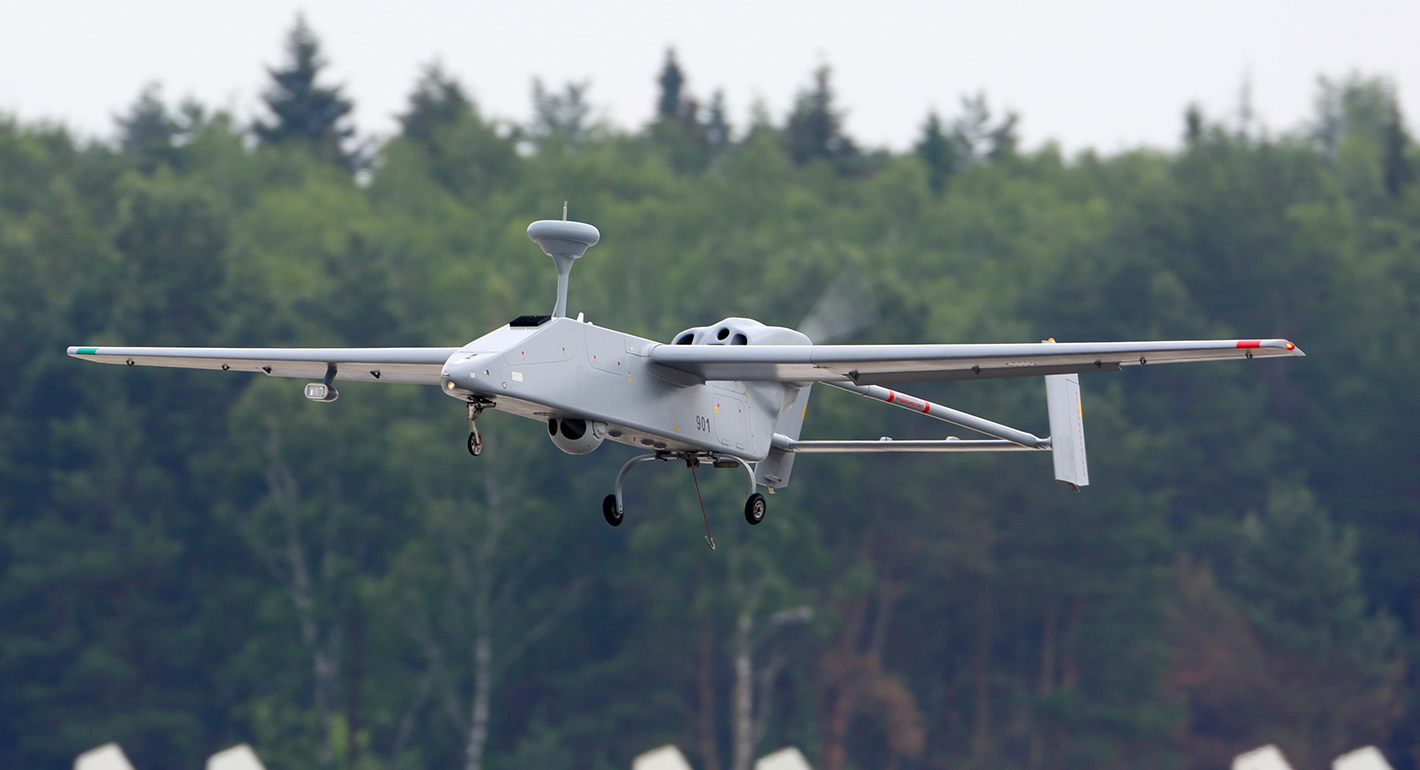
Moscow is testing Europe’s defenses with drone incursions and could decide to use drones against the continent on a much larger scale once the war in Ukraine pauses. European countries will need Kyiv to help them prepare for such a possibility.
Pavlo Zvenyhorodskyi

European states control several Overseas Countries and Territories around the world that carry strategic, economic, and environmental weight. As great powers challenge the rules-based order, defending them is a geopolitical imperative for Europe.

Marc Pierini
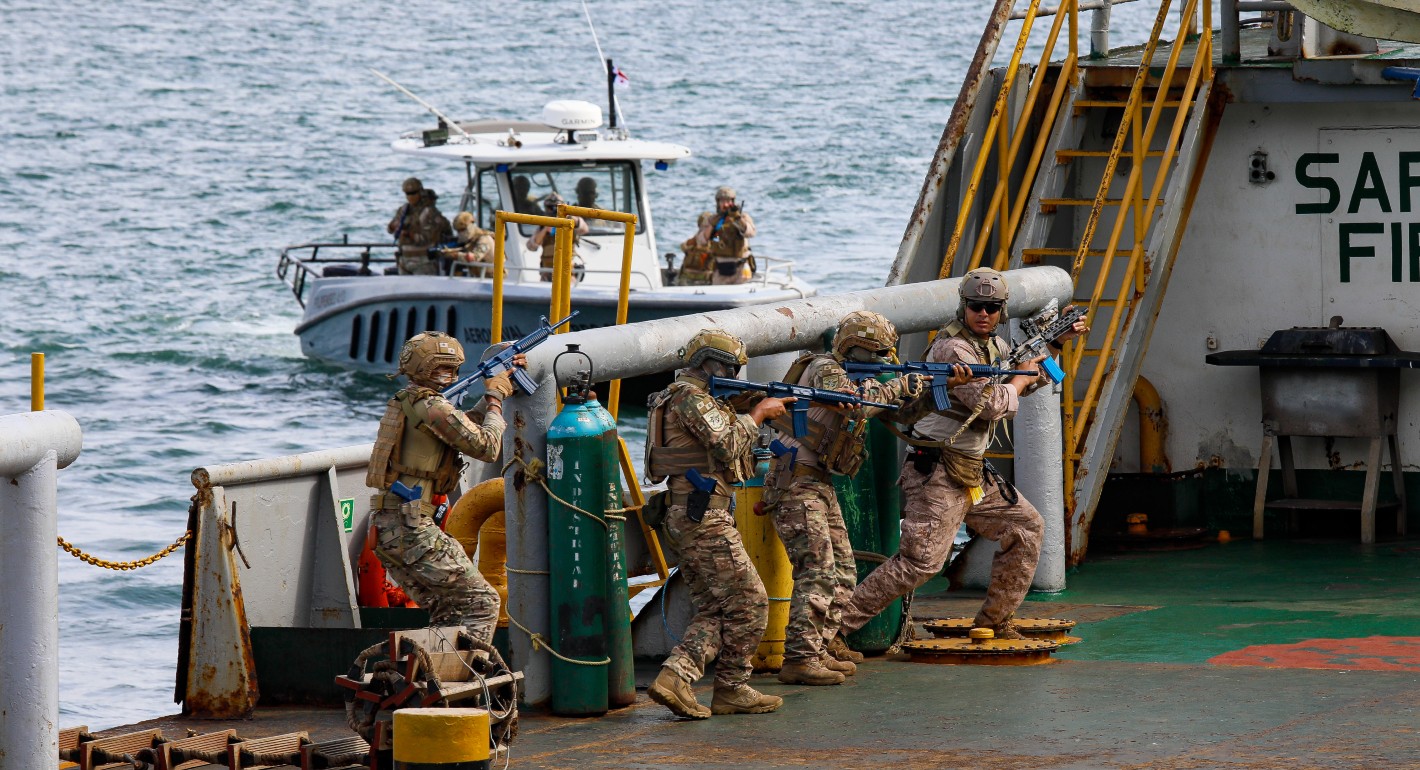
By focusing only on hard security, the Shield ignores the conditions that fuel cartel power.


Alejandro Martin Rodriguez, Kayly Ober

In any defense establishment, change is an ongoing process. However, despite the best of intentions, existing bureaucracies, bound by habit and years of socialization, have their limits in implementing transformative change.

Anit Mukherjee
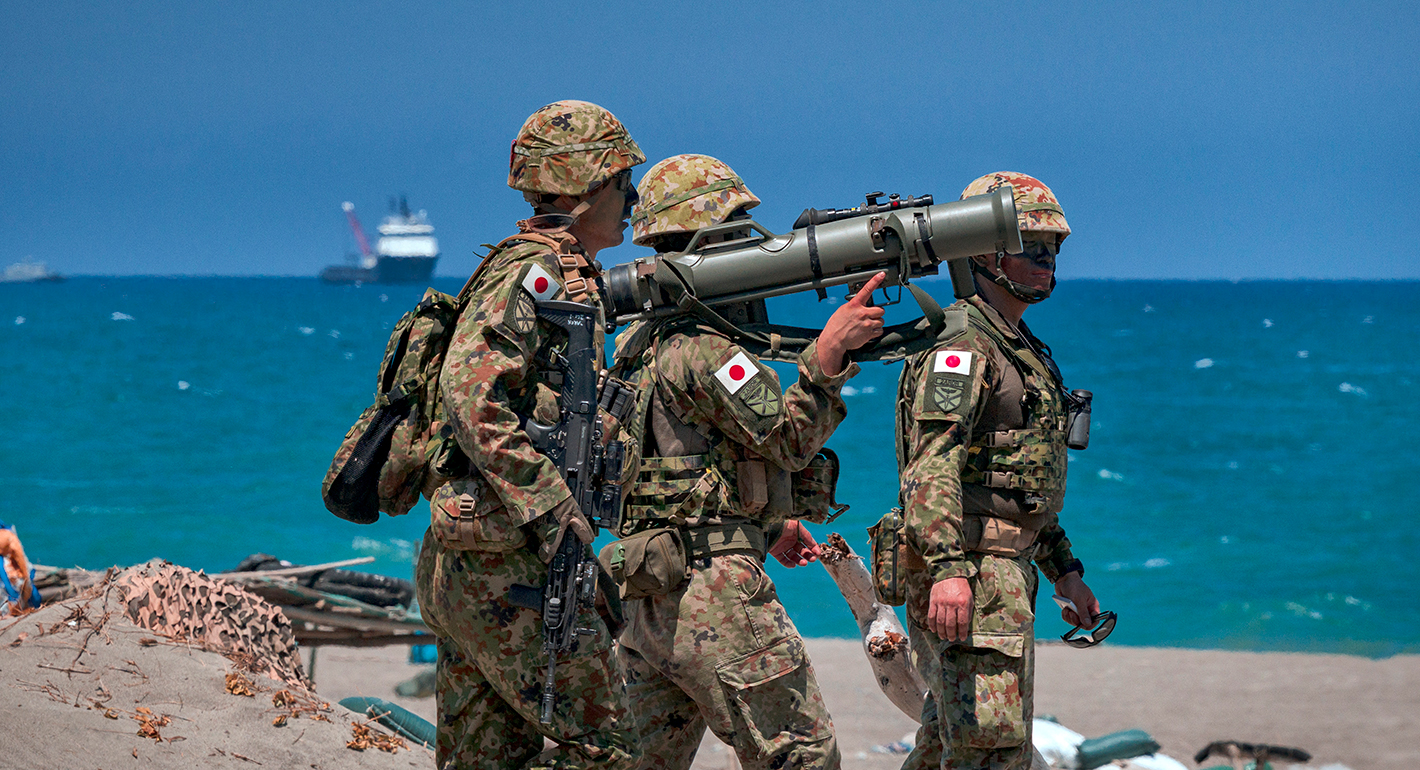
Japan’s revision of its three strategic documents reflects an intention to keep the United States engaged in the region while Japan fills any vacuums of U.S. power to preserve the Indo-Pacific order.
Ryo Sahashi