• Research
  • Emissary
  • About
  • Experts
Carnegie Global logoCarnegie lettermark logo
Democracy
  • Donate
{
  "authors": [
    "Pierre Goldschmidt"
  ],
  "type": "legacyinthemedia",
  "centerAffiliationAll": "dc",
  "centers": [
    "Carnegie Endowment for International Peace"
  ],
  "collections": [],
  "englishNewsletterAll": "",
  "nonEnglishNewsletterAll": "",
  "primaryCenter": "Carnegie Endowment for International Peace",
  "programAffiliation": "NPP",
  "programs": [
    "Nuclear Policy"
  ],
  "projects": [],
  "regions": [
    "Middle East",
    "Iran"
  ],
  "topics": []
}
Source: Getty

In The Media

Weighing the Impact of Iran's Uranium Program

Link Copied
By Pierre Goldschmidt
Published on Dec 11, 2007
Program mobile hero image

Program

Nuclear Policy

The Nuclear Policy Program aims to reduce the risk of nuclear war. Our experts diagnose acute risks stemming from technical and geopolitical developments, generate pragmatic solutions, and use our global network to advance risk-reduction policies. Our work covers deterrence, disarmament, arms control, nonproliferation, and nuclear energy.

Learn More

Source: NPR's Morning Edition

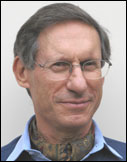
The unclassified National Intelligence Estimate (NIE) on Iran, released December 3, reported that Iran ended efforts to build a nuclear weapon in 2003. Yet even if Iran has, in fact, stopped these efforts, it continues to pursue uranium enrichment and other technical capabilities that could be applied to producing nuclear weapons.

The NIE did not draw a clear distinction between the intention to develop nuclear weapons and the intention to develop a nuclear weapons capability, Carnegie's Pierre Goldschmidt says.
Click here to listen to the broadcast.

About the Author

Pierre Goldschmidt

Former Nonresident Senior Associate, Nuclear Policy Program

Goldschmidt was a nonresident senior associate at the Carnegie Endowment.

    Recent Work

  • Article
    A Realistic Approach Toward a Middle East Free of WMD

      Pierre Goldschmidt

  • Article
    Serious Deficiencies Exposed by Latest IAEA Safeguards Implementation Report

      Pierre Goldschmidt

Pierre Goldschmidt
Former Nonresident Senior Associate, Nuclear Policy Program
Pierre Goldschmidt
Middle EastIran

Carnegie does not take institutional positions on public policy issues; the views represented herein are those of the author(s) and do not necessarily reflect the views of Carnegie, its staff, or its trustees.

More Work from Carnegie Endowment for International Peace

  • Trump speaking
    Commentary
    Emissary
    Trump’s State of the Union Was as Light on Foreign Policy as He Is on Strategy

    The speech addressed Iran but said little about Ukraine, China, Gaza, or other global sources of tension.

      Aaron David Miller

  • GCC foreign minister meeting in Kuwait City on June 2, 2025
    Article
    Can the Gulf Cooperation Council Transcend Its Divisions?

    Without structural reform, the organization, which is racked by internal rivalries, risks sliding into irrelevance.

      Hesham Alghannam

  • Commentary
    Diwan
    U.S. Aims in Iran Extend Beyond Nuclear Issues

    Because of this, the costs and risks of an attack merit far more public scrutiny than they are receiving.

      • Nicole Grajewski Profile Picture

      Nicole Grajewski

  • Photo of Marco Rubio speaking while Donald Trump sits beside him at the table with a row of flags behind them.
    Article
    The Trump Administration’s Tangled Talk About Democracy Abroad

    How significant are statements by senior U.S. officials about supporting democracy abroad in the context of a foreign policy led by a president focused on near-term transactional interests?

      • McKenzie Carrier

      Thomas Carothers, McKenzie Carrier

  • Commentary
    Carnegie Politika
    Once Neutral on the Ukraine War, Arab States Increasingly Favor Moscow

    Disillusioned with the West over Gaza, Arab countries are not only trading more with Russia; they are also more willing to criticize Kyiv.  

      Ruslan Suleymanov

Get more news and analysis from
Carnegie Endowment for International Peace
Carnegie global logo, stacked
1779 Massachusetts Avenue NWWashington, DC, 20036-2103Phone: 202 483 7600Fax: 202 483 1840
  • Research
  • Emissary
  • About
  • Experts
  • Donate
  • Programs
  • Events
  • Blogs
  • Podcasts
  • Contact
  • Annual Reports
  • Careers
  • Privacy
  • For Media
  • Government Resources
Get more news and analysis from
Carnegie Endowment for International Peace
© 2026 Carnegie Endowment for International Peace. All rights reserved.