{
  "authors": [],
  "type": "pressRelease",
  "centerAffiliationAll": "dc",
  "centers": [
    "Carnegie Endowment for International Peace"
  ],
  "collections": [],
  "englishNewsletterAll": "asia",
  "nonEnglishNewsletterAll": "",
  "primaryCenter": "Carnegie Endowment for International Peace",
  "programAffiliation": "AP",
  "programs": [
    "Asia",
    "Sustainability, Climate, and Geopolitics"
  ],
  "projects": [],
  "regions": [
    "China",
    "North America"
  ],
  "topics": []
}
REQUIRED IMAGE
Press Release
$3 Million Carnegie Corporation Investment Supports Carnegie Endowment’s China Policy Research Program
The Carnegie Corporation of New York invested $3 million in the Carnegie China Program in Washington and Beijing.
Link Copied
Published on Jan 9, 2008
WASHINGTON and NEW YORK, Jan 9—Carnegie Corporation of New York, a grantmaking foundation, and the Carnegie Endowment for International Peace, building the first global think tank, today jointly announced a $3 million investment by the Corporation in the Carnegie China Program in Washington and Beijing.
"We are immensely grateful to the Carnegie Corporation of New York for its generous support of and investment in the Endowment’s China Program in Washington and Beijing, and particularly to its president, Vartan Gregorian, for his leadership. Coming on the eve of the first anniversary of the launch of our NEW VISION, this financial support is a tremendous further endorsement of a key component of the mission we are pursuing,” said Jessica T. Mathews, president of the Carnegie Endowment.
"If we are to move toward a more stable and prosperous world, it is imperative that the United States redefine the nature of its relationships with major and emerging powers,” said Vartan Gregorian, president of the Carnegie Corporation of New York. “We are particularly in need of innovative research to inform our near– and long-term policies toward China.”
Gregorian added that the deep pool of subject matter expertise cultivated by the Endowment in China and throughout the world will benefit the partners as they seek to better understand the impact of globalization on foreign, economic, and security policy making.
The Carnegie Endowment for International Peace was the first think tank headquartered in the United States to establish a joint presence in Beijing and Washington. Two core features distinguish the Endowment’s work in China:
an unparalleled set of partnerships with the Endowment’s lead partner, the China Reform Forum (CRF), and six other leading Chinese institutions (see notes for details) and,
the broad sweep of subject matter from international security to energy and climate, economic policy, ethnic relations, domestic society, and politics.
Most recently, the Endowment began a multi-year project to move past the gridlock that has prevented meaningful action by the United States and China on climate change. In October 2007, the Program partnered with China’s Energy Research Institute on a Beijing workshop on “Energy Security and Climate: How Can the U.S. and China Cooperate and Lead?”
The Endowment has also held a series of conferences in Beijing that draw on its staff in Washington, Beirut, and Moscow, as well as Beijing. Together with CRF, it co-hosted meetings on “Rising India: Opportunities and Lessons for China,” “New Security Challenges in Northeast Asia,” “China’s Environmental Protection System,” and “Energy Cooperation between China, Russia, and Central Asia,” which included senior Russian researchers from the Carnegie Moscow Center and a team from Washington. A September 2007 conference explored the impacts of President Bush’s policies on world order.
Andrew Carnegie gave generously in support of peace, including his creation in 1910 of the Carnegie Endowment for International Peace “to hasten the abolition of international war” and his endowment in 1911 of Carnegie Corporation of New York to promote “the advancement and diffusion of knowledge and understanding.”
###
NOTES
The Carnegie China Programin Beijing and Washington provides policy makers in both countries with a better understanding of the dynamics within China and between United States and China. In late 2005, the Carnegie Endowment established a joint Program in China on globalization and international relations with the China Reform Forum, a leading Chinese think tank. The mission of the program is to advance research on the impact of globalization on foreign policy making and promote scholarly exchange between the two countries.
Communication in Chinese is a critical component of the Endowment’s work. The Endowment has an active program of translations and original publications in Chinese, including:
ChinaNet, the Endowment’s Chinese-language website, features international affairs content produced in Chinese and translated from Carnegie publications, including Foreign Policy magazine. The material includes articles on economics, Chinese social and political change, Chinese foreign policy, and U.S.-China relations, much of it not available from any other source in China.
The Endowment’s electronic newsletter, Carnegie China Insight Monthly, is distributed to more than 4,000 high-caliber subscribers. Newsletter articles are regularly reprinted in internal government publications and major Chinese newspapers. Contributions from writers within China are growing.
The Hong Kong Journal is an on-line quarterly edited by Robert Keatley, former editor of the Asian Wall Street Journal, and continues to draw a sizeable readership, attracting 17,000 visitors and over 50,000 page views. The main clusters of readers are in Hong Kong, the Washington, DC area, New York City, Singapore, Beijing, London, and Sydney. The Endowment is preparing to launch a Chinese translation of the quarterly.
Reframing China Policy: The Carnegie Debates: The series aims to candidly discuss the most pressing issues in U.S.-China relations and to provide the most authoritative information possible to policy makers on Capitol Hill who are shaping U.S. foreign policy. Since its inception in Fall 2006, the China Program has hosted seven debates on the most critical—and controversial—issues involving China's economic, socio-political, and military evolution and their policy implications.
Building on the successful establishment of the Carnegie Moscow Center fourteen years ago, and following its century-long practice of adapting to radically-changed global circumstances, the Endowment is undertaking a fundamental re-definition of its role and mission. In a two-day series of events to publicly launch the NEW VISION, the Carnegie Endowment for International Peace announced that it has added operations in Beijing, Beirut, and Brussels to its existing offices in Washington and Moscow, pioneering the idea that a think tank whose mission is to contribute to global security, stability, and prosperity requires a permanent international presence and a multinational outlook at the core of its operations. For more information on the Carnegie Endowment’s NEW VISION or to watch the NEW VISION DVD online, please click here.
About Carnegie Corporation of New York:
The Corporation supports work to redefine the country’s engagement with the world in an era of rapidly advancing globalization. The organizations it supports are engaging experts and policy makers from the United States, China, India, Russia and possibly other countries to generate new knowledge to inform U.S. foreign and security policies.
For additional information about work funded under the Corporation’s U.S. Global Engagement Program, please click here.
Carnegie Corporation of New York recently reconfirmed and re-committed its programmatic focus to address the primary concerns to which founder Andrew Carnegie devoted the foundation: international peace and advancing education and knowledge.
For more information on Carnegie Corporation, please visit: www.carnegie.org
Carnegie does not take institutional positions on public policy issues; the views represented herein are those of the author(s) and do not necessarily reflect the views of Carnegie, its staff, or its trustees.
More Work from Carnegie Endowment for International Peace
Chinese biotech companies have been on the receiving end of U.S. economic coercion. Yet their responses have differed significantly because firm and state interests are not uniformly aligned. For Washington, treating all Chinese tech firms the same, irrespective of their actual interests, risks pushing them farther into Beijing’s corner.
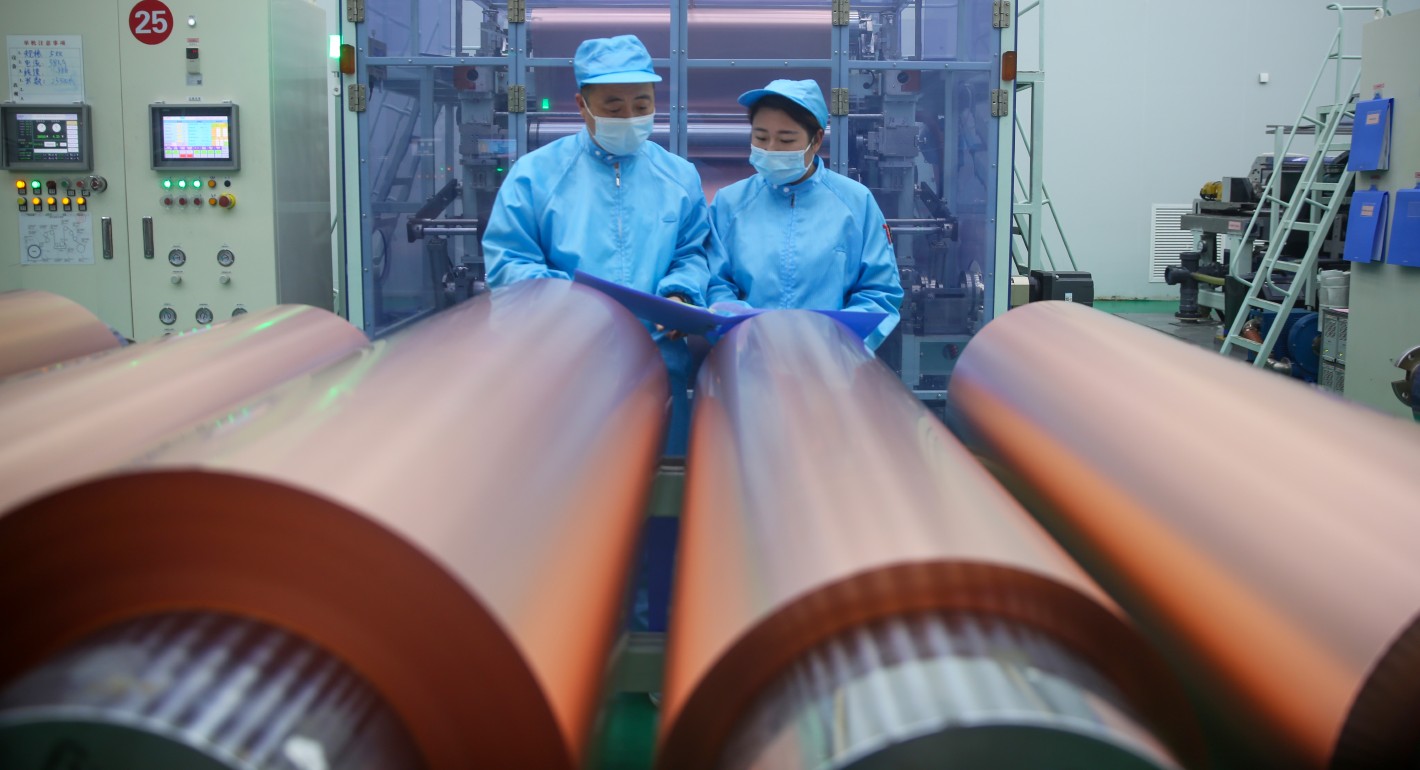
Over the past decade, China has moved from marginal player to major producer of all things batteries. The United States, Europe, and others are aiming to balance the market.
China’s latest energy plan explicitly calls for integrating data centers into the electricity system, particularly connecting them to green energy. It appears Beijing wants to use compute as a source of domestic demand to absorb renewables excess capacity.
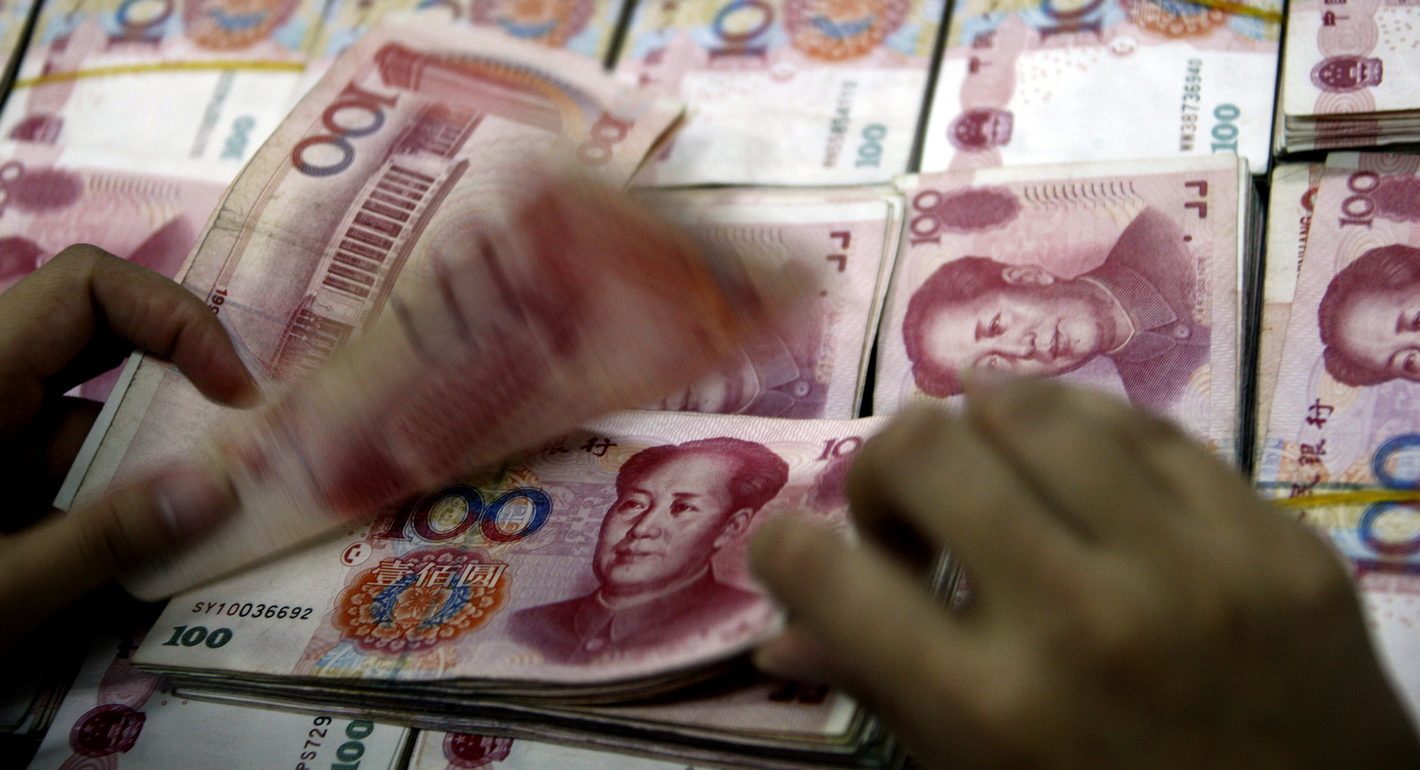
Is the Gulf moving beyond the dollar? This article examines how China is expanding the renminbi's role across Gulf markets, what that means for regional finance, and why the future of global currencies is more complex than the de-dollarization debate suggests.
The hybrid warfare landscape is evolving rapidly, leaving policymakers without clear strategies. To better inform their work in addressing emerging challenges, governments must dig deeper into the underlying dynamics at play.