

In The Media
John Judis
{
  "authors": [
    "John Judis"
  ],
  "type": "legacyinthemedia",
  "centerAffiliationAll": "",
  "centers": [
    "Carnegie Endowment for International Peace"
  ],
  "collections": [],
  "englishNewsletterAll": "",
  "nonEnglishNewsletterAll": "",
  "primaryCenter": "Carnegie Endowment for International Peace",
  "programAffiliation": "",
  "programs": [],
  "projects": [],
  "regions": [
    "North America",
    "United States"
  ],
  "topics": [
    "Political Reform"
  ]
}
REQUIRED IMAGE
Bill Buckley, who died yesterday, will, of course, be remembered as the man who was most singly responsible for the modern conservative movement.
Source: The New Republic
Bill Buckley, who died yesterday, will, of course, be remembered as the man who was most singly responsible for the modern conservative movement. Before 1955, when Buckley founded National Review, there were disparate strands of an American right--from free market anti-New Dealers to traditionalists like Russell Kirk to anti-Semitic crackpots like Gerald L. K. Smith. Through National Review, Buckley constructed a new conservatism by knitting together the traditional and free-market strands of the right with the militant anti-Communism of former Communists and Trotskyists like Whittaker Chambers and James Burnham and by casting out of the new mix the various anti-Semites and kooks. Barry Goldwater was around, too, but Goldwater's politics--set forth in a book ghosted by National Review editor Brent Bozell, Bill's brother-in-law--were inconceivable before National Review. Buckley provided the synthesis.
Buckley didn't necessarily provide the theory. He was a brilliant impresario and editor and later became an exceptional columnist and television personality. Buckley himself yearned to write what he called a "big book" on the model of Russell Kirk's The Conservative Mind--it was to be called The Revolt against the Masses--but he gave up in the early '60s and settled for the fast lane of punditry, hosting Firing Line, and later novel-writing. A conservative by political reputation and a traditionalist in his faith, he was nonetheless at home, and reached the peak of his own success, during the frenetic '60s. He was most comfortable in the role of a rebel--and as Dwight Macdonald wrote in a review of Buckley's first book, God and Man at Yale, he had much of the temperament and sensibility but none (or very little) of the political outlook of the left-wing rebel.
When I was writing his biography, William F. Buckley, Jr.: Patron Saint of the Conservatives (1988), I had trouble understanding his Catholicism, but I finally figured it out when I was watching him host Evelyn Waugh's Brideshead Revisited on public television. Buckley's Catholicism was not the docile faith of the working-class Irish or Italian. Instead, he was very much in the mold of the English Catholic, for whom religion is a fighting faith against the prevailing Anglican Church. Thus, Buckley would feel no compunction in challenging American Catholics' deeply held support for welfare capitalism or later in rebelling against Pope John XXII's Pacem in Terris.
Yet the key to Buckley is to understand that he was a rebel, but not a heretic. He fancied himself and his politics to be anti-establishment, yet he was part of the American establishment against which he rebelled. He never went so far as to be cast out, or to attempt to be cast out. He was raised in upper-class Sharon, Connecticut, went to prep school and Yale, and lived on the Upper East Side and in Stamford, Connecticut. He was a member of the Council on Foreign Relations in good standing. Politically, he occupied a space on the right similar to that occupied by socialist Michael Harrington on the left. Just as Harrington used to call for a politics that represented the left wing of the possible, Buckley tried to construct a politics that represented the right wing of the possible. In 1956, National Review endorsed Dwight Eisenhower in spite of its misgivings about his acceptance of the New Deal and his reluctance to roll back Soviet communism. Eisenhower's buttons that year read "I like Ike." National Review's editorial was titled, "I prefer Ike." Buckley also took the lessons of Goldwater's rout in 1964 to heart and backed Richard Nixon in 1968.
What was true on a political level was also true on a personal level. Many of Buckley's best friends were liberals like John Kenneth Galbraith. He got along famously with Norman Mailer, with whom he debated frequently during the 1960s. When I was writing his biography, I was always puzzled by this side of Buckley, and after I had done a draft, I hold him that I couldn't figure out how the young Buckley, who as a teenager was pretty insufferable and not well-liked, became a man of such wide-ranging and close friendships. I had gone through Buckley's papers at Yale, which trace his political career, but at that point, he gave me a stack of letters that he had written to his mother and sisters when he was in the army at Fort Benning at the end of World War II.
What I found in those letters was a clue to the mystery that is Bill Buckley. When he was at officer's training school, Buckley, who was only 18 at the time, couldn't get by on his good grades and brilliance, and found himself not only disliked, but on the verge of being flunked out of officer candidates' school. In the letters he wrote, Buckley revealed a fear and anguish about his place in the world and how people thought of him. He got his commission, but he also learned that he had to leaven his own political and intellectual convictions with a tolerance for people who didn't share them. He would sometimes condemn their views, but he would not condemn them. By the time he arrived at Yale, he was pretty much the Buckley whom we've known for the last sixty years--witty, arrogant, but always with a certain restraint, even at times a gentleness and consideration. And I think that same sense of limits and boundaries--a sense of how far he could and couldn't go--affected the way he conducted himself politically.
As a political figure, Bill Buckley ceased to be central to Republican conservatism sometime in the 1980s. He was displaced by both New Right conservatives who saw him as too willing to break bread with the Council on Foreign Relations and who conceived of conservatism as an alliance between the religious right and K Street, and also by neo-conservatives who, even after the Cold War was over, wanted to continue to fight it out against new enemies. That wasn't the conservatism of early National Review. Once the Soviet Union fell, for instance, Buckley no longer favored an embargo against Cuba. What was the point? And, finally, he was skeptical about the crusade that was the Iraq war.
Buckley, too, may have simply felt toward the new establishment of Republican conservatism the same ambivalence he felt against the old liberal establishment. As conservatives actually gained power, Buckley found himself once again standing athwart history and yelling stop. He remained a rebel to the end.
John B. Judis is a senior editor at The New Republic and a visiting scholar at the Carnegie Endowment for International Peace. His book William F. Buckley, Jr.: Patron Saint of the Conservatives (Simon & Schuster) is available in paperback.
Former Visiting Scholar
As a visiting scholar at Carnegie, Judis wrote The Folly of Empire: What George W. Bush Could Learn from Theodore Roosevelt and Woodrow Wilson.
Recent Work
John Judis
John Judis
Carnegie does not take institutional positions on public policy issues; the views represented herein are those of the author(s) and do not necessarily reflect the views of Carnegie, its staff, or its trustees.

It should address the shortcomings of previous crisis communication efforts and adapt to the demands of frontier AI.

Lucy Luo

If the Russian-speaking community in Latvia cannot articulate their interests without being seen as disloyal, they could end up embracing a pro-Kremlin agenda.

Sergejs Potapkins
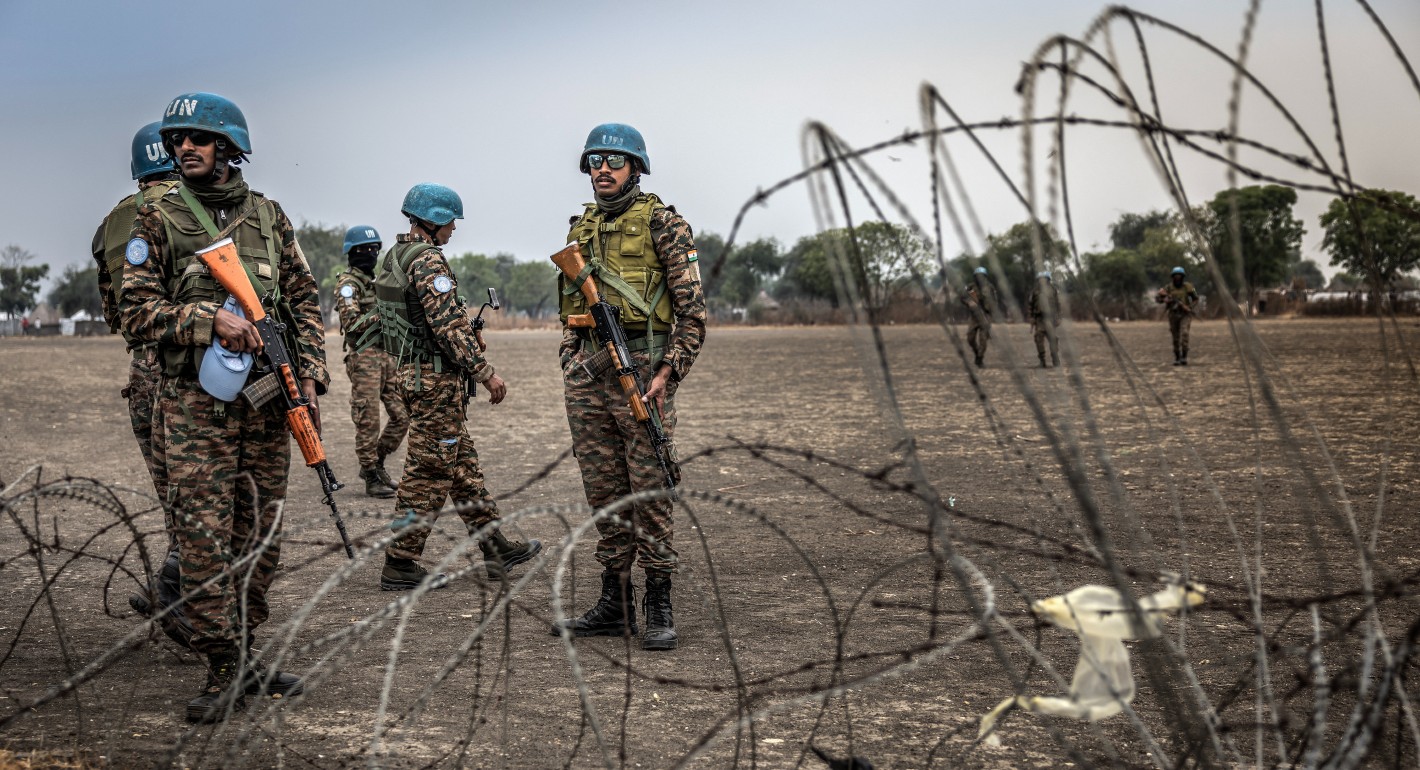
Washington’s decision to support some UN functions while letting others wither is pulling the organization apart at the seams.

Stewart Patrick, Theodore Zaritsky

While there are notable demographic, economic, and geographic divides over AI, there is also substantial alignment between Republicans and Democrats.


Ian Klaus, Mark Baldassare, Rachel George, …

Russia’s ruling party would have benefited from Putin appearing as its distant patron, but as an active frontman imposing his views on the public, he has done nothing but harm both the party’s election campaign and the ruling system overall.

Andrey Pertsev