
• Research
  • Emissary
  • About
  • Experts
Carnegie Global logoCarnegie lettermark logo
DemocracyIran
  • Donate
{
  "authors": [
    "Karim Sadjadpour"
  ],
  "type": "legacyinthemedia",
  "centerAffiliationAll": "dc",
  "centers": [
    "Carnegie Endowment for International Peace"
  ],
  "collections": [],
  "englishNewsletterAll": "menaTransitions",
  "nonEnglishNewsletterAll": "",
  "primaryCenter": "Carnegie Endowment for International Peace",
  "programAffiliation": "MEP",
  "programs": [
    "Middle East"
  ],
  "projects": [],
  "regions": [
    "Middle East",
    "Iran"
  ],
  "topics": [
    "Political Reform"
  ]
}
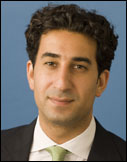
Source: Getty

In The Media

Level of Iranian Support for Ahmadinejad Uncertain

Carnegie's Karim Sadjadpour discusses the popularity of Iranian President Mahmoud Ahmadinejad ahead of the 2009 presidential elections with NPR's Mike Shuster.

Link Copied
By Karim Sadjadpour
Published on Jun 20, 2008
Program mobile hero image

Program

Middle East

The Middle East Program in Washington combines in-depth regional knowledge with incisive comparative analysis to provide deeply informed recommendations. With expertise in the Gulf, North Africa, Iran, and Israel/Palestine, we examine crosscutting themes of political, economic, and social change in both English and Arabic.

Learn More

Source: NPR's Morning Edition

Carnegie's Karim Sadjadpour discusses the popularity of Iranian President Mahmoud Ahmadinejad ahead of the 2009 presidential elections with NPR's Mike Shuster. Sadjadpour comments, "Ahmadinejad recognizes that the urban sophisticates in Tehran don't like him. He doesn't like them. And therefore he's been traveling nonstop to the provinces to appeal to people outside of Tehran for the votes. And it's much more difficult to gauge popular sentiment in Iran outside the capital."

Click here to listen to the broadcast.

About the Author

Karim Sadjadpour

Senior Fellow, Middle East Program

Karim Sadjadpour is a senior fellow at the Carnegie Endowment for International Peace, where he focuses on Iran and U.S. foreign policy toward the Middle East.

    Recent Work

  • Q&A
    What’s Keeping the Iranian Regime in Power—for Now

      Aaron David Miller, Karim Sadjadpour, Robin Wright

  • Q&A
    How Washington and Tehran Are Assessing Their Next Steps

      Aaron David Miller, David Petraeus, Karim Sadjadpour

Karim Sadjadpour
Senior Fellow, Middle East Program
Karim Sadjadpour
Political ReformMiddle EastIran

Carnegie does not take institutional positions on public policy issues; the views represented herein are those of the author(s) and do not necessarily reflect the views of Carnegie, its staff, or its trustees.

More Work from Carnegie Endowment for International Peace

  • Commentary
    Carnegie Politika
    Will Russia–Armenia Relations Improve Following Pashinyan’s Re-Election?

    For all the menacing rhetoric, the Armenian prime minister remains a leader with whom Putin is prepared to interact: not as an ally, but as a partner, albeit a problematic one.

      • Alexander Atasuntsev

      Alexander Atasuntsev

  • Commentary
    Emissary
    Washington and Tehran’s Very Dangerous Moment

    The Islamic Republic’s words and actions suggest that it has changed its approach to both diplomacy and war.

      • Mohammad Ayatollahi Tabaar

      Mohammad Ayatollahi Tabaar

  • Commentary
    Strategic Europe
    The Climate Blind Spot in Europe’s New Migration Pact

    The EU’s new migration policy is not suited to today’s realities. With climate change increasingly becoming a driver of displacement, Europe needs to rethink its deterrence-focused approach.

      • Shana Tabak headshot

      Shana Tabak

  • Commentary
    Diwan
    World Cup 2026: A Middle East and North Africa Primer

    This will be the region’s most representative tournament, amid broad changes in its footballing landscape.

      Issam Kayssi

  • Commentary
    Carnegie Politika
    Who Does Azerbaijan Want to See Win Armenia’s Elections?

    By fueling the arguments of both supporters and opponents of Armenian Prime Minister Nikol Pashinyan, Azerbaijan wants to ensure he is re-elected with a weaker mandate.

      Bashir Kitachaev

Get more news and analysis from
Carnegie Endowment for International Peace
Carnegie global logo, stacked
1779 Massachusetts Avenue NWWashington, DC, 20036-2103Phone: 202 483 7600
  • Research
  • Emissary
  • About
  • Experts
  • Donate
  • Programs
  • Events
  • Blogs
  • Podcasts
  • Contact
  • Annual Reports
  • Careers
  • Privacy
  • For Media
  • Government Resources
Get more news and analysis from
Carnegie Endowment for International Peace
© 2026 Carnegie Endowment for International Peace. All rights reserved.













