

Q&A
Suzanne Maloney, Aaron David Miller, Karim Sadjadpour
{
  "authors": [
    "Karim Sadjadpour"
  ],
  "type": "legacyinthemedia",
  "centerAffiliationAll": "dc",
  "centers": [
    "Carnegie Endowment for International Peace"
  ],
  "collections": [],
  "englishNewsletterAll": "menaTransitions",
  "nonEnglishNewsletterAll": "",
  "primaryCenter": "Carnegie Endowment for International Peace",
  "programAffiliation": "MEP",
  "programs": [
    "Middle East"
  ],
  "projects": [],
  "regions": [
    "Middle East",
    "Iran"
  ],
  "topics": [
    "Foreign Policy",
    "Nuclear Policy"
  ]
}
Source: Getty
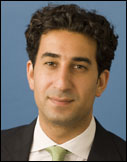
Any successful approach toward Iran must take into account that real political power resides with Ayatollah Ali Khamenei, Supreme Leader of Iran. On C-SPAN’s Book TV, Karim Sadjadpour discussed his monograph Reading Khamenei: The World View of Iran's Most Powerful Leader, and policy implications for the United States.
Source: C-SPAN2's Book TV

A central tenet of Khamanei’s strategy, Sadjadpour explained, is to position Iran as the champion of the downtrodden and dispossessed throughout the Middle East. His writings and speeches are replete with the rhetoric of “justice.”
Sadjadpour argued that Khamenei has great ambivalence about mending Iran’s relationship with the West and the U.S. in particular. Thus far, he has straddled the line between accommodation and confrontation with the West. He refuses to compromise when Iran is pressured, since he believes this projects weakness and will invite even more pressure, but he does not seek an all out confrontation. Ultimately, Sadjadpour argued, Khamenei may desire an adversarial relationship with the U.S. to sustain the regime’s legitimacy.

Senior Fellow, Middle East Program
Karim Sadjadpour is a senior fellow at the Carnegie Endowment for International Peace, where he focuses on Iran and U.S. foreign policy toward the Middle East.
Recent Work


Suzanne Maloney, Aaron David Miller, Karim Sadjadpour

Aaron David Miller, Karim Sadjadpour, Robin Wright
Carnegie does not take institutional positions on public policy issues; the views represented herein are those of the author(s) and do not necessarily reflect the views of Carnegie, its staff, or its trustees.
Why governance of rapidly evolving technology will be distributed and complex.


Stewart Patrick, Scott Singer

It should address the shortcomings of previous crisis communication efforts and adapt to the demands of frontier AI.

Lucy Luo
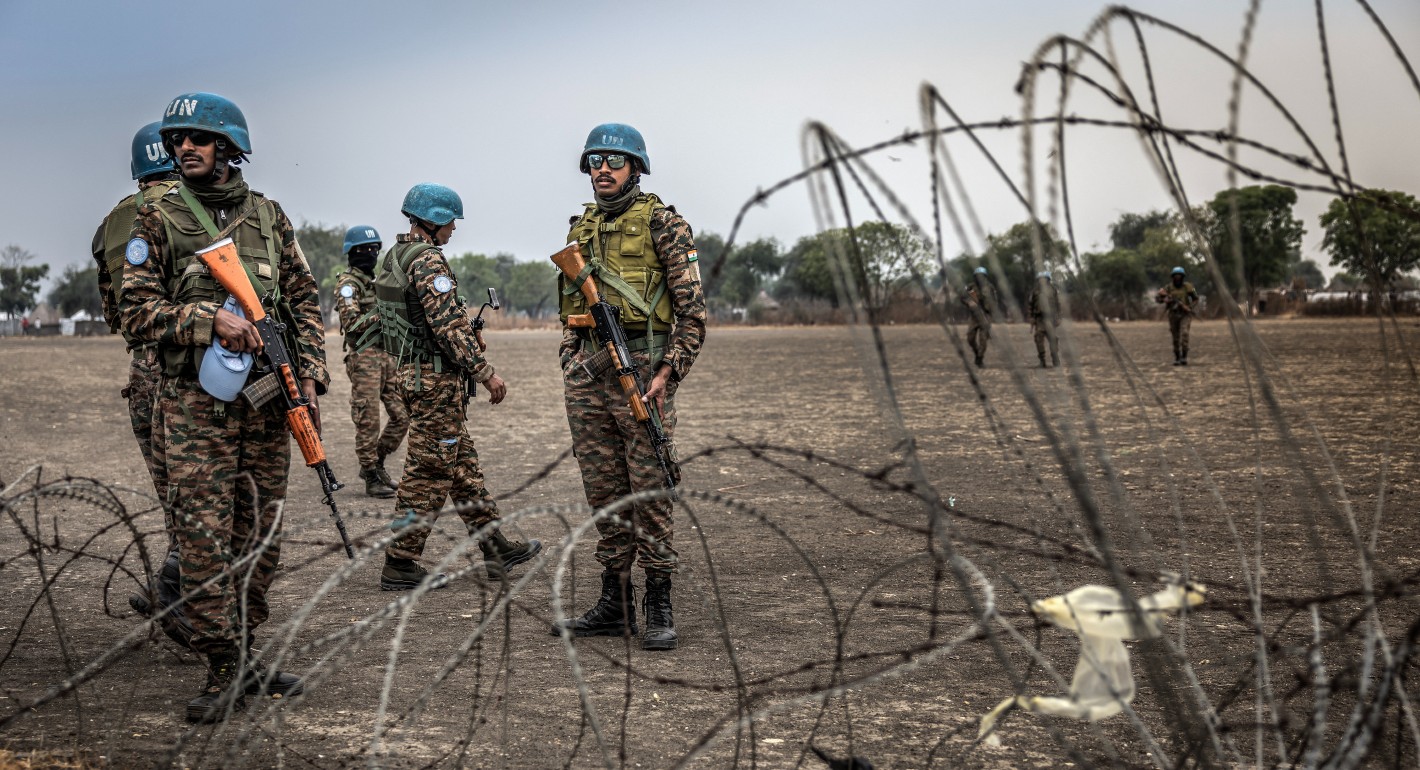
Washington’s decision to support some UN functions while letting others wither is pulling the organization apart at the seams.
Stewart Patrick, Theodore Zaritsky

Are Germany’s economic, industrial, and political struggles becoming a liability for the EU’s ability to rise to the geopolitical moment?

Rym Momtaz, ed.

China’s police training infrastructure construction projects provide benefits to recipient countries, promote China’s image as a major global security provider, and are likely to reinforce alignment between Beijing’s security priorities and those of countries in the Global South.


Cameron Waltz, Sheena Chestnut Greitens, Kim Nguyen, …