

Article
Marina Ottaway, Omar Hossino
{
  "authors": [
    "Marina Ottaway"
  ],
  "type": "legacyinthemedia",
  "centerAffiliationAll": "dc",
  "centers": [
    "Carnegie Endowment for International Peace"
  ],
  "collections": [],
  "englishNewsletterAll": "menaTransitions",
  "nonEnglishNewsletterAll": "",
  "primaryCenter": "Carnegie Endowment for International Peace",
  "programAffiliation": "MEP",
  "programs": [
    "Middle East"
  ],
  "projects": [],
  "regions": [
    "Middle East"
  ],
  "topics": [
    "Foreign Policy"
  ]
}
Source: Getty
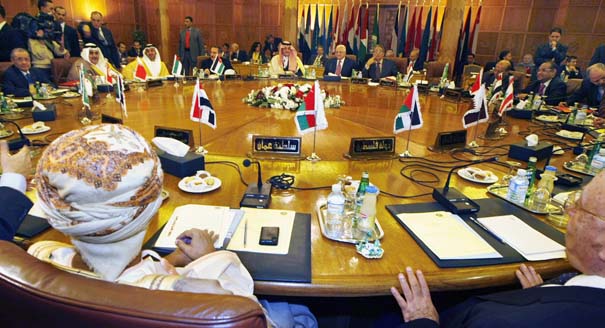
Regimes in the Middle East that have long been friendly to the United States are increasingly reluctant to follow Washington’s lead; they follow the policies they believe best protect their interests.
Source: Harvard International Review

Today the alignment of the Middle East is quite different, but not in the way the United States envisaged after the disappearance of the Soviet Union. The number of Arab governments truly antagonistic to the United States dwindled to almost none once Saddam Hussein was removed from power in early 2003 and Libya’s Muammar Qaddafi renounced the pursuit of nuclear weapons and turned to the West later that year. Even Syria and the Sudan would like to establish better ties to the United States. However, regimes that have long been friendly to the United States are increasingly reluctant to follow Washington’s lead on any issue. They are not enemies of the United States, but they are not faithful allies, either. Rather, they follow the policies they believe best protect their interests, regardless of what the United States wants.
This article originall appeared in the Harvard International Review. Click here to read the full article.
Former Senior Associate, Middle East Program
Before joining the Endowment, Ottaway carried out research in Africa and in the Middle East for many years and taught at the University of Addis Ababa, the University of Zambia, the American University in Cairo, and the University of the Witwatersrand in South Africa.
Recent Work
Marina Ottaway, Omar Hossino
Marina Ottaway
Carnegie does not take institutional positions on public policy issues; the views represented herein are those of the author(s) and do not necessarily reflect the views of Carnegie, its staff, or its trustees.
Despite the agreement’s uncertainty, it’s still a significant development in regional and nuclear policy.


Andrew Leber, Jane Darby Menton
“AI safety in parallel” is modest and pragmatic but vital.

Matt Sheehan

Trump is distracted and Ukraine wants Europe to step up. The continent’s leaders must find their voice and assert it in talks with Russia.

Alissa de Carbonnel
Unresolved tensions within the AfD may ultimately constrain the its potential as a leader among European and global populist forces.
Jeremy Cliffe

There is a deeply rooted assumption in post–Cold War American statecraft that overwhelming military and economic power translates directly into favorable political outcomes. But force alone is rarely enough. To meet the challenges of the mid-21st century, Washington needs a cultural shift toward a mindset that takes negotiation far more seriously.

Cecily Brewer