• Research
  • Emissary
  • About
  • Experts
Carnegie Global logoCarnegie lettermark logo
DemocracyIran
  • Donate
{
  "authors": [
    "Ashley J. Tellis"
  ],
  "type": "legacyinthemedia",
  "centerAffiliationAll": "dc",
  "centers": [
    "Carnegie Endowment for International Peace"
  ],
  "collections": [],
  "englishNewsletterAll": "ctw",
  "nonEnglishNewsletterAll": "",
  "primaryCenter": "Carnegie Endowment for International Peace",
  "programAffiliation": "SAP",
  "programs": [
    "South Asia"
  ],
  "projects": [],
  "regions": [
    "North America",
    "United States"
  ],
  "topics": [
    "Security",
    "Military",
    "Foreign Policy"
  ]
}
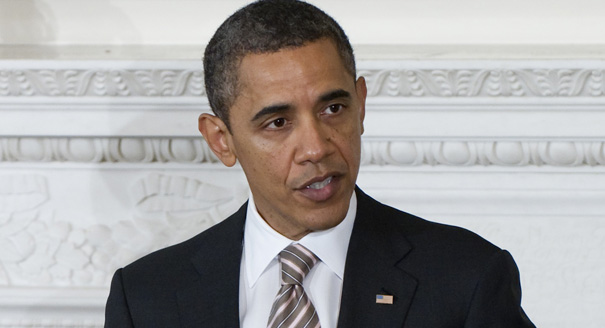
Source: Getty

In The Media

Preserving Hegemony: The Strategic Tasks Facing the United States

The principle task facing the new U.S. administration is to consolidate U.S. hegemony by reaffirming the nation’s global role, renewing its economic strength, and recovering its legitimacy.

Link Copied
By Ashley J. Tellis
Published on Apr 17, 2009
Program mobile hero image

Program

South Asia

The South Asia Program informs policy debates relating to the region’s security, economy, and political development. From strategic competition in the Indo-Pacific to India’s internal dynamics and U.S. engagement with the region, the program offers in-depth, rigorous research and analysis on South Asia’s most critical challenges.

Learn More

Source: Global Asia

Preserving Hegemony: The Strategic Tasks Facing th The US experience of hegemony in global politics is still very young. Although the United States entered the international system as a great power early in the twentieth century, its systemic impact was not felt until World War II and, soon thereafter, its power was constrained by the presence of another competitor, the Soviet Union. Only after the demise of this challenger in 1991 has the United States been liberated in the exercise of its hegemonic power but — as has become quite evident in the past two decades — this application of power, although potent in its impact when well exercised, is also beset by important limitations. In any event, the now significant, century-long, involvement of the United States in international politics as a great power tends to obscure the reality of how short its hegemonic phase has actually been thus far.

Click here for the full text.

About the Author

Ashley J. Tellis

Former Senior Fellow

Ashley J. Tellis was a senior fellow at the Carnegie Endowment for International Peace.

    Recent Work

  • Paper
    Multipolar Dreams, Bipolar Realities: India’s Great Power Future

      Ashley J. Tellis

  • Commentary
    India Sees Opportunity in Trump’s Global Turbulence. That Could Backfire.

      Ashley J. Tellis

Ashley J. Tellis
Former Senior Fellow
SecurityMilitaryForeign PolicyNorth AmericaUnited States

Carnegie does not take institutional positions on public policy issues; the views represented herein are those of the author(s) and do not necessarily reflect the views of Carnegie, its staff, or its trustees.

More Work from Carnegie Endowment for International Peace

  • Pashinyan surrounded by supporters while speaking to reporters
    Commentary
    Next Steps Toward Peace After the Armenian Elections

    It’s time to build momentum, and Ankara is the venue of the next opportune diplomatic window to do this.

      • Garo Paylan

      Alper Coşkun, Garo Paylan

  • Commentary
    Strategic Europe
    European Security Strategy: In Search of a New Ambition

    The EU is putting together a new security strategy to meet today’s myriad challenges. But for any proposal to be effective, the union needs to grapple with its identity and ambitions.

      Pierre Vimont

  • Commentary
    Reviving Kosovo-Serbia Normalization Talks

    Three years after the Ohrid Agreement, Kosovo and Serbia remain far from normalization. To revive implementation, the EU should abandon its ambiguity and act as an even-handed arbitrator.

      • +1

      Miloš Pavković, Fitim Gashi, Iliriana Gjoni, …

  • Commentary
    Emissary
    Washington and Tehran’s Very Dangerous Moment

    The Islamic Republic’s words and actions suggest that it has changed its approach to both diplomacy and war.

      • Mohammad Ayatollahi Tabaar

      Mohammad Ayatollahi Tabaar

  • Commentary
    Diwan
    Looking Past the Wall on Palestine-Israel

    Policy discussion is ignoring that the Palestinian national project is hollowed out and apartheid is a present danger.

      Nathan J. Brown

Get more news and analysis from
Carnegie Endowment for International Peace
Carnegie global logo, stacked
1779 Massachusetts Avenue NWWashington, DC, 20036-2103Phone: 202 483 7600
  • Research
  • Emissary
  • About
  • Experts
  • Donate
  • Programs
  • Events
  • Blogs
  • Podcasts
  • Contact
  • Annual Reports
  • Careers
  • Privacy
  • For Media
  • Government Resources
Get more news and analysis from
Carnegie Endowment for International Peace
© 2026 Carnegie Endowment for International Peace. All rights reserved.