• Research
  • Emissary
  • About
  • Experts
Carnegie Global logoCarnegie lettermark logo
DemocracyIran
  • Donate
{
  "authors": [],
  "type": "legacyinthemedia",
  "centerAffiliationAll": "",
  "centers": [
    "Carnegie Endowment for International Peace"
  ],
  "collections": [],
  "englishNewsletterAll": "",
  "nonEnglishNewsletterAll": "",
  "primaryCenter": "Carnegie Endowment for International Peace",
  "programAffiliation": "",
  "programs": [],
  "projects": [],
  "regions": [
    "North America",
    "United States",
    "North Africa",
    "Sudan"
  ],
  "topics": [
    "Foreign Policy"
  ]
}
Source: Getty

In The Media

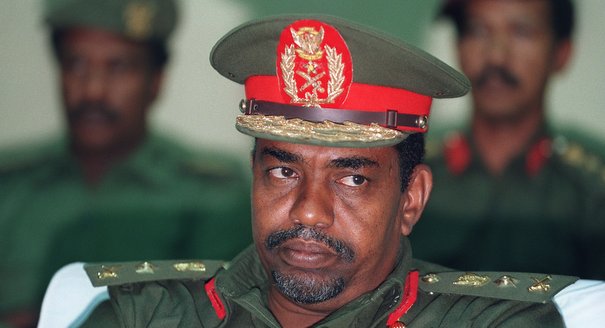
Darfur Makes Sudan's Omar al-Bashir Barack Obama's Biggest African Foe

Darfur is being pushed perilously close to the edge by the Sudanese government. President Obama's biggest test in Africa will not be pirates, but Omar al-Bashir, the first sitting president with a warrant for his arrest.

Link Copied
Published on May 26, 2009

Source: U.S. News & World Report

Darfur Makes Sudan's Omar al-Bashir Barack Obama'sPresidents don't get to choose their first foreign policy crisis. It usually chooses them. For President Clinton, it was the killing of 18 U.S. soldiers in Mogadishu. For President Bush, it came when a U.S. EP-3 military plane collided with a Chinese fighter pilot, forcing the American crew to land on the Chinese island of Hainan. Many think that President Obama's first crisis came last month in the unlikely form of Somali pirates. (Actually, pirates have been patrolling those waters longer than there have been American presidents and they will likely be there hundreds of years from now.)

While Obama may have handled the high seas showdown, his most dangerous foe in Africa isn't a rag-tag group of teenagers with AK-47s and speedboats. No, that adversary is Sudan's Omar al-Bashir, the world's first sitting president with a warrant for his arrest.

Darfur, the war-torn western region of Sudan, is being pushed perilously close to the edge by the Sudanese government. The biggest test for Obama's foreign policy in Africa will not be pirates; it will be Bashir.

Click here to read the full article.

Foreign PolicyNorth AmericaUnited StatesNorth AfricaSudan

Carnegie does not take institutional positions on public policy issues; the views represented herein are those of the author(s) and do not necessarily reflect the views of Carnegie, its staff, or its trustees.
More Work from Carnegie Endowment for International Peace

  • US President Donald Trump delivers remarks to the United Nations General Assembly at the UN headquarters in New York City on September 23, 2025.
    Paper
    Retreat, Rebel, Replace, or Reform? Making Sense of Multilateralism Under Trump 2.0

    The conventional narrative of the second Trump administration simply repudiating multilateralism is incomplete. The record to date is far more mixed and varies across issue areas and institutions.

      Gustavo Romero, Stewart Patrick

  • Commentary
    Strategic Europe
    France and Germany Need Their Own Situation Room

    The Franco-German relationship is on the rocks again. But unlike previous moments of tension, the epochal changes on the world stage require that both step up investment in their bilateral ties.

      • Rym Momtaz

      Rym Momtaz

  • Europe trade economy container supply chains
    Paper
    From Trade Dependence to Geopolitical Leverage: The EU in an Era of Weaponized Interdependence

    As geopolitical rivalry weaponizes global supply chains, the EU’s true vulnerability lies in emerging-risk imports. For these goods, suppliers are growing more concentrated, substitution more difficult, and political risk is looming.

      Sinan Ülgen

  • Photo of flames behind palm trees in a residential neighborhood in Altadena, California.
    Article
    Reimagining Disaster Response in the Age of Chaotic Austerity

    It’s the early days of a new architecture for disaster recovery. Now is the time to build a better, more adaptive funding ecosystem.

      • Sarah Labowitz
      • Photo of Katie Mears.

      Sarah Labowitz, Katie Mears

  • Pashinyan surrounded by supporters while speaking to reporters
    Commentary
    Next Steps Toward Peace After the Armenian Elections

    It’s time to build momentum, and Ankara is the venue of the next opportune diplomatic window to do this.

      • Garo Paylan

      Alper Coşkun, Garo Paylan

Get more news and analysis from
Carnegie Endowment for International Peace
Carnegie global logo, stacked
1779 Massachusetts Avenue NWWashington, DC, 20036-2103Phone: 202 483 7600
  • Research
  • Emissary
  • About
  • Experts
  • Donate
  • Programs
  • Events
  • Blogs
  • Podcasts
  • Contact
  • Annual Reports
  • Careers
  • Privacy
  • For Media
  • Government Resources
Get more news and analysis from
Carnegie Endowment for International Peace
© 2026 Carnegie Endowment for International Peace. All rights reserved.