• Research
  • Emissary
  • About
  • Experts
Carnegie Global logoCarnegie lettermark logo
DemocracyIran
  • Donate
{
  "authors": [
    "Karim Sadjadpour"
  ],
  "type": "legacyinthemedia",
  "centerAffiliationAll": "dc",
  "centers": [
    "Carnegie Endowment for International Peace"
  ],
  "collections": [],
  "englishNewsletterAll": "menaTransitions",
  "nonEnglishNewsletterAll": "",
  "primaryCenter": "Carnegie Endowment for International Peace",
  "programAffiliation": "MEP",
  "programs": [
    "Middle East"
  ],
  "projects": [],
  "regions": [
    "Middle East",
    "Iran"
  ],
  "topics": [
    "Political Reform",
    "Foreign Policy"
  ]
}
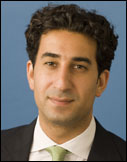
Source: Getty

In The Media

Aftermath of Iran's Presidential Elections

The surprise announcement that President Mahmoud Ahmadinejad had won outright the first round of Iran’s presidential election has been met with widespread allegations of fraud and domestic unrest.

Link Copied
By Karim Sadjadpour
Published on Jun 14, 2009
Program mobile hero image

Program

Middle East

The Middle East Program in Washington combines in-depth regional knowledge with incisive comparative analysis to provide deeply informed recommendations. With expertise in the Gulf, North Africa, Iran, and Israel/Palestine, we examine crosscutting themes of political, economic, and social change in both English and Arabic.

Learn More

Source: CSPAN's Washington Journal

The surprise announcement that President Mahmoud Ahmadinejad had won outright the first round of Iran’s presidential election has been confronted with widespread allegations of fraud within Iran and domestic unrest. Karim Sadjadpour discusses the results of the Iranian elections and the role of Supreme Leader Ayatollah Khamenei, "Presidential elections are not for the most powerful post in Iran. The most powerful post is held by the Supreme Leader Ayatollah Khamenei. That is an unelected position and Khamenei has held this position for twenty years now, so he's going to have to be the major arbiter in this situation but it's widely believed, and I think it's correctly believed, that Ayatollah Khamenei essentially selected Mahmoud Ahmadinejad as president. Ahmadinejad is a Khamenei man. So he's not exactly an objective arbitrator in this situation."

About the Author

Karim Sadjadpour

Senior Fellow, Middle East Program

Karim Sadjadpour is a senior fellow at the Carnegie Endowment for International Peace, where he focuses on Iran and U.S. foreign policy toward the Middle East.

    Recent Work

  • Q&A
    What’s Keeping the Iranian Regime in Power—for Now

      Aaron David Miller, Karim Sadjadpour, Robin Wright

  • Q&A
    How Washington and Tehran Are Assessing Their Next Steps

      Aaron David Miller, David Petraeus, Karim Sadjadpour

Karim Sadjadpour
Senior Fellow, Middle East Program
Karim Sadjadpour
Political ReformForeign PolicyMiddle EastIran

Carnegie does not take institutional positions on public policy issues; the views represented herein are those of the author(s) and do not necessarily reflect the views of Carnegie, its staff, or its trustees.

More Work from Carnegie Endowment for International Peace

  • Commentary
    Emissary
    The Iran War Is Uncovering the Weakness in U.S.-Gulf Ties

    Neither the Abraham Accords nor the presence of large U.S. bases are enough to protect Arab Gulf states.

      Marwan Muasher

  • Commentary
    Carnegie Politika
    The Afghanistan–Pakistan War Poses Awkward Questions for Russia

    Not only does the fighting jeopardize regional security, it undermines Russian attempts to promote alternatives to the Western-dominated world order.

      Ruslan Suleymanov

  • Article
    Rewiring the South Caucasus: TRIPP and the New Geopolitics of Connectivity

    The U.S.-sponsored TRIPP deal is driving the Armenia-Azerbaijan peace process forward. But foreign and domestic hurdles remain before connectivity and economic interdependence can open up the South Caucasus.

      • Areg Kochinyan

      Thomas de Waal, Areg Kochinyan, Zaur Shiriyev

  • Commentary
    Diwan
    Hezbollah’s Wartime Strategy

    The party’s objectives involve tying together the Lebanese and Iranian fronts, while surviving militarily and politically at home. 

      Mohamad Fawaz

  • Photo of Balen Shah taking a selfie with a group of Nepali adults and children.
    Article
    A New Generation Takes Power in Nepal

    The incoming government has swept Nepal’s election. The real work begins now.

      Amish Raj Mulmi

Get more news and analysis from
Carnegie Endowment for International Peace
Carnegie global logo, stacked
1779 Massachusetts Avenue NWWashington, DC, 20036-2103Phone: 202 483 7600Fax: 202 483 1840
  • Research
  • Emissary
  • About
  • Experts
  • Donate
  • Programs
  • Events
  • Blogs
  • Podcasts
  • Contact
  • Annual Reports
  • Careers
  • Privacy
  • For Media
  • Government Resources
Get more news and analysis from
Carnegie Endowment for International Peace
© 2026 Carnegie Endowment for International Peace. All rights reserved.