

Commentary
Amr Hamzawy
{
  "authors": [
    "Amr Hamzawy"
  ],
  "type": "legacyinthemedia",
  "centerAffiliationAll": "dc",
  "centers": [
    "Carnegie Endowment for International Peace",
    "Malcolm H. Kerr Carnegie Middle East Center"
  ],
  "collections": [],
  "englishNewsletterAll": "menaTransitions",
  "nonEnglishNewsletterAll": "",
  "primaryCenter": "Carnegie Endowment for International Peace",
  "programAffiliation": "MEP",
  "programs": [
    "Middle East"
  ],
  "projects": [],
  "regions": [
    "North Africa",
    "Egypt"
  ],
  "topics": [
    "Political Reform"
  ]
}
Source: Getty
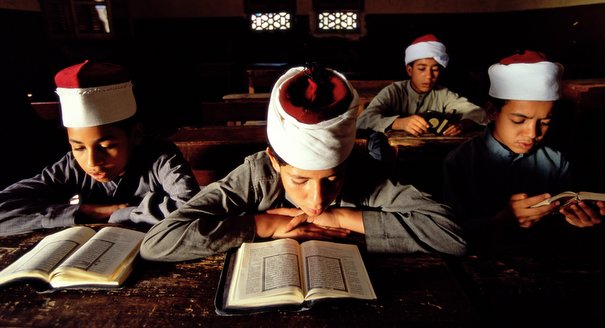
The Egyptian state uses Islamic morals to stifle freedom of expression, which prevents them from fully embracing either conservatism or liberalism.
Source: Al-Ahram Weekly

In April, the Court of Administrative Justice revoked the licence of Ibdaa (Creativity) -- a literary quarterly issued by the General Egyptian Book Organisation (GEBO) -- for having published a poem by Helmi Salem entitled "Layla Murad's Balcony" on the grounds that the poem was "offensive to the divine being". More recently, certain Islamist factions launched a campaign in the press and the courts demanding that the Ministry of Culture revoke, on grounds of apostasy, the State Award of Merit in Social Sciences granted in July to Sayed El-Qimni and Hassan Hanafi. These and similar cases cast to the fore the dangers of thrusting religion into the realms of the arts and sciences as the ultimate authority on right and wrong in activities that derive their strength and dynamism from free creativity or unimpeded rational thought.
The proponents of this trend are not restricted to certain Islamist quarters. It has been exhibited by Coptic institutions and officials against literary works, such as Youssef Zeidan's historical novel Azazil, and against such feature films as Osama Fawzi's For the Love of Cinema and Kamla Abu Zikri's One-Zero. We can thus regard this trend as a general Egyptian ailment, the circumstances and causes of which require a calm and constructive dialogue if we are to disentangle religion from the freedom of expression in the interest of promoting the greater health and safety of both. Here, I will address primarily the legal framework of the issue.
Article 47 of the Egyptian constitution states, "Freedom of opinion is guaranteed. Every individual has the right to express his opinion and to publicise it verbally or in writing or by photography or by any other means within the limits of the law. Self-criticism and constructive criticism form the guarantee for the well-being of the national structure." In addition, in accordance with Article 49, "The State shall guarantee the freedom of scientific research and literary, artistic and cultural creativity, and provide the necessary means to promote the realisation of this freedom." Unfortunately, while guarantees for the freedom of opinion and expression and for the freedom of scientific research and creativity are present in theory, several major factors impede implementation in practice.
First come two constitutional provisions: Article 2, which states that "Islam is the religion of the state and Arabic its official language" and that "the principles of Islamic law are the primary source of legislation," and Article 12, which states, "Egyptian society shall be committed to overseeing and protecting morals, ensuring the prevalence of authentic Egyptian traditions, and observing high standards of religious education, moral values and public morals." These provisions have become the mainstay for those who seek to suppress the freedom of expression and opinion on the pretext of safeguarding religion or who campaign against the promulgation of an article of legislation or a regulation that they claim violates the provisions of Islamic law or offends religious sensibilities. The suit to ban Ibdaa for publishing "Layla Murad's Balcony" rested precisely on these two articles, as does the suit currently in progress to revoke the national prizes awarded to El-Qimni and Hanafi.
Other legal impediments to the freedom of opinion and expression and to creativity and free research are to be found in several laws and governmental decrees. Prime among them are Law 102/1985 regulating the printing of Qurans and Prophetic Hadith, the Egyptian Council of State Decree of 1994 designating the powers and jurisdictions of Al-Azhar and the Ministry of Culture with regards to artistic activities and audiovisual products dealing with Islamic matters, and the minister of justice's decree of 2004 that granted Al-Azhar and the Islamic Research Council the right to monitor and order the confiscation of not only religious works but also artistic, literary and scientific works if these are deemed to violate Islamic law, principles and values. Since 2004, the list of banned novels, poems and scholastic works in the humanities and social sciences has been growing steadily longer and longer.
As though to confuse matters further, judicial rulings, especially by the Administrative Court, have been highly contradictory, at times seeming to defend freedom of opinion and expression, at other times working towards the suppression and erosion of this freedom. Two examples will suffice to illustrate. At the end of 2007, the court ruled against the banning of some 50 websites, appealing in its justification to constitutional Article 47 that states that, "freedom of expression is sacred." Yet in 2009 this same court completely reversed itself on this principle when it ruled to revoke the licence of Ibdaa for its publication of a poem. Such contradictory rulings create a legal grey area that can be exploited by the Islamic Research Council and various religious circles to push through more and more bans, expand proscriptions and compel the state to narrow the noose on creative and intellectual freedoms.
The problem with the grey area is compounded by the government's perpetual vacillation between secular and religious terms of reference. Irrespective of the regime's poor record of respect for freedom of opinion in non- religious, political, intellectual and journalistic spheres, the regime rarely departs from a track running between catering to the most socially influential religious organisations and trends and, at the other extreme, pushing for legislative reforms and public policies aiming to modernise and secularise social structures. The state that brought a modernist liberal spirit to the reform of personal status laws and the laws governing women and children, that amended the first article of the constitution to emphasise the concept of equal citizenship for all, and whose Ministry of Culture had the courage to bestow the State Award of Merit on El-Qimni and Hanafi is the selfsame state that refuses to allow any discussion of the status of Islamic law in the national constitution, that has given Al-Azhar a constantly expanding power to prohibit and ban intellectual and artistic products, and whose appointed chief of GEBO scrambled to withdraw all the copies of the Ibdaa edition containing "Layla Murad's Balcony" from circulation for fear of incurring the wrath of the religious establishment.
Without a doubt the state's vacillation stems from its lack of a national enlightenment project and its failure to systematically oversee the formulation of a religious discourse that supports enlightened values, abides by the secularist frame of reference for politics, and prevents religion from being turned into an instrument for suppressing freedom of opinion and expression in the arts, literature and scientific enquiry.

Director, Middle East Program
Amr Hamzawy is a senior fellow and the director of the Carnegie Middle East Program. His research and writings focus on Egypt’s and other middle powers’ involvement in regional security in the Middle East, particularly through collective diplomacy and multilateral conflict resolution
Recent Work
Amr Hamzawy
Amr Hamzawy, Kathryn Selfe
Carnegie does not take institutional positions on public policy issues; the views represented herein are those of the author(s) and do not necessarily reflect the views of Carnegie, its staff, or its trustees.

In the discussions made possible by the State Duma election campaign, one question is being asked more and more loudly. “What next?”

Andrey Pertsev
Most migrants may have left Ceuta, but the effects may linger.


Alejandro Martin Rodriguez, Sarah Yerkes
Saied’s main accomplishment has been to destroy a decade’s worth of democratic progress.
Sarah Yerkes
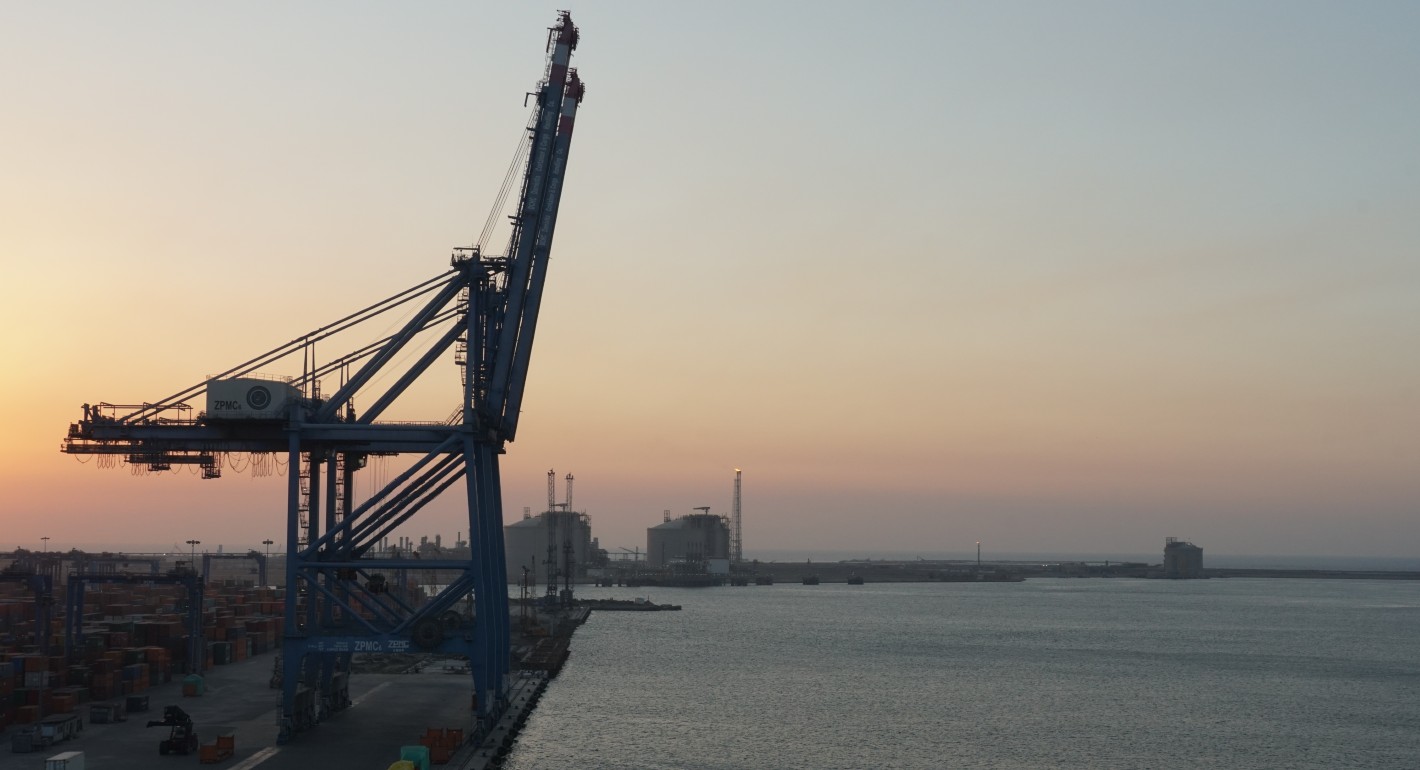
The targeting of Damietta Port appears to be more than a mere security message.
Amr Hamzawy
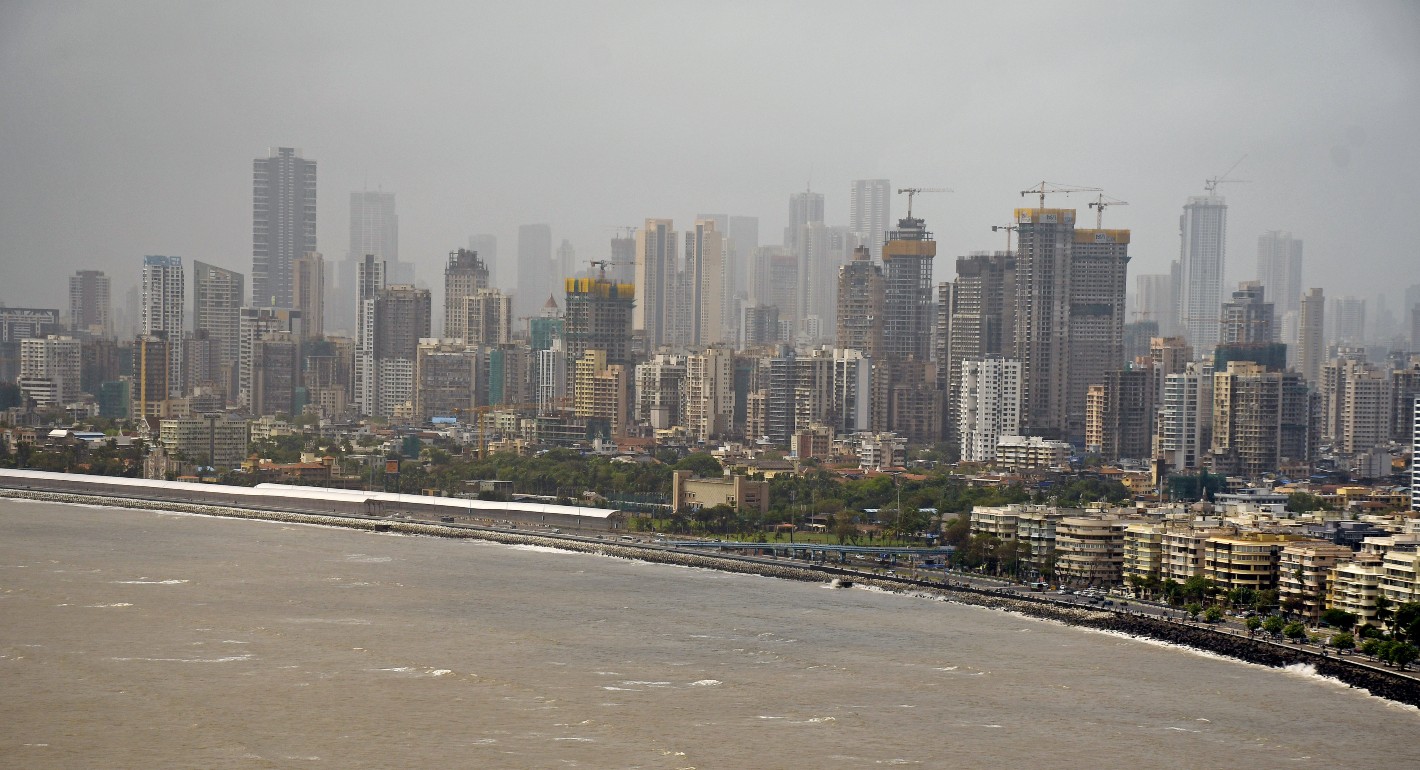
As India undergoes a demographic transition, its cities will be its economic powerhouse—but only if it accurately captures city growth and empowers cities to support their citizens.
Apoorva Jadhav