Democracy In Egypt: Necessary Ingredient in a U.S.-Egyptian Partnership
A wise U.S. policy towards Egypt would simultaneously seek stability and promote democracy through cooperative measures that build partnerships with citizens abroad, not just with their governments.
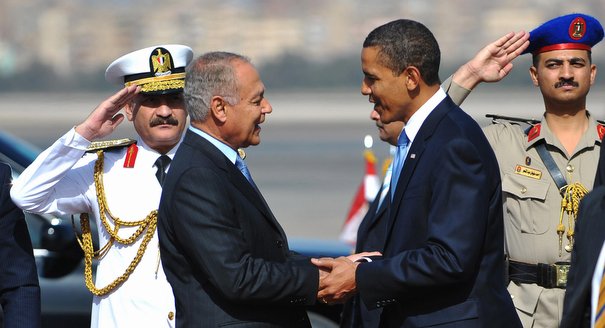
Democracy In Egypt: Necessary Ingredient in a U.S. Today, Egyptian President Hosni Mubarak arrives in Washington for his first visit since 2004, with a crowded agenda. Egypt is America’s closest Arab ally, a key strategic support for U.S. military operations in the Middle East and a central player in Arab-Israeli peace efforts. With a strong central government, a large and growing population, and cultural reach across the Arab world, Egypt is looked to by many in Washington (and beyond) as a central pillar for regional stability. But is that stability at risk?
Egypt today is a crucible for challenges facing many Arab societies: one-fifth of its people lives in poverty, and is bulging youth cohort is largely un- or under-employed. Many Egyptians are frustrated with their country’s stagnation and underdevelopment, and resentful of both American policy and their government’s alliance with America. Despite some efforts at political and economic reforms, Egypt’s record on basic rights and freedoms has slipped since 2005. Even President Mubarak, in a June op-ed, noted that Egyptian reform “has a way to go in fulfilling our aspirations.”
Hosni Mubarak has been a key reason for Egypt’s long stability. Taking the reins in the turmoil after Sadat’s 1981 assassination, Mubarak placed the country under a state of emergency and, with shrewd politicking, brute force, and a bit of luck, beat back the radical Islamists inside Egypt and navigated the country back from the regional isolation it endured after the Camp David Accords. But the 81-year-old Mubarak has made no clear plans for anyone to replace him: the vice-presidency is vacant, and his son Gamal, after a swift rise through the ruling party, is widely seen as his likely successor. In the meantime, an atmosphere of uncertainty that pervades Cairo, players jockey for position, and key policy questions remain captive to domestic maneuvering. As economic and demographic pressures build in Egypt’s population, this is an unstable brew indeed.
For the United States, Egypt embodies the central dilemmas Washington faces in trying to promote human rights and democracy in the wake of Bush’s Freedom Agenda. Bush’s bombastic rhetoric alienated the Egyptian president, but produced some small gains in political freedom in Egypt that were quickly reversed when Bush’s pressure on democracy let up in 2006. Egypt’s president, while formally elected through a competitive process, imprisoned his most recent opponent for three years. His regime continues to arrest and torture journalists, bloggers, and others who challenge government authority. Egypt’s human rights failings don’t stop at its own borders: Mubarak has been a prime sponsor of Sudan’s Omar al-Bashir, and his diplomats have been among those subverting the UN Human Rights Council, which Obama now seeks to rehabilitate.
Some argue that short-term exigencies (as well as a bitter Bush legacy) should militate against any effort by President Obama to press Mubarak on political reform when he visits the White House. Harping on the issue, some warn, will goad Mubarak into limiting his foreign policy cooperation with Washington at a time when regional challenges loom large. Others fear those who might succeed Mubarak should democracy emerge: the largest opposition in the country are Islamists of dubious democratic credentials, resolutely opposed to American policy preferences in the Middle East. These two concerns ultimately doomed Bush’s democracy push in the Middle East; will they prevent Obama from speaking up at all?
Fortunately, there is not a zero-sum tradeoff between promoting democracy and protecting stability in Egypt. Indeed, a wise policy would pursue both goals simultaneously, through cooperative measures.
First, the United States should pursue a wide-ranging strategic dialogue with Egypt to place military cooperation, foreign assistance, trade, and other aspects of bilateral relations into the framework of a shared agenda for the future. This agenda should include discussion of human rights and political freedoms, as well as discussion of how to ensure a democratic transition when Mubarak eventually steps down from the presidency – perhaps by the elections in 2011.
If the United States and Egypt can agree on shared goals for reform, Washington should consider increasing its foreign assistance to Egypt to facilitate progress. U.S. economic aid to Egypt has been dropping for eleven straight years, although Egypt’s 80 million people still lack adequate clean water, health care, and education. Increased aid that funds development alongside improved governance will vastly increase the “bang for the buck” of American aid, improve Egyptian lives, and increase goodwill. But to achieve these goals, any increase in aid must be contingent on benchmarks for political reform, and a portion of the aid must be set aside for project supporting good governance. A wealth of evidence now demonstrates that transparent and accountable governance are crucial to progress in development.
Despite the controversy over conditioning aid to Egypt, there is precedent: in 2004, the two nations signed a Memorandum of Understanding on economic reforms Egypt would undertake, with U.S. help – and Congress wrote the reform requirements into law. The Egyptian government already accepts U.S. support for programs to educate parliamentary staff, to make courts more efficient, to strengthen local governments and to improve local control over public education. Such projects will not alone transform Egypt into a democracy. But these projects highlight the Egyptian government’s willingness to engage and accept U.S. help to advance internal change.
In addition to government-to-government aid, however, the U.S. government must continue to fund independent civil society groups in Egypt, even those which have been unable to win formal legal recognition under Egypt’s restrictive law on associations. This type of funding, while small in scale, has raised the ire of the Egyptian government in recent years. But independent funding to civil society strengthens the capacity of ordinary Egyptians to organize and raise their own legitimate demands on their government, reducing the risk that a pro-democracy agenda will be seen as an external imposition. More, funding civic groups is key to the Obama Administration’s stated assistance goals: American aid is meant to build partnerships with citizens abroad, not just with their governments. In this case, it is crucial that we continue to put our money where our mouth is.
This piece was originally published on the Brookings Institution's website on August 17, 2009
Michele Dunne was a nonresident scholar in Carnegie’s Middle East Program, where her research focuses on political and economic change in Arab countries, particularly Egypt, as well as U.S. policy in the Middle East.
Tamara Cofman Wittes
Tamara Cofman Wittes is a senior fellow in the Center for Middle East Policy at Brookings, where she focuses on U.S. policy in the Middle East.
Carnegie does not take institutional positions on public policy issues; the views represented herein are those of the author(s) and do not necessarily reflect the views of Carnegie, its staff, or its trustees.
More Work from Carnegie Endowment for International Peace
China’s political future will be shaped between now and next October. As the Communist Party enters its intense “campaign season” to prepare for a major political transition in 2027, reading Beijing's actions and responses may become more difficult as domestic politics weigh on its behavior more than usual.
The EU can impose sanctions but struggles to enforce them without the United States. With Washington increasingly disinterested in backing European interests, the bloc must now fend for itself.
Global and rising powers will need to engage with Africa’s priorities and agency in order to secure the continent’s increasingly attractive partnerships.