

Commentary
Amr Hamzawy
{
  "authors": [
    "Amr Hamzawy"
  ],
  "type": "legacyinthemedia",
  "centerAffiliationAll": "dc",
  "centers": [
    "Carnegie Endowment for International Peace"
  ],
  "collections": [],
  "englishNewsletterAll": "menaTransitions",
  "nonEnglishNewsletterAll": "",
  "primaryCenter": "Carnegie Endowment for International Peace",
  "programAffiliation": "MEP",
  "programs": [
    "Middle East"
  ],
  "projects": [],
  "regions": [
    "North Africa",
    "Egypt"
  ],
  "topics": [
    "Political Reform"
  ]
}
Source: Getty
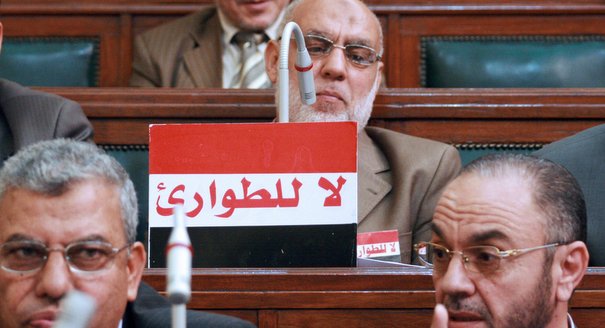
The Egyptian public sphere is filled with ineffective disputes and debates that provide more noise than substance. This stagnant public sphere is the result not only of the policies of the Egyptian government, but also the weaknesses of non-governmental actors and Egypt’s non-pluralistic culture.
Source: Al Shourouk

The public sphere is one of the primary spaces where a society can come to a consensus around its basic priorities – what political scientists define as the ‘public good’ – and where the majority approves of programs designed to implement those basic priorities. Ideally, such priorities include the existence of a democratic administration that, on the one hand, defines the boundaries between the state, society and the citizen and, on the other hand, maintains a balanced distribution of power between different societal forces so all can participate in the decision-making process.
The public sphere does not exist only within the confines of a pluralistic democracy. Totalitarian and authoritarian regimes regularly instigate public debate over controversial issues, using the media and intellectual forums. Most commonly, these public debates are maneuvered by the ruling elite to provide an outlet for the society – even if sometimes an imaginary outlet – to participate in defining the ‘public good.’
In Egypt, the semi-liberal, semi-plural, limited political system has created an extremely flawed public space. Since the 1970s, Egypt has witnessed the rise of a free press, diversified media and debate forums with different ideological and political positions. These on-going debates over the priorities of Egyptian society have not, however, materialized into any form of consensus.
There are several reasons for this. The first is that the ruling elite regards the public sphere as a place where criticism can be voiced but not listened to; designing policy and decision-making will remain in the hands of the ruling elite, regardless of the opinions expressed in the public sphere. Second, the non-governmental actors, be they parties, civil organizations, or intellectuals, are incapable of reaching any common consensus or of developing a collective agenda for the public good.
Non-governmental actors, instead of engaging in constructive dialogue, prefer to indulge in wordplay and accusations. Rather than determining a shared agenda, they dispute the connotations of words: is secularism blasphemy, or atheism, or an emphasis on the civil facet of politics? Important questions, such as the nature of democratic reform or the role of religion in society, are framed not as debates but disputes, public exchanges of accusations that are incapable of leading to a real consensus.
A third issue that prevents the Egyptian public sphere from being a source of societal strength is that of transparency. The Egyptian public sphere lacks transparency among both the governmental and non-governmental actors. As state institutions have already been subject to strong criticism and accusations, I will focus my attention on non-governmental organizations (NGOs).
In reality, there is little reason for optimism about the state of NGOs. Although some play a vital role in promoting critical issues such as human rights, the empowerment of women, and educational reform, most NGOs in Egypt lack internal transparency.
I do not come to this conclusion lightly. I have found that very few Egyptian NGOs make their annual budget public. In discussions with activists, I investigated the current mechanisms for assigning administrative and executive board members, as well as issues of internal promotion. The practices of the NGOs mirrored those of the government; in both, the logic of personalization – hiring and promoting those in a shared family or social group – dominates. The concepts of responsibility, accountability, and merit were remarkably absent, as was a clear distinction between the private interest and the public position. This is not the case in Europe, where NGOs are known for their ardent searches for non-authoritarian decision-making mechanisms. Some even lack a classical bureaucratic body altogether, giving regular members most of the privileges typically reserved for the executives. In contrast, Egyptian organizations are highly authoritarian, with the director as central. The director will generally remain in that position until nature calls or, in very rare cases, until removed due to a massive corruption scandal.
The elitist nature of Egyptian NGOs and their structural weaknesses in building channels of communications gives a pessimistic impression of actors with highly marginal social roles. Unfortunately, a great deal of the criticisms and accusations aimed toward the state and its institutions over its lack of democratic credentials or its patterns of communications with society and Egyptian citizens also apply to NGOs. In this context, it is only natural for citizens to lose faith in the public sphere altogether, thus making governmental and non-governmental actors alike into figures of power in a society that endorses injustice. The Egyptian public sphere becomes devoid of the morals and higher values that should be guiding its discussions. Instead, it is a vain realm dedicated to officials and non-officials who discuss the importance of transparency, anti-corruption and respect of human rights but do not practice what they preach.
Another fourth factor contributing to the deformation of the Egyptian public sphere is the absence of a culture of pluralism. What I mean by pluralism here is not the mere acknowledgement of the existence of other opinions but rather the belief in the importance of diverse perspectives toward identifying and achieving the public good. A true culture of pluralism is based around the idea that no actor can entirely and indefinitely dominate the conversation and that the public good itself is only defined in the context of on-going dialogues between all societal actors.
The situation in Egypt is the opposite of a culture of pluralism. Its state institutions are primarily concerned with imposing and passing a social, economic, and political agenda that it sets itself, disregarding any input that does not suit it. Other forces, opposition parties and NGOs, provide a background to the state’s dominance, either by engaging in empty and fruitless ideological disputes or endlessly criticizing the state’s agenda (the current dispute over presidential succession is one example of this). This has marginalized central issues worthy of concern and debate, such as the average citizen’s living conditions, the continuous deterioration of the public health sector, the state of education, social security, and others.
The result of these distortions is loud and ineffective debates in a public sphere incapable of yielding any real societal consensus and notorious for its stagnant stances and repetitive slogans.

Director, Middle East Program
Amr Hamzawy is a senior fellow and the director of the Carnegie Middle East Program. His research and writings focus on Egypt’s and other middle powers’ involvement in regional security in the Middle East, particularly through collective diplomacy and multilateral conflict resolution
Recent Work
Amr Hamzawy
Amr Hamzawy
Carnegie does not take institutional positions on public policy issues; the views represented herein are those of the author(s) and do not necessarily reflect the views of Carnegie, its staff, or its trustees.
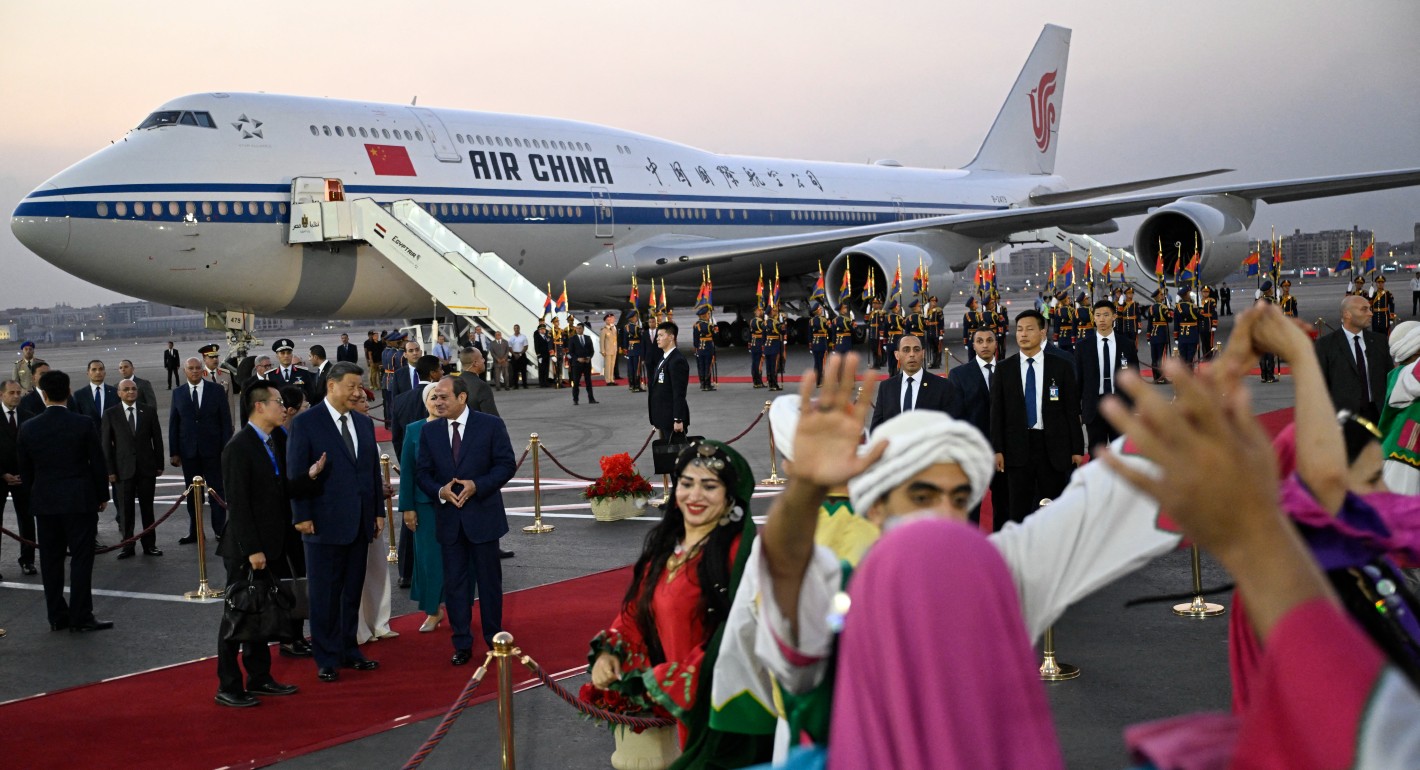
Amid celebrations of bilateral ties was a deeper focus on stability in the Middle East.
Amr Hamzawy
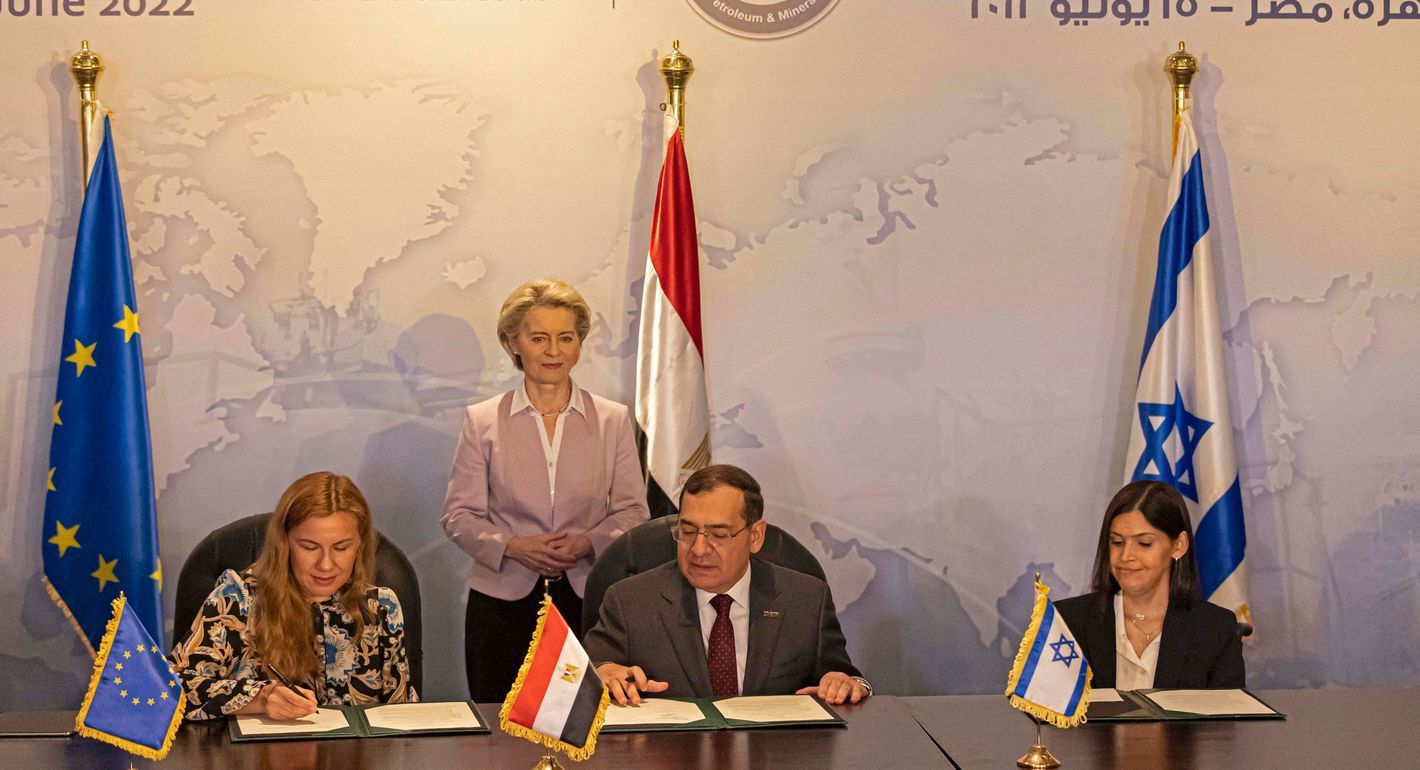
Can economic ties help contain conflict between Egypt and Israel, or do they simply postpone confrontation? Drawing on the German-Russian experience, the article examines how the gas deal creates mutual dependence, keeps channels of cooperation open, and raises the cost of conflict, without necessarily delivering lasting peace.
Nourhan Hefzy

The greater threat to Zelensky comes not from Fedorov alone, but from the convergence between the former defense minister’s political campaign and the anti-corruption investigations moving ever closer to the presidential administration.

Balázs Jarábik

With his public call for new elections in Ukraine, ex-defense minister Mykhailo Fedorov has opened Pandora’s box.

Konstantin Skorkin

In the discussions made possible by the State Duma election campaign, one question is being asked more and more loudly. “What next?”

Andrey Pertsev