

Paper
George Perkovich
{
  "authors": [
    "George Perkovich"
  ],
  "type": "legacyinthemedia",
  "centerAffiliationAll": "dc",
  "centers": [
    "Carnegie Endowment for International Peace"
  ],
  "collections": [],
  "englishNewsletterAll": "ctw",
  "nonEnglishNewsletterAll": "",
  "primaryCenter": "Carnegie Endowment for International Peace",
  "programAffiliation": "NPP",
  "programs": [
    "Nuclear Policy"
  ],
  "projects": [],
  "regions": [
    "Middle East",
    "Iran"
  ],
  "topics": [
    "Nuclear Policy",
    "Nuclear Energy"
  ]
}
Source: Getty
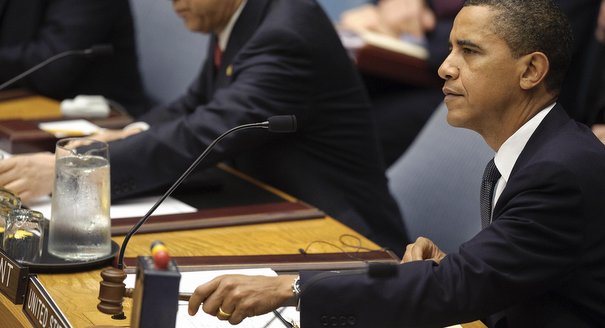
The UN Security Council should better define what constitutes peaceful nuclear activities to ensure that Iran cannot cross the line and covertly pursue nuclear weapons projects.
Source: New York Times

The leaders gave Iran gave two months to comply with international demands or face increased sanctions. Prime Minister Gordon Brown of Britain said the international community “has no choice today but to draw a line in the sand.” Iran’s president, Mahmoud Ahmadinejad, denied that the plant was a secret.
What kinds of sanctions would work in this situation? What strategies might be deployed against Iran now?
Define and Isolate
Iranian leaders insist they do not want nuclear weapons. That is good. The United States and others should not assert otherwise. Rather, the focus should be on defining what are peaceful nuclear activities, which are all that Iran says it wants to pursue, and what are military nuclear activities.
Iran acknowledges it has no right to do the latter so we should cooperate with Iran in peaceful nuclear activities. For example, we could offer to help it build a small new reactor to produce medical isotopes without using highly enriched uranium, once Iran has answered all the International Atomic Energy Agency’s questions and restored international confidence.
At the same time we should define with Russia, China and other Security Council members a list of nuclear-related activities that have no non-military purposes. These activities would, in effect, define weaponization and mark the firewall between peaceful nuclear energy and nuclear weapons. If Iran, despite its pledges, undertook one of these specified weaponization-related activities, Russia, China and other Security Council members would be committed to the strongest possible sanctions.
Defining the line between peaceful and military nuclear programs would apply to all countries. However, some activities — like uranium enrichment — can be done for peaceful or military purposes. To give confidence that they are peaceful, states that want to undertake those activities would have to adopt reporting and transparency requirements at least as robust as the I.A.E.A. additional protocol.
U.N. Security Council members should clarify that cat-and-mouse games like Iran is playing with the agency are not consistent with purely peaceful nuclear programs, especially if the activity in question has inherent military applications.
What deters Iran from going too far is isolation — not only from the West, but from the East, North and South. Such isolation would strengthen the breadth and depth of sanctions to come. As important, it would further delegitimize the rulers who put the country in this embarrassing situation. Iranian nationalism is now wedded to resistance against anyone forcing it to abandon a peaceful nuclear program.
But if Iran’s leaders have been caught lying about their program, and will not make an accommodation to end their isolation by foregoing military nuclear activities, frustration with that leadership will mount.

Japan Chair for a World Without Nuclear Weapons, Senior Fellow
George Perkovich is the Japan Chair for a World Without Nuclear Weapons and a senior fellow in the Carnegie Endowment for International Peace’s Nuclear Policy Program. He works primarily on nuclear deterrence, nonproliferation, and disarmament issues.
Recent Work
George Perkovich
George Perkovich
Carnegie does not take institutional positions on public policy issues; the views represented herein are those of the author(s) and do not necessarily reflect the views of Carnegie, its staff, or its trustees.

Understanding the climatic pain points is necessary for policymakers hoping to minimize the war’s negative environmental consequences.



Alejandro Martin Rodriguez, Joy Arkeh, Sarah Yerkes

Huawei pushed hard to enter the Egyptian data centers market, until the Americans made a better offer.

Angie Omar

The books, podcasts, and films that explain the world it made.

Andrew Leber
Congress should ask tough questions about the agreement’s more unique features and whether they advance U.S. interests or compromise them.

Jane Darby Menton
Amid celebrations of bilateral ties was a deeper focus on stability in the Middle East.

Amr Hamzawy