

In The Media
Minxin Pei
{
  "authors": [
    "Minxin Pei"
  ],
  "type": "legacyinthemedia",
  "centerAffiliationAll": "dc",
  "centers": [
    "Carnegie Endowment for International Peace"
  ],
  "collections": [],
  "englishNewsletterAll": "asia",
  "nonEnglishNewsletterAll": "",
  "primaryCenter": "Carnegie Endowment for International Peace",
  "programAffiliation": "AP",
  "programs": [
    "Asia"
  ],
  "projects": [],
  "regions": [
    "East Asia",
    "China"
  ],
  "topics": [
    "Political Reform"
  ]
}
Source: Getty
While the Chinese Communist Party has succeeded in erasing dark chapters of its history from the minds of many Chinese, it cannot expect to gain true international respect until it admits its historical failings.
Source: Financial Times

For example, under the megalomaniacal rule of Mao Zedong, the party purged more than 500,000 intellectuals and professionals in the Anti-Rightist Campaign of 1957. Mao’s Great Leap Forward, an ill-conceived scheme to vault China into the industrialised world in 1958, led to the worst famine in world history, in which about 36m people starved to death. The Cultural Revolution (1966-1976) brought China to the brink of civil war, destroyed millions of lives and left Chinese society completely traumatised.
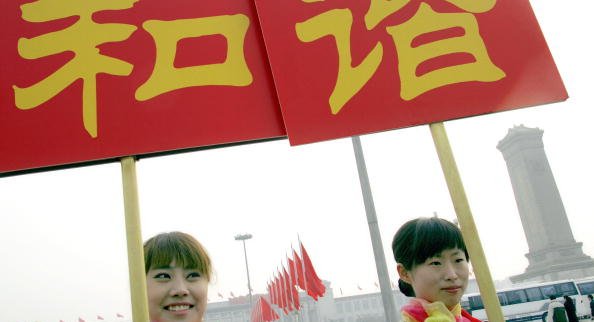
Of course, Chinese leaders who reviewed a meticulously orchestrated military parade atop Tiananmen on October 1 would rather the world not pay attention to the dark chapters in its recent history. The last time China was in the global spotlight, the opening ceremonies of the Beijing Olympics in August 2008, the world was treated to a spectacular show that celebrated China’s historical contribution to civilisation but airbrushed out the Communist party’s worst excesses.
The party understands very well how important it is to present a one-sided version of its own history. Dwelling on its past failings will raise disturbing questions about its legitimacy and lead to calls for accountability. That is why most of the books banned in China today are works on the party’s history and, in particular, the first three decades of the People’s Republic. For example, Mubei (Tombstone), an investigative history on the Great Leap famine by a Chinese journalist, is banned in mainland China even though it was voted one of the best books published in Hong Kong in 2008.
Sadly, the party’s systematic efforts to whitewash its history seem to be working. The younger generations in China have little knowledge of its unpleasant past. Few know anything about the Anti-Rightist Campaign or the Great Leap famine. At the same time, today’s Chinese youths, many of them fiercely nationalistic, have unquestioningly bought into officially concocted historical myths. Most do not know, for example, that the North Koreans started the Korean war (because official Chinese history continues to claim that the US and South Korea initiated the war). Nor are they aware that the Nationalist forces did most of the fighting during the war with Japan (because official history insists that the Communist forces defeated the Japanese).
The party’s suppression of historical memory carries a huge cost. Beijing cannot expect to gain genuine international respect unless its leaders confront history and achieve political reconciliation with their people, many of them victims of the party’s failures during the Maoist era. Without admitting their historical failings, Chinese leaders will sound hypocritical when they lecture other countries, especially Japan, on history. By defending its “Big Lie” on history, the party may be fuelling xenophobic and self-destructive ultra-nationalism that provides a short-term boost in legitimacy but limits its policy options on key issues, such as the ethnic conflict in Tibet and Xinjiang (the official histories of which are perhaps among the most distorted). A China deeply integrated into the world economy cannot afford to flirt with lie-fed nationalism.
For China, it is not too late to set the historical record straight. For all its faults, the party has come a long way from the darkest days of Maoist rule. Its accomplishments in promoting economic growth and restoring order since the end of the Cultural Revolution have earned it enough political capital with the Chinese people, who are likely to be more forgiving if the party abandons the “Big Lie” and starts telling the truth about itself.
Originally published in the Financial Times, October 1, 2009.
Former Adjunct Senior Associate, Asia Program
Pei is Tom and Margot Pritzker ‘72 Professor of Government and the director of the Keck Center for International and Strategic Studies at Claremont McKenna College.
Recent Work
Minxin Pei
Minxin Pei
Carnegie does not take institutional positions on public policy issues; the views represented herein are those of the author(s) and do not necessarily reflect the views of Carnegie, its staff, or its trustees.
The real test may come after the leaders leave the room.



Sheena Chestnut Greitens, Oriana Skylar Mastro, Yukon Huang, …

The European far right might fail to steer EU policy in the direction Russia wants, but they will create enough chaos inside Europe to benefit the Kremlin.

Dimitar Bechev

The nuclear relationship between China and the United States is increasingly shaped by widening perception gaps rather than deliberate strategic design.

Tong Zhao

Why governance of rapidly evolving technology will be distributed and complex.


Stewart Patrick, Scott Singer

It should address the shortcomings of previous crisis communication efforts and adapt to the demands of frontier AI.

Lucy Luo