
• Research
  • Emissary
  • About
  • Experts
Carnegie Global logoCarnegie lettermark logo
DemocracyIran
  • Donate
{
  "authors": [
    "Ashley J. Tellis"
  ],
  "type": "legacyinthemedia",
  "centerAffiliationAll": "dc",
  "centers": [
    "Carnegie Endowment for International Peace"
  ],
  "collections": [],
  "englishNewsletterAll": "ctw",
  "nonEnglishNewsletterAll": "",
  "primaryCenter": "Carnegie Endowment for International Peace",
  "programAffiliation": "SAP",
  "programs": [
    "South Asia"
  ],
  "projects": [],
  "regions": [
    "South Asia",
    "India",
    "Pakistan",
    "East Asia",
    "China"
  ],
  "topics": [
    "Economy",
    "Security",
    "Military",
    "Foreign Policy",
    "Nuclear Policy"
  ]
}
Source: Getty

In The Media

The Asia Questions

The global economic crisis, the growing instability in Pakistan, and the Afghanistan War present several challenges to U.S. foreign policy in Asia.

Link Copied
By Ashley J. Tellis
Published on Nov 16, 2009
Program mobile hero image

Program

South Asia

The South Asia Program informs policy debates relating to the region’s security, economy, and political development. From strategic competition in the Indo-Pacific to India’s internal dynamics and U.S. engagement with the region, the program offers in-depth, rigorous research and analysis on South Asia’s most critical challenges.

Learn More

Source: KUOW Puget Sound Public Radio

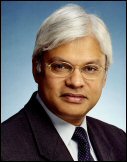
On October 12, President Barack Obama traveled to Asia to express U.S. policy priorities in the region. The global economic crisis, the growing instability in Pakistan, and the Afghanistan War all present challenges to U.S. foreign policy in Asia. Carnegie’s Ashley Tellis addresses China’s stimulus package, the future of Sino-U.S. relations, nuclear nonproliferation in Pakistan, and a better strategy for Afghanistan.

About the Author

Ashley J. Tellis

Former Senior Fellow

Ashley J. Tellis was a senior fellow at the Carnegie Endowment for International Peace.

    Recent Work

  • Paper
    Multipolar Dreams, Bipolar Realities: India’s Great Power Future

      Ashley J. Tellis

  • Commentary
    India Sees Opportunity in Trump’s Global Turbulence. That Could Backfire.

      Ashley J. Tellis

Ashley J. Tellis
Former Senior Fellow
EconomySecurityMilitaryForeign PolicyNuclear PolicySouth AsiaIndiaPakistanEast AsiaChina

Carnegie does not take institutional positions on public policy issues; the views represented herein are those of the author(s) and do not necessarily reflect the views of Carnegie, its staff, or its trustees.
More Work from Carnegie Endowment for International Peace

  • .S. Secretary of Energy Chris Wright speaks with Venezuela's interim president, Delcy Rodríguez during a press conference regarding the oil agreement reached by the US government and Venezuela on September 2, 2026 in Caracas, Venezuela.
    Paper
    Recasting American Power in Latin America

    Washington needs to recognize that influence in the Western Hemisphere comes from presence, delivery, and reliability. It also must recognize that while the United States remains the key external actor, it no longer operates in a permissive environment and cannot presume deference from regional players who have other options, namely China.

      Juan S. Gonzalez

  • Commentary
    Carnegie Politika
    Have U.S.-Belarusian Negotiations Stalled?

    Minsk clearly expected the dialogue with Washington to yield more results, in particular the lifting of EU sanctions and permission to export potash.

      Artyom Shraibman

  • Ukraine Russia Black Sea Food
    Commentary
    Strategic Europe
    A Black Sea Truce Is About Global Food Security, Too

    A summer of escalation in the Black Sea has hurt Ukraine economically and is exacerbating world food security. A truce is needed—as is a broader reframing of Europe’s Ukraine strategy.

      Thomas de Waal
  • Two men speaking
    Commentary
    Emissary
    Who Puts Guardrails on AI?

    Why governance of rapidly evolving technology will be distributed and complex.

      Stewart Patrick, Scott Singer

  • Trump walking toward Xi, both with arms extended to shake hands
    Commentary
    Emissary
    The U.S. and China Need an AI Hotline. Here’s How to Build It.

    It should address the shortcomings of previous crisis communication efforts and adapt to the demands of frontier AI.

      • Lucy Luo

      Lucy Luo

Get more news and analysis from
Carnegie Endowment for International Peace
Carnegie global logo, stacked
1779 Massachusetts Avenue NWWashington, DC, 20036-2103Phone: 202 483 7600
  • Research
  • Emissary
  • About
  • Experts
  • Donate
  • Programs
  • Events
  • Blogs
  • Podcasts
  • Contact
  • Annual Reports
  • Careers
  • Privacy
  • For Media
  • Government Resources
Get more news and analysis from
Carnegie Endowment for International Peace
© 2026 Carnegie Endowment for International Peace. All rights reserved.
