• Research
  • Emissary
  • About
  • Experts
Carnegie Global logoCarnegie lettermark logo
DemocracyIran
  • Donate
{
  "authors": [
    "Sharon Squassoni"
  ],
  "type": "legacyinthemedia",
  "centerAffiliationAll": "dc",
  "centers": [
    "Carnegie Endowment for International Peace"
  ],
  "collections": [
    "U.S. Nuclear Policy"
  ],
  "englishNewsletterAll": "ctw",
  "nonEnglishNewsletterAll": "",
  "primaryCenter": "Carnegie Endowment for International Peace",
  "programAffiliation": "NPP",
  "programs": [
    "Nuclear Policy"
  ],
  "projects": [],
  "regions": [
    "North America",
    "United States"
  ],
  "topics": [
    "Nuclear Policy",
    "Nuclear Energy"
  ]
}
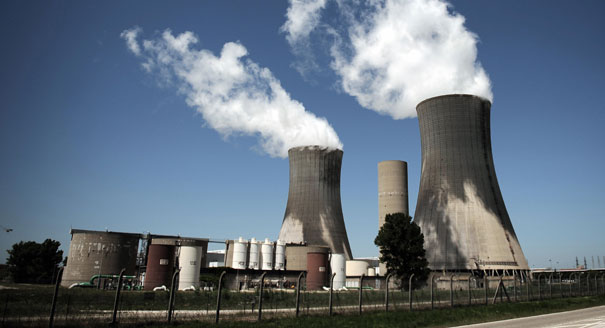
Source: Getty

In The Media

The US Nuclear Industry: Current Status and Prospects under the Obama Administration

Expectations of a nuclear energy renaissance are particularly high in the United States, but government programs to jump start new reactor construction will likely not be enough to spark more than a handful of reactors by 2015.

Link Copied
By Sharon Squassoni
Published on Nov 30, 2009
Program mobile hero image

Program

Nuclear Policy

The Nuclear Policy Program aims to reduce the risk of nuclear war. Our experts diagnose acute risks stemming from technical and geopolitical developments, generate pragmatic solutions, and use our global network to advance risk-reduction policies. Our work covers deterrence, disarmament, arms control, nonproliferation, and nuclear energy.

Learn More

Source: CIGI Nuclear Energy Futures Paper No. 7

The US Nuclear Industry: Current Status and ProspeExpectations of a nuclear energy renaissance are particularly high in the United States, which hasn't had a new reactor order in 30 years. Government programs to jump start new reactor construction have contributed to the optimism, but these are not likely enough to spark more than a handful of reactors by 2015. Aggressive government support would be needed, including subsidies, a carbon pricing mechanism, and an acceptable waste management solution. This paper, published by the Centre for International Governance Innovation (CIGI), discusses the history, current status and prospects for US nuclear power under the Obama administration.

About the Author

Sharon Squassoni

Former Senior Associate, Nuclear Policy Program

Squassoni came to Carnegie from the Congressional Research Service. She also served for nine years in the executive branch. Her last position at the State Department was director of Policy Coordination in the Nonproliferation Bureau.

    Recent Work

  • Other
    Grading Progress on 13 Steps Toward Nuclear Disarmament

      Sharon Squassoni

  • Report
    Nuclear Energy: Rebirth or Resuscitation?

      Sharon Squassoni

Sharon Squassoni
Former Senior Associate, Nuclear Policy Program
Sharon Squassoni
Nuclear PolicyNuclear EnergyNorth AmericaUnited States

Carnegie does not take institutional positions on public policy issues; the views represented herein are those of the author(s) and do not necessarily reflect the views of Carnegie, its staff, or its trustees.

More Work from Carnegie Endowment for International Peace

  • U.S. President Donald Trump (C) oversees "Operation Epic Fury" with (L-R) Central Intelligence Agency Director John Ratcliffe, U.S. Secretary of State Marco Rubio and White House Chief of Staff Susie Wiles at Mar-a-Lago on February 28, 2026 in Palm Beach, Florida. President Trump announced today that the United States and Israel had launched strikes on Iran targeting political and military leaders, as well as Iran’s ballistic missile and nuclear programs. (Photo by Daniel Torok/White House via Getty Images)
    Paper
    Operation Epic Fury and the International Law on the Use of Force

    Assessing U.S. compliance with the international laws of war is essential at a time when these frameworks are already fraying.

      • Federica D'Alessandra

      Federica D’Alessandra

  • Commentary
    Diwan
    Iran Rewrites Its War Strategy

    In an interview, Hamidreza Azizi discusses how Tehran has adapted in real time to the conflict with the United States and Israel.

      Michael Young

  • Article
    Kenya’s Health Deal Is a Stress Test for the America First Global Health Strategy

    U.S. agreements must contend with national data protection laws to make durable foreign policy instruments.

      • A Black woman with long hair wears a black blazer

      Jane Munga, Rose Mosero

  • Commentary
    Diwan
    Trump’s Plan for Gaza Is Not Irrelevant. It’s Worse.

    The simple conclusion is that the scheme will bring neither peace nor prosperity, but will institutionalize devastation.

      Nathan J. Brown

  • Trump seated and gesturing while speaking
    Commentary
    Emissary
    The Iran War Is Making America Less Safe

    A conflict launched in the name of American security is producing the opposite effect.

      • Sarah Yerkes

      Sarah Yerkes

Get more news and analysis from
Carnegie Endowment for International Peace
Carnegie global logo, stacked
1779 Massachusetts Avenue NWWashington, DC, 20036-2103Phone: 202 483 7600Fax: 202 483 1840
  • Research
  • Emissary
  • About
  • Experts
  • Donate
  • Programs
  • Events
  • Blogs
  • Podcasts
  • Contact
  • Annual Reports
  • Careers
  • Privacy
  • For Media
  • Government Resources
Get more news and analysis from
Carnegie Endowment for International Peace
© 2026 Carnegie Endowment for International Peace. All rights reserved.