

Q&A
Suzanne Maloney, Aaron David Miller, Karim Sadjadpour
{
  "authors": [
    "Karim Sadjadpour"
  ],
  "type": "legacyinthemedia",
  "centerAffiliationAll": "dc",
  "centers": [
    "Carnegie Endowment for International Peace"
  ],
  "collections": [],
  "englishNewsletterAll": "menaTransitions",
  "nonEnglishNewsletterAll": "",
  "primaryCenter": "Carnegie Endowment for International Peace",
  "programAffiliation": "MEP",
  "programs": [
    "Middle East"
  ],
  "projects": [],
  "regions": [
    "Middle East",
    "Iran"
  ],
  "topics": [
    "Political Reform",
    "Nuclear Policy"
  ]
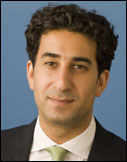
}
Source: Getty
The IAEA announcement that Iran may be working towards a nuclear warhead plays into growing international concerns that Iran is becoming a military dictatorship, with the influence of the Revolutionary Guards eclipsing that of the clergy.
Source: PBS' Worldfocus
Secretary Clinton’s recent remark that Iran is moving towards becoming a “military dictatorship” has helped spotlight the role of the Revolutionary Guards in Iran. Karim Sadjadpour asserts that “the Revolutionary Guards has surpassed the clergy in Iran in terms of political and economic influence and are running Iranian foreign policy in Iraq, Lebanon and Afghanistan.”
Ayatollah Khamenei and President Ahmadinejad have spearheaded this transition to military dictatorship. The regime is facing increasing scrutiny on its nuclear program, after a recent International Atomic Energy Agency report stated that Iran has either resumed work on making a nuclear warhead or had never stopped. Although many actors in the international community have expressed concerns over this report, Sadjadpour suggests that it will not be a “game changer” nor affect the Obama administration’s efforts to sanction Iran.

Senior Fellow, Middle East Program
Karim Sadjadpour is a senior fellow at the Carnegie Endowment for International Peace, where he focuses on Iran and U.S. foreign policy toward the Middle East.
Recent Work


Suzanne Maloney, Aaron David Miller, Karim Sadjadpour

Aaron David Miller, Karim Sadjadpour, Robin Wright
Carnegie does not take institutional positions on public policy issues; the views represented herein are those of the author(s) and do not necessarily reflect the views of Carnegie, its staff, or its trustees.

Ex-president Gurbanguly Berdimuhamedov remains interested in politics, but his son Serdar, Turkmenistan’s current president, is becoming increasingly independent and willing to break with his father’s legacy. If their covert rivalry goes too far, both risk losing power.

Galiya Ibragimova

A notable degree of participative democracy has firmly arrived in Europe. But to have more far-reaching impact, democratic deliberation needs to move into a radically new phase.

Richard Youngs

Sergei Kiriyenko used Russia’s parliamentary vote to further hone his strategy of corporate mobilization that is designed to maximize votes for United Russia.

Andrey Pertsev

Before the next wave of EU enlargement takes place, the union needs to grapple with thorny questions of how power is distributed among its members.


Emil Sondaj Hansen, Ditte Brasso Sørensen

The Horn of Africa countries are among those facing a new security calculus.


Andrew Leber, Lesley Anne Warner