

Q&A
Suzanne Maloney, Aaron David Miller, Karim Sadjadpour
{
  "authors": [
    "Karim Sadjadpour"
  ],
  "type": "legacyinthemedia",
  "centerAffiliationAll": "dc",
  "centers": [
    "Carnegie Endowment for International Peace"
  ],
  "collections": [],
  "englishNewsletterAll": "menaTransitions",
  "nonEnglishNewsletterAll": "",
  "primaryCenter": "Carnegie Endowment for International Peace",
  "programAffiliation": "MEP",
  "programs": [
    "Middle East"
  ],
  "projects": [],
  "regions": [
    "North America",
    "United States",
    "Middle East",
    "Iran"
  ],
  "topics": [
    "Political Reform",
    "Foreign Policy",
    "Nuclear Policy"
  ]
}
Source: Getty
Over the past decade, the political and economic influence of the Revolutionary Guard has eclipsed that of the clergy. The Obama administration’s call for new, targeted sanctions would target the Revolutionary Guard without undermining Iran’s opposition movement.
Source: On Point with Tom Ashbrook February 15

The American domestic political reality no longer gives President Obama the luxury of patience in seeking to moderate Iran’s nuclear position. After a year of engagement, few significant gains have been made. However, the administration’s efforts to engage have demonstrated to the international community that it is Tehran, not Washington, who is the intransigent negotiator and have halted complaints about Washington’s unwillingness to engage and shown the nature of the hardliners in Iran.
Iran’s foreign policies are intimately connected to its domestic policy. The Iranian regime is currently facing its biggest existential crisis since 1979. In order to ensure their power, “Ayatollah Khamenei and President Ahmadinejad may welcome a [military] attack on the nuclear facilities, because it could heal the deep internal political rifts in Iran. Any military action in Iran could severely dampen or even kill the opposition movement,” notes Sadjadpour.

Senior Fellow, Middle East Program
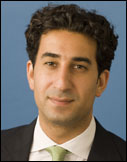
Karim Sadjadpour is a senior fellow at the Carnegie Endowment for International Peace, where he focuses on Iran and U.S. foreign policy toward the Middle East.
Recent Work


Suzanne Maloney, Aaron David Miller, Karim Sadjadpour

Aaron David Miller, Karim Sadjadpour, Robin Wright
Carnegie does not take institutional positions on public policy issues; the views represented herein are those of the author(s) and do not necessarily reflect the views of Carnegie, its staff, or its trustees.
The acknowledgment has sparked fears of a new arms race with China and Russia.

Chris O’Meara
Smaller powers cannot go it alone, but Canadian history shows that integration with the United States will not always be benign.
Paul Samson

The European Commissioner for Trade is headed to China. But after President Xi’s bridge-building visit to Washington, can a more isolated EU overcome Beijing’s stranglehold on critical raw materials? Who will blink first?

Rym Momtaz, ed.
The summit may be remembered as a fatal blunder, when Washington, Beijing, and the AI industry collectively chose ceremony over action.
Jeffrey Prescott

European NATO countries are wrestling with the possibility of U.S. disengagement from the alliance. With the continent’s security increasingly uncertain, governments must restore the credibility of their collective defense.



Hans-Dieter Lucas, Adam Thomson, Pierre Vimont