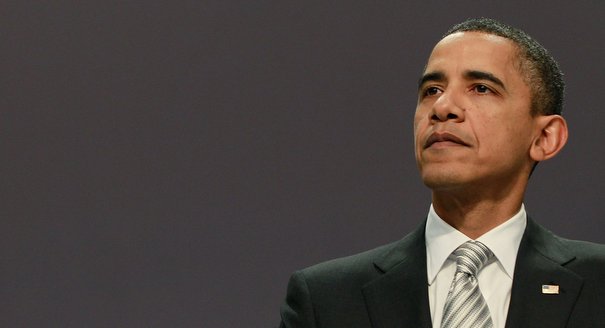
Last March, Barack Obama extended a hand to the Iranian government on the occasion of Nowruz, the country's New Year. This year, he should speak straight to the people.
The Message Obama Should Send to IranLast spring, President Barack Obama broke dramatically with three decades of U.S. foreign policy by delivering a recorded message to the government and people of Iran. In addressing the leadership of the "Islamic Republic of Iran" -- the first time a U.S. president has ever used Iran's official name -- Obama signaled that Washington recognized the legitimacy of the government born of the 1979 revolution. And in delivering his message on the occasion of Nowruz, an ancient Persian spring ritual, he showed that it sought a rebirth of relations between the two countries.
Several months after Washington finally came to terms with the legitimacy of the Iranian government however, that legitimacy was cast in serious doubt by a tainted presidential election that spurred dramatic street protests on a scale not seen since 1979. If anything, Obama's extended hand played a role in accentuating Iran's deep internal divides, proving that Tehran, not Washington, is the principal impediment to a rapprochement.
While Obama's objective in last year's message was to reassure the Iranian government about U.S. intentions, the focus of this year's message should be to reassure the Iranian people about them. Perhaps something like this:
PRESIDENT OBAMA:
Today I would like to send my warm greetings to all those around the world celebrating Nowruz. I was delighted to see the U.S. Congress recently pass a resolution recognizing the richness of this ancient ritual. During this time of reflection and renewal, I would especially like to convey my thoughts to the people of Iran.
Throughout the last eight months, we here in the United States have witnessed your courageous struggle for freedoms that we often take for granted. We were awed when, despite being dismissed by your own leaders as "dirt and dust," millions of you took to the streets, in silence, to demand your right to be counted. We join you in mourning the tragic deaths of your brave youth, like Neda Agha-Soltan and Ramin Pourandarjani, whose sacrifices will long be remembered.
Beginning with my inauguration speech over one year ago, my administration has made a sincere attempt to try and change the fraught relationship between our two governments. We have pursued a policy of engagement, without preconditions, on the basis of mutual respect and mutual interests.
In this context, last spring I wrote a private letter to your leader, Ayatollah Ali Khamenei, making it clear that the United States was genuinely interested in a path of reconciliation. Though he responded unenthusiastically nearly one month later, I nonetheless followed up with another letter, to underscore the seriousness of our intentions.
While our overtures have gone unreciprocated, the door of official dialogue between our two nations remains open, and the United States remains fully committed to a nuclear resolution that is both peaceful and equitable. Rest assured, however, that we do not and will not seek such a resolution at the expense of Iranians' aspirations for a more tolerant government that is accountable to its people.
As I have said in the past, I believe that peace is unstable where citizens are denied the right to speak freely or worship as they please, choose their own leaders, or assemble without fear. America's interests are not served by the denial of human aspirations.
In 1953, and throughout the Cold War, the United States erred in promoting Iranian stability over Iranian democracy and got neither. While valid skepticism about America's true intentions continues to linger, allow me to be crystal clear: It is in all of our interests to see Iran realize its centennial quest for democracy.
Today there are leaders in Tehran who openly articulate that enmity toward the United States is a fundamental pillar of the 1979 revolution, central to Iran's identity as an Islamic Republic. We in the United States believe this continued hostility is inimical to both countries' national interests. As a famous American statesman once put it, "There are few nations in the world with which the United States has less reason to quarrel or more compatible interests than Iran."
Iran is a proud, independent country, inheritor of one of the world's great civilizations. We in the United States welcome the day when Iran reclaims its rightful role in the concert of nations as an indispensable partner whose influence comes from its ability to create, not destroy. We welcome the day when Iranians and Americans can visit one another freely, unburdened by the political disputes of the past. I personally look forward to the day when I can experience firsthand the glory of Isfahan, the grandeur of Persepolis, and above all the renowned humanity of the Iranian people.
On this first day of spring, the day of revival, I would like to echo the words of the great Persian poet Hafez, who wrote many years ago that "A breeze of Nowruz is coming from a friend's quarters; Seek solace from this breeze to brighten your heart." On this day of a new beginning and the day of planting, nurturing, and growing, I want the noble people of Iran to know this: As you continue your long quest for self-determination, know that you have history, and the United States, on your side. Nowruz beh shoma khosh.
Karim Sadjadpour is a senior fellow at the Carnegie Endowment for International Peace, where he focuses on Iran and U.S. foreign policy toward the Middle East.
Carnegie does not take institutional positions on public policy issues; the views represented herein are those of the author(s) and do not necessarily reflect the views of Carnegie, its staff, or its trustees.
More Work from Carnegie Endowment for International Peace
Much has been said of the changes Brussels is trying to make to the EU enlargement process. Here’s why gradual integration might—or might not—be the answer.
Despite a new textbook, an influx of Russian teachers and managers, and an end to the teaching of Ukrainian, the Kremlin is unlikely to have “reprogrammed” locals.