• Research
  • Emissary
  • About
  • Experts
Carnegie Global logoCarnegie lettermark logo
DemocracyIran
  • Donate
{
  "authors": [
    "Michael Pettis"
  ],
  "type": "legacyinthemedia",
  "centerAffiliationAll": "dc",
  "centers": [
    "Carnegie Endowment for International Peace"
  ],
  "collections": [],
  "englishNewsletterAll": "asia",
  "nonEnglishNewsletterAll": "",
  "primaryCenter": "Carnegie Endowment for International Peace",
  "programAffiliation": "AP",
  "programs": [
    "Asia"
  ],
  "projects": [],
  "regions": [
    "North America",
    "United States",
    "Western Europe"
  ],
  "topics": [
    "Economy",
    "Trade"
  ]
}
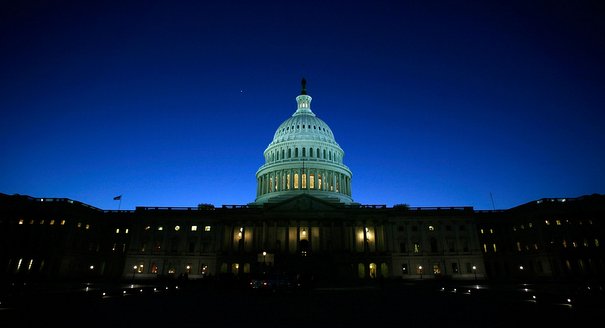
Source: Getty

In The Media

American Anger May Give Way to a Protectionist Response

While the U.S. trade deficit will still increase over the next year, growing anger in the United States over trade imbalances is likely to result in new protectionist policies.

Link Copied
By Michael Pettis
Published on Jul 23, 2010
Program mobile hero image

Program

Asia

The Asia Program in Washington studies disruptive security, governance, and technological risks that threaten peace, growth, and opportunity in the Asia-Pacific region, including a focus on China, Japan, and the Korean peninsula.

Learn More

Source: The Economist

American Anger May Give Way to a Protectionist ResReserve accumulation is likely to be just one of the symptoms of beggar-thy-neighbour policymaking. As a consequence of the financial crisis most countries are struggling to gain greater access to dwindling global demand. Many of them explicitly or implicitly seek to goose domestic growth and employment by accessing foreign demand and running current account surpluses.

Net capital exports, of course, are simply the obverse of current account surpluses, and one of the easiest ways for policymakers to increase net capital exports is to do so officially, through reserve accumulation. This is what seems to be happening. The combination of currency intervention and financial repression (setting domestic interest rate artificially low) allows central banks to accumulate foreign reserves in a non-inflationary way, and, as a consequence, to turbo charge the current account surplus, although at the expense of overinvestment and, in the case of some countries, severe domestic imbalances.Obviously this can only go on if there are countervailing current account deficits and net capital imports elsewhere. Until recently there have been two very large countervailing deficits—that of the US and that of the trade-deficit countries of Europe. The latter, because of the European financial crisis, will have real difficulty in maintaining their trade deficits as net capital imports dry up, so that pretty much leaves the US as the world’s only great trade deficit country.
 
The appetite in the US for running up larger deficits, however, is clearly finite. I expect rapid reserve accumulation, along with a rising US trade deficit, will continue over the next year or so but will thereafter slow sharply—not because of intelligent and responsible polices implemented by policymakers in the major economies, but simply as a consequence of rising anger in the US and a protectionist move to counter trade policies elsewhere. It is hard to see how this does not end badly.

About the Author

Michael Pettis

Nonresident Senior Fellow, Carnegie China

Michael Pettis is a nonresident senior fellow at the Carnegie Endowment for International Peace. An expert on China’s economy, Pettis is professor of finance at Peking University’s Guanghua School of Management, where he specializes in Chinese financial markets. 

    Recent Work

  • Commentary
    What’s New about Involution?

      Michael Pettis

  • Commentary
    Using China’s Central Government Balance Sheet to “Clean up” Local Government Debt Is a Bad Idea

      Michael Pettis

Michael Pettis
Nonresident Senior Fellow, Carnegie China
Michael Pettis
EconomyTradeNorth AmericaUnited StatesWestern Europe

Carnegie does not take institutional positions on public policy issues; the views represented herein are those of the author(s) and do not necessarily reflect the views of Carnegie, its staff, or its trustees.

More Work from Carnegie Endowment for International Peace

  • Xi walking into a room with people standing and applauding around him
    Commentary
    Emissary
    The Xi Doctrine Zeros in on “High-Quality Development” for China’s Economic Future

    In the latest Five-Year Plan, the Chinese president cements the shift to an innovation-driven economy over a consumption-driven one.

      • Damien Ma

      Damien Ma

  • Article
    Kenya’s Health Deal Is a Stress Test for the America First Global Health Strategy

    U.S. agreements must contend with national data protection laws to make durable foreign policy instruments.

      • A Black woman with long hair wears a black blazer

      Jane Munga, Rose Mosero

  • Commentary
    Diwan
    Trump’s Plan for Gaza Is Not Irrelevant. It’s Worse.

    The simple conclusion is that the scheme will bring neither peace nor prosperity, but will institutionalize devastation.

      Nathan J. Brown

  • Trump seated and gesturing while speaking
    Commentary
    Emissary
    The Iran War Is Making America Less Safe

    A conflict launched in the name of American security is producing the opposite effect.

      • Sarah Yerkes

      Sarah Yerkes

  • illustration of AI chat bubbles
    Commentary
    California Sees Ways AI Can Support Policymaking. Here’s What It Needs to Succeed.

    For AI to capture the public’s policy concerns, people need to know that the models are elevating human concerns in human words, not generating their own.

      • Micah Weinberg headshot

      Micah Weinberg

Get more news and analysis from
Carnegie Endowment for International Peace
Carnegie global logo, stacked
1779 Massachusetts Avenue NWWashington, DC, 20036-2103Phone: 202 483 7600Fax: 202 483 1840
  • Research
  • Emissary
  • About
  • Experts
  • Donate
  • Programs
  • Events
  • Blogs
  • Podcasts
  • Contact
  • Annual Reports
  • Careers
  • Privacy
  • For Media
  • Government Resources
Get more news and analysis from
Carnegie Endowment for International Peace
© 2026 Carnegie Endowment for International Peace. All rights reserved.