• Research
  • Emissary
  • About
  • Experts
Carnegie Global logoCarnegie lettermark logo
DemocracyIran
  • Donate
{
  "authors": [
    "Deepti Choubey"
  ],
  "type": "legacyinthemedia",
  "centerAffiliationAll": "dc",
  "centers": [
    "Carnegie Endowment for International Peace"
  ],
  "collections": [],
  "englishNewsletterAll": "ctw",
  "nonEnglishNewsletterAll": "",
  "primaryCenter": "Carnegie Endowment for International Peace",
  "programAffiliation": "NPP",
  "programs": [
    "Nuclear Policy"
  ],
  "projects": [],
  "regions": [],
  "topics": [
    "Nuclear Policy"
  ]
}
Source: Getty

In The Media

Future Prospects for the NPT

The results of the 2010 NPT Review Conference were notable. Now, NPT parties must determine how best to build on their incremental success and overcome obstacles, some of which already are apparent.

Link Copied
By Deepti Choubey
Published on Jul 15, 2010
Program mobile hero image

Program

Nuclear Policy

The Nuclear Policy Program aims to reduce the risk of nuclear war. Our experts diagnose acute risks stemming from technical and geopolitical developments, generate pragmatic solutions, and use our global network to advance risk-reduction policies. Our work covers deterrence, disarmament, arms control, nonproliferation, and nuclear energy.

Learn More

Source: Arms Control Today

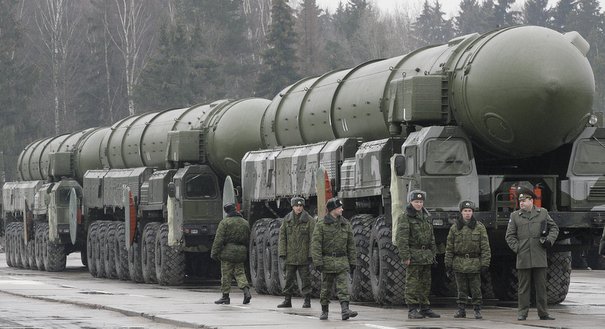
Future Prospects for the NPTFor the fourth time in 40 years, the parties to the nuclear Nonproliferation Treaty (NPT) accomplished the difficult task of reaching consensus on steps to strengthen the treaty at the end of their review conference in May. At the review conference—the eighth since the NPT came into force in 1970—the 172 states in attendance universally adopted a 64-point action plan and steps toward creating a zone free of weapons of mass destruction (WMD) in the Middle East.

There have been a number of complaints, many of them legitimate, about what it does and does not contain. Nevertheless, it did succeed in capturing the commitment of all states to the principles and objectives of the treaty. Considering the damage the nonproliferation regime has endured in the last decade, that commitment was not a foregone conclusion.

About the Author

Deepti Choubey

Former Deputy Director, Nuclear Policy Program

Choubey was previously the director of the Peace and Security Initiative for the Ploughshares Fund. She also worked for Ambassador Nancy Soderberg in the New York office of the International Crisis Group.

    Recent Work

  • Q&A
    Understanding the 2010 NPT Review Conference

      Deepti Choubey

  • Article
    Defining Success for the NPT Review Conference

      Deepti Choubey

Deepti Choubey
Former Deputy Director, Nuclear Policy Program
Deepti Choubey
Nuclear Policy

Carnegie does not take institutional positions on public policy issues; the views represented herein are those of the author(s) and do not necessarily reflect the views of Carnegie, its staff, or its trustees.

More Work from Carnegie Endowment for International Peace

  • Commentary
    Strategic Europe
    Europe Should Not Let Nuclear Nonproliferation Die

    Amid uncertainty caused by the Iran war, the global drive for nonproliferation has stalled. With Europe diplomatically marginalized and countries reassessing their nuclear options, efforts to curb the spread of nuclear weapons risk becoming irrelevant.

      • Jane Darby Menton

      Jane Darby Menton

  • Commentary
    Diwan
    Corrupted by Absolute Power

    In an interview, Marc Lynch discusses his new book decrying the post-1990 U.S.-dominated order in the Middle East.

      Michael Young

  • people looking at damage
    Commentary
    Emissary
    Two Wars Later, Iran’s Nuclear Question Is Still on the Table

    Tehran may conclude that its ability to disrupt the global economy via the Strait of Hormuz provides enough deterrence to begin quietly rebuilding its nuclear program.

      • Jane Darby Menton
      • Mohammad Ayatollahi Tabaar

      Jane Darby Menton, Mohammad Ayatollahi Tabaar

  • Aerial view of Chernobyl damage
    Commentary
    Emissary
    Chernobyl Is Still a Current Event, Forty Years Later

    The 1986 incident showed that a nuclear accident anytime is a nuclear accident for all time.

      Corey Hinderstein

  • Commentary
    Carnegie Politika
    What Does Nuclear Proliferation in East Asia Mean for Russia?

    Troubled by the growing salience of nuclear debates in East Asia, Moscow has responded in its usual way: with condemnation and threats. But by exacerbating insecurity, Russia is forcing South Korea and Japan to consider radical security options.

      James D.J. Brown

Get more news and analysis from
Carnegie Endowment for International Peace
Carnegie global logo, stacked
1779 Massachusetts Avenue NWWashington, DC, 20036-2103Phone: 202 483 7600
  • Research
  • Emissary
  • About
  • Experts
  • Donate
  • Programs
  • Events
  • Blogs
  • Podcasts
  • Contact
  • Annual Reports
  • Careers
  • Privacy
  • For Media
  • Government Resources
Get more news and analysis from
Carnegie Endowment for International Peace
© 2026 Carnegie Endowment for International Peace. All rights reserved.