

Paper
Paul Salem
{
  "authors": [
    "Paul Salem"
  ],
  "type": "legacyinthemedia",
  "centerAffiliationAll": "",
  "centers": [
    "Carnegie Endowment for International Peace",
    "Malcolm H. Kerr Carnegie Middle East Center"
  ],
  "collections": [],
  "englishNewsletterAll": "",
  "nonEnglishNewsletterAll": "",
  "primaryCenter": "Malcolm H. Kerr Carnegie Middle East Center",
  "programAffiliation": "",
  "programs": [],
  "projects": [],
  "regions": [
    "Levant",
    "Lebanon",
    "Middle East"
  ],
  "topics": [
    "Security"
  ]
}
Source: Getty
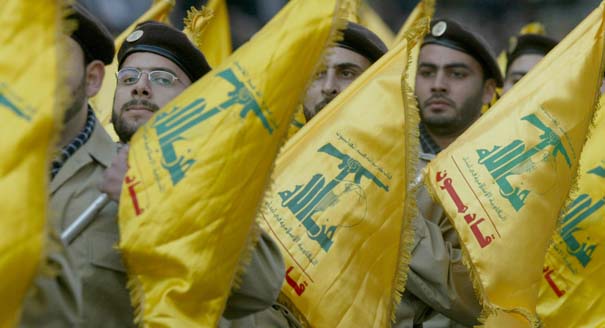
Regional and international developments suggest that the challenges facing Hezbollah are mounting, but Hezbollah is not likely to relinquish its power without a fight.
Source: Project Syndicate

The most immediate question concerns the possibility of another Israel-Hezbollah war, fears of which have mounted throughout this year, fueled by reports of new missile transfers to Hezbollah and intermittent threats from Israel. Those who foresee war argue that Israel is unwilling to tolerate a heavily armed Iranian proxy on its border while tensions with Iran over the nuclear issue remain unresolved.
Although war is unlikely in the coming months, if sanctions on Iran don’t bear fruit by early 2011, Israel might feel the need to act. If it launched military strikes on Iran’s nuclear installations, Hezbollah would likely join the fray and Israel would have to engage Hezbollah at the same time. Alternatively, Israel might launch a pre-emptive war against Hezbollah in order to rob Iran of a nearby retaliatory capacity.
Hezbollah is preparing intensively for such scenarios, building defenses, digging tunnels, and assembling a powerful missile arsenal. But, although Hezbollah’s preparations are likely to ensure its survival, it would be hard-pressed to justify to the Lebanese public a strategy that led to two ruinous wars in the span of five years.
In the end game of such a war, Syria might be asked by the Arab countries and the international community to take greater responsibility in Lebanon, in order to contain Hezbollah and its military profile.
Moreover, if peace prevents a slide into war, Hezbollah has another problem. Although a real breakthrough in the Arab-Israeli peace process appears unlikely, United States envoy George Mitchell is still talking of Arab-Israeli peace as a distinct possibility in 2011. Sources within the US administration hint that President Barack Obama might announce the outlines of an Arab-Israeli settlement sometime later this year.
An accord between Syria and Israel is a key element of all proposed scenarios for Arab-Israeli peace. In exchange for giving back the occupied Golan Heights, Israel and the US will insist on the disarmament of Hezbollah. Indeed, within the context of the Arab Peace Plan, announced in Beirut in 2002, the Arab states take it upon themselves to ensure the security of “all states in the region” – code words for dealing with the threats from Hezbollah and Hamas – since the region includes Israel.
Although both Hezbollah and Iran still argue, perhaps correctly, that Israel will not give back the Golan Heights or allow the emergence of a Palestinian state, the possibility of peace cannot be ruled out. If it does occur, Syria will push Lebanon into a peace treaty with Israel and lean on Hezbollah heavily to adjust to the new realities.
Given its popularity among Lebanese Shia, Hezbollah could continue as an influential political party, but it would have to abandon its role as a major proxy force for Iran’s Revolutionary Guards. Nevertheless, Hezbollah faces severe political trouble, too. Although no official announcement has been made, there are reports that Daniel Bellemare, the prosecutor for the Special Tribunal for Lebanon, might conclude his investigation and issue indictments in the fall.
In a speech on July 16, Hezbollah leader Sheikh Hassan Nasrallah acknowledged rumors that the Tribunal might indict members of his party, but charged that the Tribunal was part of an Israeli plot to undermine the Islamic resistance in Lebanon and has no credibility. He argued that the indictments would probably be based on cell-phone records, and that Israeli agents had penetrated the Lebanese cell-phone network. Indeed, the Lebanese authorities recently arrested a high-level official at one of the country’s two cell-phone companies, alleging that he was an Israeli agent.
In describing the tribunal as part of an Israeli plot, Nasrallah warned the government and other parties in Lebanon against cooperating with it, or accepting its verdicts. He reminded his audience of the street fighting in Beirut in May 2008, and made clear that Hezbollah would not shy away from another fight if necessary.
While Hezbollah has tried to convince other Lebanese that its presence helps maintain the country’s security and stability, regional and international developments suggest that it faces mounting challenges. And, although the future does not look bright for Hezbollah, it is not likely to relinquish its power without a fight.
Senior Fellow at the Middle East Institute
Paul Salem is a senior fellow at the Middle East Institute.
Recent Work
Paul Salem
Paul Salem
Carnegie does not take institutional positions on public policy issues; the views represented herein are those of the author(s) and do not necessarily reflect the views of Carnegie, its staff, or its trustees.

The Horn of Africa countries are among those facing a new security calculus.


Andrew Leber, Lesley Anne Warner

The European far right might fail to steer EU policy in the direction Russia wants, but they will create enough chaos inside Europe to benefit the Kremlin.

Dimitar Bechev

The new U.S.–Denmark–Greenland agreement will help Washington exert political, economic, and financial dominance under the guise of security. Yet, it acknowledged Copenhagen’s and Nuuk’s sovereignty on the island.

Marc Pierini

A summer of escalation in the Black Sea has hurt Ukraine economically and is exacerbating world food security. A truce is needed—as is a broader reframing of Europe’s Ukraine strategy.

Thomas de Waal

As the U.S. stumbles in its war with Iran, we are likely to see an acceleration of its disengagement from the region.

Michael Young