

Commentary
Amr Hamzawy
{
  "authors": [
    "Amr Hamzawy"
  ],
  "type": "legacyinthemedia",
  "centerAffiliationAll": "",
  "centers": [
    "Carnegie Endowment for International Peace",
    "Malcolm H. Kerr Carnegie Middle East Center"
  ],
  "collections": [],
  "englishNewsletterAll": "",
  "nonEnglishNewsletterAll": "",
  "primaryCenter": "Carnegie Endowment for International Peace",
  "programAffiliation": "",
  "programs": [],
  "projects": [],
  "regions": [
    "North Africa",
    "Egypt"
  ],
  "topics": [
    "Political Reform"
  ]
}
Source: Getty
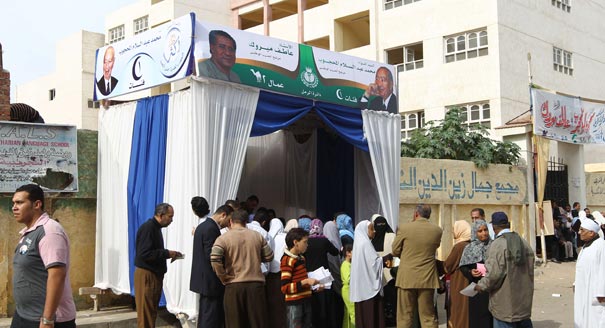
With Egypt's parliamentary elections only a few weeks away, the main parties and opposition leaders participating in the elections have yet to announce their electoral platforms, continuing instead to express vague positions on crucial social, political, and economic issues.
Source: Los Angeles Times

Other problems include the numerous obstacles to security and organization facing opposition parties and movements as they try to field candidates and communicate with citizens, as well as the limited local oversight of elections and the absence of international monitoring.
But these represent only a sliver of the election difficulties Egypt faces. Although the absence of electoral fairness and transparency perpetuated by the elite is no doubt important, other, perhaps deeper, shortcomings have surfaced in the current campaign.
First, with the elections only a few weeks away, none of Egypt’s main political parties that are participating in the elections -- or the Muslim Brotherhood -- have announced their electoral platforms. The National Democratic Party of Egypt and opposition leaders continue to voice vague positions on social, political and economic issues.
These hollow party programs allow candidates to vainly echo their parties’ slogans (such as “citizens come first” and “Islam is the solution”) without saying how they would affect the lives of average Egyptians. These generalizations also make the race more a competition among individuals with well-financed campaigns -- such as elite businesspeople, union members, representatives of highly influential families and groups in rural areas, and candidates from state and security institutions -- than a serious discussion about policy differences.
Second, regardless of the degree to which the election is transparent, the parties themselves remain opaque. Egyptian voters lack sufficient knowledge of the mechanisms political parties use to choose their candidates. The liberal opposition Wafd Party released little information to supporters about how its general assembly narrowly voted to participate in the elections and the party’s subsequent selection of candidates.
Transparency also was absent from the Muslim Brotherhood’s procedures. Although the Brotherhood’s "Guidance Office" announced that 98% of the party voted to participate in the elections, some party figures have since said the number was closer to 50%.
By contrast, on their face, the NDP’s mechanisms to choose candidates appear transparent and fair. Candidates are chosen in a three-phase process: First, electoral primaries are held, whereby active NDP members (2.5 million people) choose candidates. During a second phase, the results of primaries are added to the results of opinion polls conducted by the party, a rare trend among parties holding primaries. In the third phase, the names of candidates are referred to NDP leaders for their final decision.
If examined closely, it becomes clear the transparency is largely cremonial. In reality, the party’s leadership chooses candidates, giving only partial consideration to primary results or opinion polls. As in the past, the NDP aims to select key individuals and representatives of powerful interest groups.
Third, a 2007 law grants the Higher Electoral Commission full authority to oversee all aspects of the electoral process, such as updating and publishing voter lists; registering candidates; determining the date the campaign begins; monitoring campaign expenses; ensuring candidates do not use religious or discriminatory slogans, state institutions or places of worship in their campaigns; ensuring neutral media coverage; and granting licenses for election observers.
Though the commission has numerous roles on paper, but in practice it encounters major problems, not even counting the NDP’s ability to influence the outcome of the electoral process.
For example, in a clear violation of the commission’s decision that the campaign would start mid-month, electoral banners and posters began appearing on Egypt’s streets after candidates registered to run. Candidates from the NDP, the Wafd, and the Muslim Brotherhood also have disregarded and publicly criticized the commission’s decision that no candidate should spend more than 200,000 Egyptian pounds on the campaign.
The Brotherhood has undoubtedly made the most controversial move to belittle the commission’s decisions. Its determination to use the slogan “Islam is the solution” blatantly violates the law prohibiting the use of religious slogans in campaigns, among others.
By using this slogan, the Brotherhood also ignores Article 5 of Egypt's constitution, which prohibits any religion-based political activity. Such a decision stirs legitimate doubt about the Brotherhood’s respect for Egypt’s constitutional and legal framework.
If, as these actions suggest, the Brotherhood reluctantly accepts this framework to participate in the elections while attempting to undermine its components, Egyptian politics as a whole, and the Brotherhood in particular, risk becoming an even weaker democracy. No one will be the winner then.

Director, Middle East Program
Amr Hamzawy is a senior fellow and the director of the Carnegie Middle East Program. His research and writings focus on Egypt’s and other middle powers’ involvement in regional security in the Middle East, particularly through collective diplomacy and multilateral conflict resolution
Recent Work
Amr Hamzawy
Amr Hamzawy
Carnegie does not take institutional positions on public policy issues; the views represented herein are those of the author(s) and do not necessarily reflect the views of Carnegie, its staff, or its trustees.

Before the next wave of EU enlargement takes place, the union needs to grapple with thorny questions of how power is distributed among its members.


Emil Sondaj Hansen, Ditte Brasso Sørensen

The European far right might fail to steer EU policy in the direction Russia wants, but they will create enough chaos inside Europe to benefit the Kremlin.

Dimitar Bechev
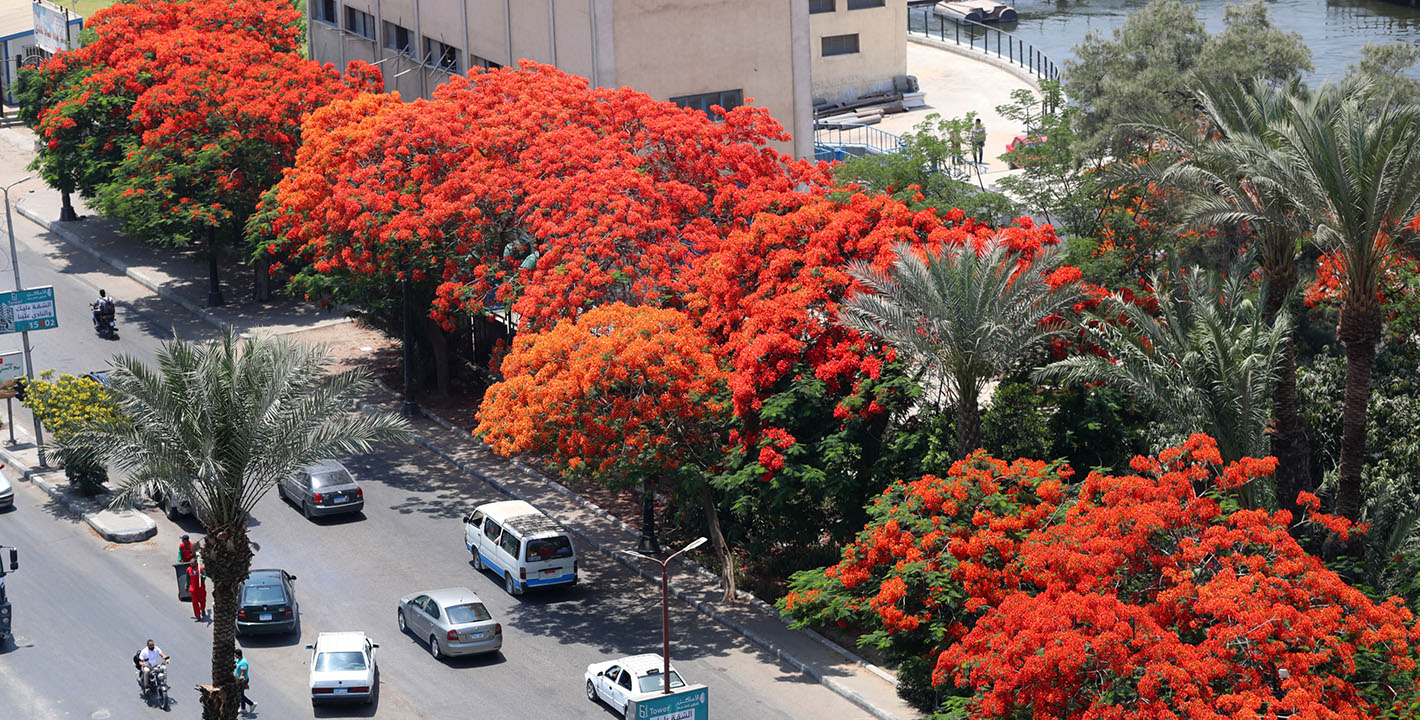
In Egypt’s dense cities, the disappearance of foliage has health implications and punishes daily commuters.

Angie Omar

If the Russian-speaking community in Latvia cannot articulate their interests without being seen as disloyal, they could end up embracing a pro-Kremlin agenda.

Sergejs Potapkins

Russia’s ruling party would have benefited from Putin appearing as its distant patron, but as an active frontman imposing his views on the public, he has done nothing but harm both the party’s election campaign and the ruling system overall.

Andrey Pertsev