

Q&A
Alper Coşkun, Amr Hamzawy
{
  "authors": [
    "Amr Hamzawy"
  ],
  "type": "legacyinthemedia",
  "centerAffiliationAll": "",
  "centers": [
    "Carnegie Endowment for International Peace",
    "Carnegie Europe",
    "Malcolm H. Kerr Carnegie Middle East Center"
  ],
  "collections": [
    "Arab Awakening"
  ],
  "englishNewsletterAll": "",
  "nonEnglishNewsletterAll": "",
  "primaryCenter": "Carnegie Endowment for International Peace",
  "programAffiliation": "",
  "programs": [],
  "projects": [],
  "regions": [
    "North Africa",
    "Tunisia",
    "Maghreb",
    "Middle East"
  ],
  "topics": [
    "Political Reform"
  ]
}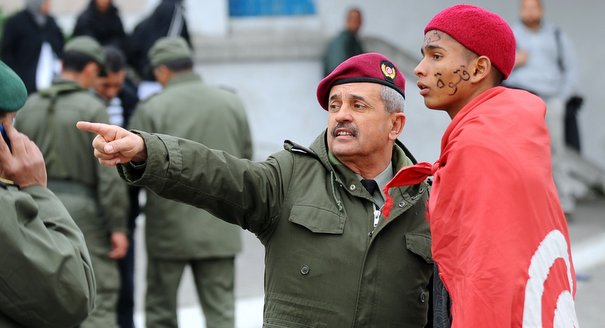
Source: Getty
With no precedent for regime transition and democratization in the Arab states, reformers in Tunisia are likely to encounter significant complications on the road to democracy.
Source: Democracy Digest

Unlike Morocco, Algeria, Egypt, and Jordan, Ben Ali’s brutal authoritarianism was felt not only by the politically active segments of the population but by literally every single citizen who did not belong to the ruling establishment or have some ties with it. While other authoritarian regimes have created some space for political competition and freedom of expression and excelled in not letting it evolve into a sustained political opening, Ben Ali did not tolerate the existence of such space beyond the late 80s.
While this harsh repression of political expression ultimately led to the discontent fueling the Jasmine Revolution, it has also prevented the development of any political opposition that might lead the revolution and take the reins of power away from the regime. Consequently, finding a qualified alternative to current political elites to pursue the democratizing process may prove difficult.
This highlights a more fundamental challenge of inexperience facing the revolution, the first of its kind in the modern Arab world: here is no precedent for regime transition and democratization in the Arab states, and Tunisia’s status as the landmark means that reformers will inevitably encounter unforeseen complications and barriers on the road to democracy.
However, the Jasmine Revolution enjoys the committed support of a broad spectrum of the populace. Thanks to Tunisia’s relatively strong economic growth and relatively efficient education system, it has a better educated middle class with greater economic, social, and political expectations than its counterparts in other Arab countries. Yet unlike the other countries, the corruption in Ben Ali’s Tunisia was felt by the majority of Tunisian citizens, and poor and marginalized segments of the population suffered from regime-sponsored corruption just as much as the middle class.
The uprising was carried in its first days by the energy of the marginalized and unemployed and afterwards by the energy and expectations of the middle class. This explains the evolution of popular demands from jobs for the unemployed and poverty-reduction measures to social justice and political freedom. Both groups continue to participate and pay close attention to the governmental transition, and will not accept a power shuffle instead of democratization.
Moreover, Tunisian labor unions and professional associations played a critical role in sustaining the uprising and expanding it beyond the remote regions in which it started. Though trade and labor unions were seemingly co-opted under Ben Ali, many joined the uprising in spite of the sway of the authoritarian regime. The legacy of relatively liberal and relatively independent labor unions and professional associations in the national liberation era and under former President Bourguiba has never withered away completely.
On the surface, Ben Ali’s Tunisia strongly resembles a host of Arab states that might potentially undergo democratic transition through revolution. Alarming increases in poverty and unemployment, government corruption, and government repression of political opposition are all traits Tunisia shares with Algeria, Egypt, Syria, and others. Tunisia’s difference from all of these is in degree, not in kind. It was the extent of economic dissatisfaction, official corruption, and government repression that made Tunisia unique and brought about the Jasmine Revolution.
Tunisian economic development over the last decade created a burgeoning middle class with growing power. This middle class is better educated and has greater economic, social, and political expectations than its counterparts in other Arab countries. Yet even as the middle class grew and those expectations rose, Ben Ali’s government imposed greater restrictions on the populace. The middle class inevitably grew discontented as expectations rose and their perception of their freedoms fell.
Government corruption serves in many Arab states as a socially binding force that distributes patronage and wealth provided the regime is stable. But the level of corruption in Ben Ali’s government is unrivaled in the breadth of its scale and the narrowness of its reach. Because so few benefits of corruption percolated from the regime to the wider society, very few people were invested in the regime’s stability.
The level of repression meant that it was impossible to express discontent over government oppression and corruption, which in other Arab states could have been safely discharged in a powerless civil society. Strictly authoritarian controls on political expression removed any of the outlets for harmless opposition seen elsewhere.
Finally, the Tunisian military has stayed out of domestic politics since independence. As a result, it does not have any experience defending the authoritarian regime in the face of a popular uprising or in policing the country in times of unrest. The Algerian, Egyptian, and Syrian armies have acquired such experience in the last three decades, and will continue to do so. The military in the region’s other authoritarian states are therefore much more likely to act decisively in support of the ruling establishment during critical moments of social unrest or a popular uprising.
From the perspective of an authoritarian dictator, Ben Ali made a mistake in not immediately repressing early unrest and protesting. Had the military intervened early and with overwhelming force, the revolution would never have materialized. The Egyptian and Algerian militaries have intervened directly in the past and would not hesitate to do so again. They may take Ben Ali’s fall as validation of their role in controlling civil society and be prepared to act more quickly with greater force in the future.
However, current indications suggest that most regimes are moving in the opposite direction, attempting to diffuse socioeconomic tensions before they can become politicized by the opposition. After initial repressing protests, the Algerian government changed tactics and promised more state subsidies and poverty reduction measures. The Egyptian government has similarly pledged to reduce poverty and unemployment. The Kuwaiti government has recently pledged $4 billion to combat poverty. The question remains of how far these regimes are willing to accommodate public discontent. If demands for jobs and bread subsidies are joined by demands for reductions in corruption, will governments make a show of launching anti-corruption programs? If the political opposition and civil society demand a voice, how much of a political opening will governments allow to ease political tension?
Western governments have once again made the mistake of waiting too long to criticize an authoritarian government’s oppressive policies. After the U.S. and European governments watched Ben Ali’s repression of early protests without comment, any newfound vocal interest in democratization and human rights will be dismissed by many Tunisian actors.
However, there is still a role for Western governments. France’s strong ties with Ben Ali’s regime, as awkward as they may now be, need to be used positively to influence the character of the transitional government in the days to come. Remaining regime leaders should be held to international expectations of a completely transparent democratic process as they remodel the Tunisian government. The constitutional and legal frameworks of the state need to be revised to allow for unhindered political participation, and Tunisian civil society and media will need free rein both during the transition period and after the establishment of a new government.
Western governments should pressure Tunisian officials to expedite this political opening however necessary. The West should expect a concrete, timely schedule for governmental transition and elections and not allow an authoritarian interregnum to exist indefinitely. Conditions should be put on Western development aid to Tunisia to ensure that this schedule is honored and that open elections for a new government are held promptly.
Democracy assistance groups and other NGOs need to engage in the transitional process as well. International monitoring groups need to be ensured free and unrestricted access during the transitional period and the elections of a new government. The underdeveloped Tunisian political opposition needs to be advised and assisted as it expands to fill new political space. A domestic Tunisian civil society needs to be fostered and developed to ensure continued democratizing reform and oversight in the future.

Director, Middle East Program
Amr Hamzawy is a senior fellow and the director of the Carnegie Middle East Program. His research and writings focus on Egypt’s and other middle powers’ involvement in regional security in the Middle East, particularly through collective diplomacy and multilateral conflict resolution
Recent Work

Alper Coşkun, Amr Hamzawy

Sarah Yerkes, Natalie Triche, Amr Hamzawy
Carnegie does not take institutional positions on public policy issues; the views represented herein are those of the author(s) and do not necessarily reflect the views of Carnegie, its staff, or its trustees.

China’s political future will be shaped between now and next October. As the Communist Party enters its intense “campaign season” to prepare for a major political transition in 2027, reading Beijing's actions and responses may become more difficult as domestic politics weigh on its behavior more than usual.

Damien Ma
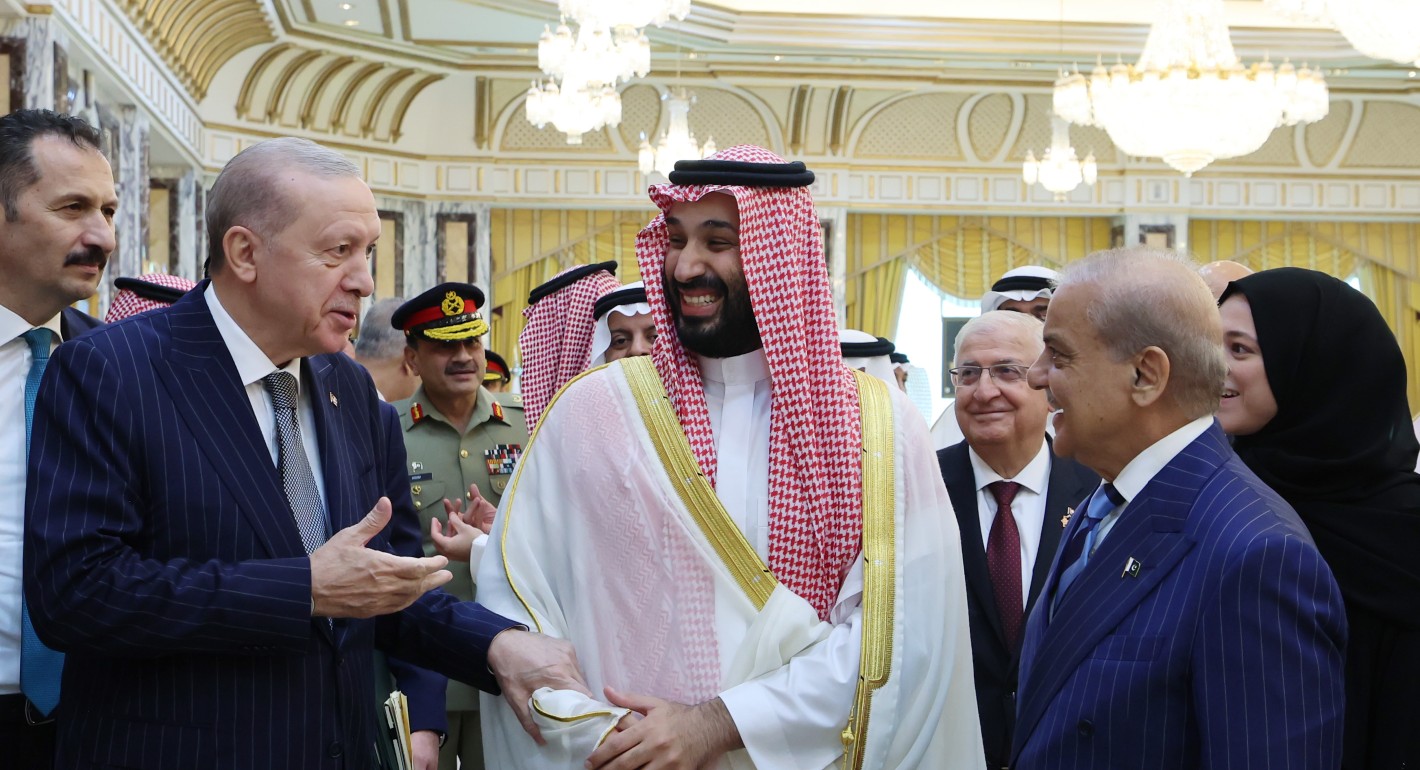
Why Pakistan, Saudi Arabia, and Turkey are joining forces on regional security.
Alper Coşkun, Amr Hamzawy
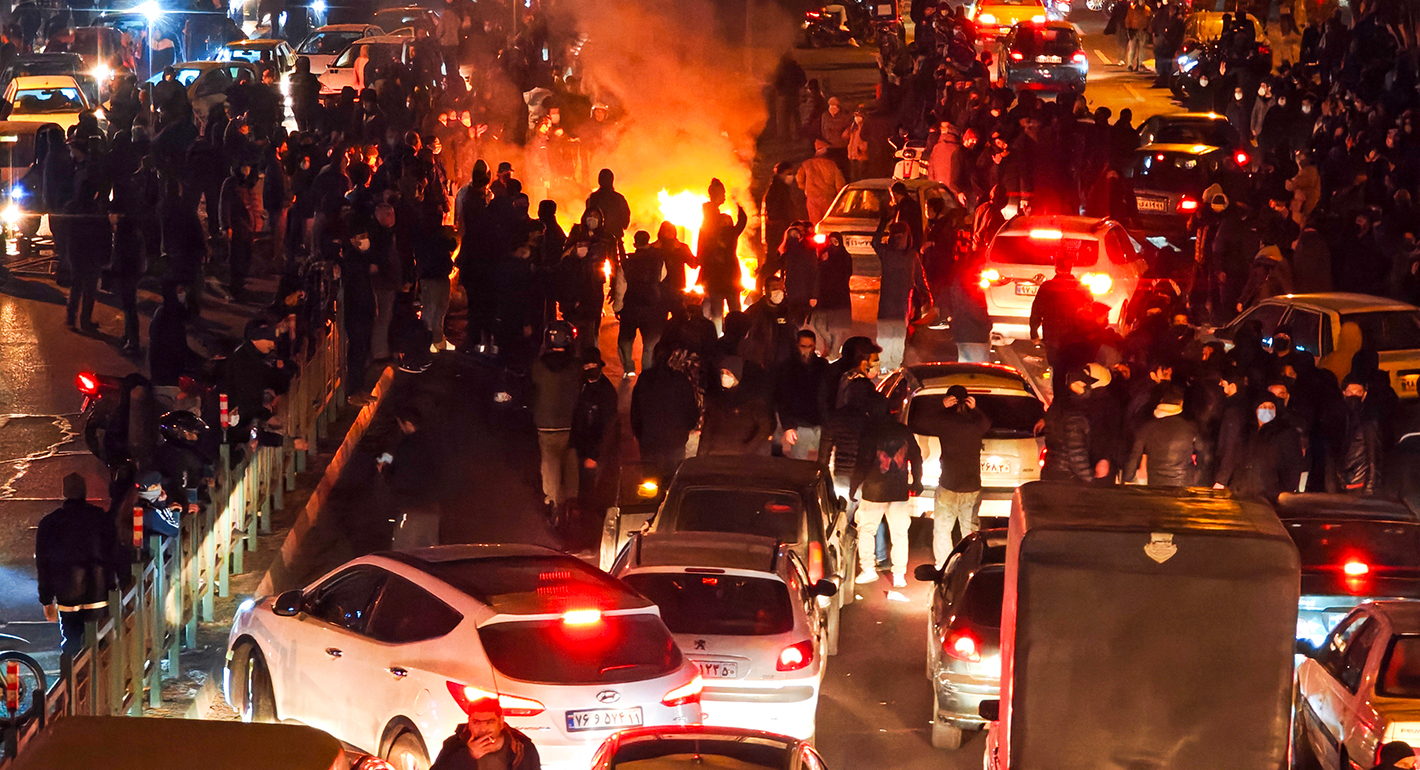
Protests in Iran follow a similar pattern: Economic grievances turn into political protests that spread nationwide. But increased state repression has begun to shift the arrangement.

Eric Lob

Putin’s conservative staffing policies and search for ever greater control have cemented parliament’s transformation into a bureaucratic appendage of the executive branch.

Andrey Pertsev

Ex-president Gurbanguly Berdimuhamedov remains interested in politics, but his son Serdar, Turkmenistan’s current president, is becoming increasingly independent and willing to break with his father’s legacy. If their covert rivalry goes too far, both risk losing power.

Galiya Ibragimova