• Research
  • Emissary
  • About
  • Experts
Carnegie Global logoCarnegie lettermark logo
DemocracyIran
  • Donate
{
  "authors": [
    "Michele Dunne"
  ],
  "type": "legacyinthemedia",
  "centerAffiliationAll": "dc",
  "centers": [
    "Carnegie Endowment for International Peace",
    "Malcolm H. Kerr Carnegie Middle East Center"
  ],
  "collections": [
    "Arab Awakening"
  ],
  "englishNewsletterAll": "menaTransitions",
  "nonEnglishNewsletterAll": "",
  "primaryCenter": "Carnegie Endowment for International Peace",
  "programAffiliation": "MEP",
  "programs": [
    "Middle East"
  ],
  "projects": [],
  "regions": [
    "North Africa",
    "Egypt"
  ],
  "topics": [
    "Political Reform",
    "Foreign Policy"
  ]
}
Source: Getty

In The Media

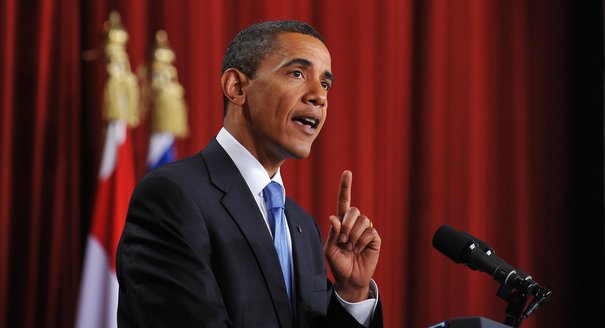
Egypt's Messy Change Demands That Obama Act

The United States should encourage a quick and peaceful end to the current crisis in Egypt and do what it can to support the establishment of a new democracy in the country.

Link Copied
By Michele Dunne
Published on Feb 2, 2011
Program mobile hero image

Program

Middle East

The Middle East Program in Washington combines in-depth regional knowledge with incisive comparative analysis to provide deeply informed recommendations. With expertise in the Gulf, North Africa, Iran, and Israel/Palestine, we examine crosscutting themes of political, economic, and social change in both English and Arabic.

Learn More

Source: Bloomberg

Egypt's Messy Change Demands That Obama ActAs hundreds of thousands of Egyptians demonstrate to demand democracy, the country’s leaders are still trying to manage the process from above rather than negotiate a transition with opposition forces.

President Hosni Mubarak has meted out a series of half- measures so far: appointing a vice president and new cabinet, saying that he will not stand for election when his present term ends in September, and promising to carry out some limited political reforms. These are exactly the kind of top-down, carefully managed changes that the U.S. has long advocated in the Middle East.
 
But the managed reform approach is likely to fail. Limited political reforms dictated by the Egyptian government, with minimal consultation with civil society or opposition forces, would have been welcomed a few years ago. Not now. Demonstrators and the opposition groups seeking to represent them have tasted power and will now insist on being part of the decision making.
 
The difficult question today is who can actually negotiate this transition? On the government side, Mubarak clearly will be an unacceptable interlocutor for the opposition. It is unknown whether newly named Vice President Omar Suleiman can do the task; he seems to have a relatively clean reputation with the Egyptian public, but many in the opposition object to him because of his long tenure as director of intelligence.
 
Opposition groups are calling for all new cabinet members to be replaced by a national unity government that would include members of the judiciary and representatives of various political forces. There is a wide gap to bridge in negotiations and the details remain unresolved.

Organized Opposition

Opponents of the government are also having difficulty coming together. An opposition committee includes representatives from major organized political groups such as the Muslim Brotherhood, Wafd Party, National Association for Change, April 6 youth movement, and Ghad Party. And Mohamed ElBaradei has stepped forward as someone empowered to speak on behalf of these groups.
 
But his role is somewhat contested within the committee and it is unclear whether this coalition can truly represent or control the hundreds of thousands of demonstrators now on the streets in Cairo, Alexandria and other Egyptian cities. Youth organizations including April 6 initiated the original Jan. 25 demonstration that started the uprising. Now events have snowballed to the extent that no-one is clearly in control.

Cut Losses

Still, whatever remains of the government -- at a minimum, the military -- will need to negotiate with someone to get Egyptians off the streets and back to their homes and jobs. For now, ElBaradei and his coalition have the best shot at representing them and translating their demands into a reasonable agenda.
 
The government should cut its losses and get down to work immediately. The longer demonstrators remain in the streets, the more extreme their demands will become.
 
The Obama administration has been tepid in its support for democratization in Egypt, the most populous Arab country, and now has to play catch-up.
 
The U.S. response to the outbreak of protests was initially inadequate. Some of the rhetoric used by the Obama administration in the first few days was out of touch with reality. U.S. officials were essentially saying Egypt was stable and the government was responding to the demands of its people. This wasn’t the case.
 
Then the Obama administration started talking about reform, but the time for reform was years ago.

Nearing Reality

The U.S. has gradually been improving its rhetoric and position, and getting closer to reality. It is in a difficult situation. The Obama administration is concerned that any new Egyptian leader will be inclined to cool relations with both the U.S. and Israel. And Mubarak’s end might further complicate many American endeavors in the region that are already troubled, particularly Israeli-Palestinian peacemaking efforts.
 
On the other hand, the damage to U.S. interests will only increase if it is seen as propping up Mubarak. The gap between Mubarak and the Egyptian people, which has been expanding for a decade, has now grown so wide that it isn’t possible for the U.S. to stand on both sides. The Obama administration needs to push for change in Egypt.
 
The U.S. should encourage a quick and peaceful end to this crisis and then do what it can to support the establishment of a new democracy in Egypt.
 
Is the way forward uncertain and fraught with risks for Egyptians and the U.S.? Yes, it is. But change -- messy change from the grassroots up, rather than tidy reforms from the government down -- is now under way. The U.S. can’t stop it and would only damage its interests further by trying.

About the Author

Michele Dunne

Former Nonresident Scholar, Middle East Program

Michele Dunne was a nonresident scholar in Carnegie’s Middle East Program, where her research focuses on political and economic change in Arab countries, particularly Egypt, as well as U.S. policy in the Middle East.

    Recent Work

  • Research
    Islamic Institutions in Arab States: Mapping the Dynamics of Control, Co-option, and Contention
      • +6

      Yasmine Farouk, Nathan J. Brown, Maysaa Shuja Al-Deen, …
  • Research
    From Hardware to Holism: Rebalancing America’s Security Engagement With Arab States
      • +8

      Robert Springborg, Emile Hokayem, Becca Wasser, …

Michele Dunne
Former Nonresident Scholar, Middle East Program
Michele Dunne
Political ReformForeign PolicyNorth AfricaEgypt

Carnegie does not take institutional positions on public policy issues; the views represented herein are those of the author(s) and do not necessarily reflect the views of Carnegie, its staff, or its trustees.
More Work from Carnegie Endowment for International Peace

  • Commentary
    Strategic Europe
    Taking the Pulse: Is France’s New Nuclear Doctrine Ambitious Enough?

    French President Emmanuel Macron has unveiled his country’s new nuclear doctrine. Are the changes he has made enough to reassure France’s European partners in the current geopolitical context?

      • Rym Momtaz

      Rym Momtaz, ed.

  • Commentary
    The Iran War’s Dangerous Fallout for Europe

    The drone strike on the British air base in Akrotiri brings Europe’s proximity to the conflict in Iran into sharp relief. In the fog of war, old tensions in the Eastern Mediterranean risk being reignited, and regional stakeholders must avoid escalation.

      Marc Pierini

  • Indian Prime Minister Narendra Modi, wearing an orange cap, and the Chief Minister of Uttar Pradesh, Yogi Adityanath, dressed in saffron robes, are greeting supporters of the Bharatiya Janata Party (BJP) during a roadshow ahead of the Indian General Elections in Ghaziabad, Uttar Pradesh, India, on April 6, 2024.
    Paper
    India’s Foreign Policy in the Age of Populism

    Domestic mobilization, personalized leadership, and nationalism have reshaped India’s global behavior.

      Sandra Destradi

  • Commentary
    Strategic Europe
    The EU Needs a Third Way in Iran

    European reactions to the war in Iran have lost sight of wider political dynamics. The EU must position itself for the next phase of the crisis without giving up on its principles.

      Richard Youngs

  • Trump United Nations multilateralism institutions 2236462680
    Article
    Resetting Cyber Relations with the United States

    For years, the United States anchored global cyber diplomacy. As Washington rethinks its leadership role, the launch of the UN’s Cyber Global Mechanism may test how allies adjust their engagement.

      • Christopher Painter

      Patryk Pawlak, Chris Painter

Get more news and analysis from
Carnegie Endowment for International Peace
Carnegie global logo, stacked
1779 Massachusetts Avenue NWWashington, DC, 20036-2103Phone: 202 483 7600Fax: 202 483 1840
  • Research
  • Emissary
  • About
  • Experts
  • Donate
  • Programs
  • Events
  • Blogs
  • Podcasts
  • Contact
  • Annual Reports
  • Careers
  • Privacy
  • For Media
  • Government Resources
Get more news and analysis from
Carnegie Endowment for International Peace
© 2026 Carnegie Endowment for International Peace. All rights reserved.