

Q&A
- +1
Amr Hamzawy, Andrew Leber, Eric Lob, …
{
  "authors": [
    "Marwan Muasher"
  ],
  "type": "legacyinthemedia",
  "centerAffiliationAll": "dc",
  "centers": [
    "Carnegie Endowment for International Peace",
    "Malcolm H. Kerr Carnegie Middle East Center"
  ],
  "collections": [
    "Arab Awakening"
  ],
  "englishNewsletterAll": "menaTransitions",
  "nonEnglishNewsletterAll": "",
  "primaryCenter": "Carnegie Endowment for International Peace",
  "programAffiliation": "MEP",
  "programs": [
    "Middle East"
  ],
  "projects": [],
  "regions": [
    "Middle East",
    "North Africa",
    "Egypt",
    "Gulf",
    "Levant",
    "Maghreb"
  ],
  "topics": [
    "Political Reform"
  ]
}
Source: Getty
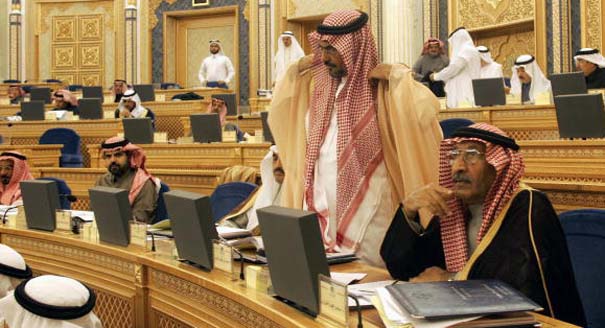
Arab moderation should address all issues of concern to Arab citizens, including reform, rather than focusing on a single issue, like the Israeli-Palestinian peace process.
Source: Yale's Politic

NR: You recently spoke at Yale about “Redefining Arab Moderation.” What were the core ideas of your talk?
Moderation is a Western construct that when used in describing the Arab world, focuses on a single issue – the Arab-Israeli peace conflict. In that sense, some Arab countries – like Egypt, Jordan, and Saudi Arabia – are defined as moderate. When it comes to other issues of concern to Arab citizens like good governance, recent events have shown then you cannot call these countries moderate. I am proposing a new definition for Arab moderation that cuts across all issues of concern to Arab citizens and includes aspects like reform in addition to peace, rather than focusing on only one issue.
JD: What do the ongoing protests say about the way the Arab world views its future and its governments?
It’s clear to me that while the protests may have been triggered by difficult economic conditions, they are not just about the economy. Demand for better government is the underlying theme across all countries. If we look at the slogans protestors are putting forward, very few of them have to do with the economy.
JD: You were the first diplomat to open a Jordanian embassy in Israel, and Jordan has been instrumental in attempts to secure peace between Israel and the region. What effect will the loss of a pro-Israel Egyptian leader have on stability in the region?
I don’t think it will change the existing peace treaties, but I think it will make Israel revisit its position after the events of the past few weeks. Israel’s longstanding claim that it is the only democracy in the Arab world cannot be reconciled with Israel’s prodding of the Obama administration to support Mubarak. The cheers across the international community for Arabs yearning for freedom cannot exclude cheers for Palestinians yearning for freedom from the Israeli occupation. My hope is that this will accelerate a push for a solution to the Arab-Israeli conflict.
NR: What do you foresee happening in Jordan?
Jordan is similar to other Arab countries in yearning for better government, but it’s not similar to Egypt as there are no demands for the King to step down since he is still a unifying figure. Many Jordanians are calling for serious reform to the system. I firmly believe we are entering a new era where business as usual cannot be sustained in any Arab country. Governments will have to either lead a reform process from above, or watch things collapse from below.
JD: What role if any should the United States play in future Middle Eastern uprisings? How do they balance ensuring security in the Middle East without appearing paternalistic?
These uprisings are domestic issues and it’s up to the countries themselves to decide how they want to govern themselves. At the same time, I think the United States can support efforts to democratize without imposing democracy from the outside. For a long time, the United States maintained a policy that prioritized stability over democracy. This was largely because of both its ties to Israel and demand for the region’s oil. The United States now needs to support both stability and democracy.
NR: What should the United States do to win the hearts and minds of Muslims across the Middle East?
President Obama started on the right track two years ago with his speech in Cairo. He basically told the Muslim and Arab worlds that the United States would collaborate with them as partners rather than imposers of reform. This needs to be translated into action, and not by imposing reform, but by making clear the United States’ position that it will prioritize issues in the region besides the Arab-Israeli conflict.
NR: How can Middle Eastern countries deal with demographic problems caused by enormous youth populations facing pervasive unemployment?
This is a real challenge in the Arab world. There is a huge youth bulge where 70% of the population is under 30. Most of the protestors have been frustrated young people. There needs to be an increase in productivity so that the market can absorb all of these people. We also need better foreign investment, but these things cannot come about without proper reform. We need to create the proper environments, including legal systems, that are conducive to growth, reduce corruption, and provide better checks and balances so that no branch of government dominates others. All of these are crucial to economic reform. The Arab world has adopted a policy of economic reform before freedom – essentially, bread before freedom – which did not work. It is clear that the region needs more economic reform, coupled with more freedom.
JD: In the past few weeks immigration from North African states to Europe has increased, particularly from Tunisia to Italy, as young people hope to find work. What will the political ramifications of this increased immigration be?
Europe has initiated a variety of partnerships like the Barcelona Process with the Arab world because Europeans are clearly concerned about these immigration issues. Arabs are also concerned because we’d like to keep this talent in the Arab world. This is connected to the previous question, where by creating economic reform and better governments (which I hope receive better support from the European Union), Arabs can create jobs that keep these citizens at home.
NR: What types of reforms are needed in Arab education systems?
The quality of education and curriculum in the Arab world needs to be reevaluated in a major way. The current system encourages submission and obedience, and subscribes to truths that are absolute rather than relative. We need to move towards a system that encourages diversity, tolerance, and critical thinking. These are not only important skills for the market place, but more importantly, crucial skills for making people better citizens.
JD: Lastly, what do you think will happen to Mubarak?
He has indicated that he would like to stay in Egypt, but what happens will be entirely up to the Egyptian people.

Vice President for Studies
Marwan Muasher is vice president for studies at Carnegie, where he oversees research in Washington and Beirut on the Middle East. Muasher served as foreign minister (2002–2004) and deputy prime minister (2004–2005) of Jordan, and his career has spanned the areas of diplomacy, development, civil society, and communications.
Recent Work



Amr Hamzawy, Andrew Leber, Eric Lob, …
Marwan Muasher
Carnegie does not take institutional positions on public policy issues; the views represented herein are those of the author(s) and do not necessarily reflect the views of Carnegie, its staff, or its trustees.
As the U.S.-led Coalition withdraws, the Kurds’ reliance on Baghdad, and on themselves, will only increase.
Wladimir van Wilgenburg

Fatima El Mansouri is the country’s first female prime minister. She’s also a privileged insider in a largely ceremonial position.

Sarah Yerkes

Sergei Kiriyenko used Russia’s parliamentary vote to further hone his strategy of corporate mobilization that is designed to maximize votes for United Russia.

Andrey Pertsev

Before the next wave of EU enlargement takes place, the union needs to grapple with thorny questions of how power is distributed among its members.


Emil Sondaj Hansen, Ditte Brasso Sørensen

The Horn of Africa countries are among those facing a new security calculus.

Andrew Leber, Lesley Anne Warner