• Research
  • Emissary
  • About
  • Experts
Carnegie Global logoCarnegie lettermark logo
Democracy
  • Donate
{
  "authors": [
    "Mark Hibbs"
  ],
  "type": "legacyinthemedia",
  "centerAffiliationAll": "dc",
  "centers": [
    "Carnegie Endowment for International Peace",
    "Carnegie Russia Eurasia Center"
  ],
  "collections": [],
  "englishNewsletterAll": "",
  "nonEnglishNewsletterAll": "",
  "primaryCenter": "Carnegie Endowment for International Peace",
  "programAffiliation": "NPP",
  "programs": [
    "Nuclear Policy"
  ],
  "projects": [],
  "regions": [
    "East Asia",
    "Japan"
  ],
  "topics": [
    "Nuclear Policy",
    "Nuclear Energy"
  ]
}
Source: Getty

In The Media

5 Early Lessons From Japan's Nuclear Crisis

As Japan struggles to find ways to cool its damaged nuclear reactors, it is increasingly clear that it is in the world’s best interest to ensure that nuclear operators can effectively handle unpredictable and even extreme external events that might impact their installations.

Link Copied
By Mark Hibbs
Published on Mar 17, 2011
Program mobile hero image

Program

Nuclear Policy

The Nuclear Policy Program aims to reduce the risk of nuclear war. Our experts diagnose acute risks stemming from technical and geopolitical developments, generate pragmatic solutions, and use our global network to advance risk-reduction policies. Our work covers deterrence, disarmament, arms control, nonproliferation, and nuclear energy.

Learn More

Source: CNN

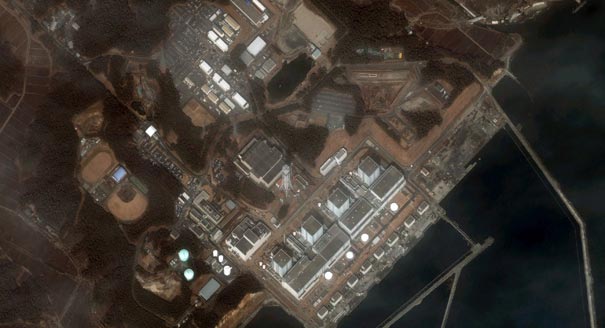
5 Early Lessons From Japan's Nuclear CrisisJapan is desperately racing to prevent three power reactors from melting down after last week's devastating earthquake and tsunami. This is an almost unthinkable challenge.

A similar accident happened at one reactor at Three Mile Island many years ago, but Japan's rescue effort is taking place in near-battlefield conditions on a site that is truly a no-man's-land.

The nuclear reactors at the Fukushima Daiichi and Fukushima Daini power stations were automatically shut off after the earthquake. But with external power lost and local backups damaged by the tsunami, emergency cooling systems failed to work. This has forced Japanese authorities to improvise and find other ways to keep the reactors cool, prevent pressure from building up inside the vessels holding the fuel, and prevent the reactor cores from melting significantly.

Without full knowledge of everything Japanese authorities have done since the crisis began, it is too early to properly evaluate the country's response. But even as we wait for all the facts, there are early lessons that we all can take from the nuclear crisis in Japan:

  • The world should be building and operating modern nuclear reactors. Countries should build and operate nuclear reactors that use the latest and safest technology available and licensing standards need to be improved regularly. The reactors at Fukushima are 40 years old and would never be given a green light for new construction by Japanese regulators today. But China and India, two rising powers that plan to invest considerably in nuclear energy, are continuing to use 25-year-old designs for new construction. In February, the Japanese government was prepared to permit the oldest of the Fukushima reactors to operate for another 10 years after its license expired this year.
     
  • Countries should not be over-reliant on nuclear energy. Last week's earthquake and another one in 2007 knocked out 15 of 17 reactors operated by Tokyo Electric Power Company on its two sites in northern Japan. If a country greatly depends on nuclear power for electricity, a major nuclear accident can trigger an electricity supply crisis. Policy makers can also face significant pressure to continue operating reactors even under unsafe conditions if the country is over-dependent on nuclear power.
  • Relying on nuclear energy requires significant know-how and resources. With the threat of global warming and burgeoning energy demand around the world, nuclear power has gained favor. Dozens of countries have announced an interest in starting nuclear energy programs, and existing operators are looking to bump up their operations. But Japan's crisis underscores that generating electricity by using nuclear fission requires the best know-how, infrastructure, management experience and resources available. New plants must meet essential preconditions for safety and international cooperation should ensure that plants can withstand possible emergencies.
  • Companies and countries must plan for the worst. Both earthquakes that set back Tokyo Electric were stronger than had been expected. There is a clear need to re-evaluate how seismic risk analysis is done to make sure that nuclear power plants are built to weather the worst threats they could face.
  • Safety concerns must not take a back seat to energy production or prestige. For many newcomer nuclear countries -- especially those facing dire energy needs -- the temptation may be great to get new nuclear power plants on line as fast as possible. Critical aspects of nuclear programs that won't contribute to profits or generate power, such as spent fuel and waste management and emergency preparedness, cannot be neglected by governments and industry leaders aiming to achieve fast results or save money.

Given the global impact of nuclear disasters, it is in all of our best interests to ensure that nuclear operators can effectively handle unpredictable and even extreme external events that impact their installations. It will take time to fully understand the extent of the crisis in Japan, but there are steps that can be taken today that will make the world's nuclear programs safer.

Mark Hibbs
Nonresident Senior Fellow, Nuclear Policy Program
Mark Hibbs
Nuclear PolicyNuclear EnergyEast AsiaJapan

Carnegie does not take institutional positions on public policy issues; the views represented herein are those of the author(s) and do not necessarily reflect the views of Carnegie, its staff, or its trustees.
More Work from Carnegie Endowment for International Peace

  • Commentary
    Carnegie Politika
    For Putin, Increasing Russia’s Nuclear Threat Matters More Than the Triad’s Modernization

    For Putin, upgrading Russia’s nuclear forces was a secondary goal. The main aim was to gain an advantage over the West, including by strengthening the nuclear threat on all fronts. That made growth in missile arsenals and a new arms race inevitable.

      Maxim Starchak

  • Commentary
    Carnegie Politika
    Japan’s “Militarist Turn” and What It Means for Russia

    For a real example of political forces engaged in the militarization of society, the Russian leadership might consider looking closer to home.

      James D.J. Brown

  • A Quarter Century of Nuclear South Asia: Nuclear Noise, Signalling, and the Risk of Escalation in India-Pakistan Crises
    Paper
    A Quarter Century of Nuclear South Asia: Nuclear Noise, Signalling, and the Risk of Escalation in India-Pakistan Crises

    A close study of five crises makes clear that Cold War logic doesn’t apply to the South Asia nuclear powers.

      • Rizwan Zeb

      Moeed Yusuf, Rizwan Zeb

  • A New Era of Nuclear-Powered Submarines Is Making Waves in Nuclear-Weapon-Free Zones
    Research
    A New Era of Nuclear-Powered Submarines Is Making Waves in Nuclear-Weapon-Free Zones

    As states without nuclear weapons develop nuclear-powered submarines, can NWFZ regimes adapt to manage new technical, legal, procedural, and normative challenges?

      Jamie Kwong, ed., Toby Dalton, ed., Celia McDowall, ed.

  • Navigating Responsible Stewardship of Nuclear-Powered Submarines
    Research
    Navigating Responsible Stewardship of Nuclear-Powered Submarines

    As the first states without nuclear weapons set to acquire nuclear-powered attack submarines, Australia and Brazil face new questions and challenges as they seek to responsibly manage the risks of naval nuclear propulsion.

      Jamie Kwong, ed., Toby Dalton, ed.

Get more news and analysis from
Carnegie Endowment for International Peace
Carnegie global logo, stacked
1779 Massachusetts Avenue NWWashington, DC, 20036-2103Phone: 202 483 7600Fax: 202 483 1840
  • Research
  • Emissary
  • About
  • Experts
  • Donate
  • Programs
  • Events
  • Blogs
  • Podcasts
  • Contact
  • Annual Reports
  • Careers
  • Privacy
  • For Media
  • Government Resources
Get more news and analysis from
Carnegie Endowment for International Peace
© 2026 Carnegie Endowment for International Peace. All rights reserved.