
• Research
  • Emissary
  • About
  • Experts
Carnegie Global logoCarnegie lettermark logo
DemocracyIran
  • Donate
{
  "authors": [
    "Michele Dunne"
  ],
  "type": "legacyinthemedia",
  "centerAffiliationAll": "dc",
  "centers": [
    "Carnegie Endowment for International Peace",
    "Malcolm H. Kerr Carnegie Middle East Center"
  ],
  "collections": [
    "Arab Awakening"
  ],
  "englishNewsletterAll": "menaTransitions",
  "nonEnglishNewsletterAll": "",
  "primaryCenter": "Carnegie Endowment for International Peace",
  "programAffiliation": "MEP",
  "programs": [
    "Middle East"
  ],
  "projects": [],
  "regions": [
    "North Africa",
    "Egypt"
  ],
  "topics": [
    "Political Reform",
    "Economy"
  ]
}
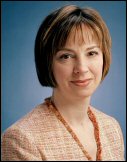
Source: Getty

In The Media

Egypt's Transition to Democracy

Egypt’s growing middle class, large civil society, and well-developed state institutions may enable it to achieve a successful democratic transition.

Link Copied
By Michele Dunne
Published on Mar 8, 2011
Program mobile hero image

Program

Middle East

The Middle East Program in Washington combines in-depth regional knowledge with incisive comparative analysis to provide deeply informed recommendations. With expertise in the Gulf, North Africa, Iran, and Israel/Palestine, we examine crosscutting themes of political, economic, and social change in both English and Arabic.

Learn More

Source: American Public Media

KAI RYSSDAL: There's legal news from Egypt today. A court in Cairo has rejected an appeal from former President Hosni Mubarak. He wants to stop prosecutors from seizing assets that've been linked to him and his family.

There's some speculation this could eventually mean a criminal trial for Mubarak. Already some prominent Egyptian businessmen and former government officials have been arrested on corruption charges, something that would have been unheard of just a couple of months ago.
 
Commentator Michele Dunne says those are just some of the changes that Egyptians are going to have to get used to.
 
MICHELE DUNNE: Is Egypt ready for democracy?
 
You've probably heard these facts over the last few weeks: Some 20 percent of the Egyptian population lives on $2 a day. More than 30 percent of the public suffers from illiteracy. Reforms that were made by the former President Hosni Mubarak tended to be distributed unequally among Egyptians. The rich were getting richer and the poorer were getting poorer. There's no middle class to speak of.
 
That must make you think the answer is "no."
 
But we need to look deeper at trends in Egypt and what they predict for the future of democracy.
 
Compare Egypt to other countries. Egypt is a lower middle income country by international standards, but by no means among the poorest of the poor. Income per capita and the equality of income distribution are similar to or better than those in India and Indonesia, two countries that made successful transitions to democracy.
 
Middle class and poor Egyptians have definitely felt the pinch of rising global commodity prices and have not had their fair share of economic growth. That's due to corruption, but also because public education has failed to prepare their children for the private sector jobs that previous reforms generated.
 
But the idea that the middle class has disappeared is a myth. In fact, the Egyptian middle class has grown as a percentage of the overall population for decades -- from about 20 percent in the 1950s to roughly 50 percent by the 1990s. The percentage under the poverty line fell steadily until at least 2008, when it rose slightly as the global economic downturn hit.
 
So, is Egypt ready for democracy?
 
Egyptians are now embarked on what will probably be a long political journey with many detours. But they have a large civil society, and well-developed state institutions. And the socioeconomic indicators are not as bad as many outsiders imagine.

About the Author

Michele Dunne

Former Nonresident Scholar, Middle East Program

Michele Dunne was a nonresident scholar in Carnegie’s Middle East Program, where her research focuses on political and economic change in Arab countries, particularly Egypt, as well as U.S. policy in the Middle East.

    Recent Work

  • Research
    Islamic Institutions in Arab States: Mapping the Dynamics of Control, Co-option, and Contention
      • +6

      Yasmine Farouk, Nathan J. Brown, Maysaa Shuja Al-Deen, …
  • Research
    From Hardware to Holism: Rebalancing America’s Security Engagement With Arab States
      • +8

      Robert Springborg, Emile Hokayem, Becca Wasser, …

Michele Dunne
Former Nonresident Scholar, Middle East Program
Michele Dunne
Political ReformEconomyNorth AfricaEgypt

Carnegie does not take institutional positions on public policy issues; the views represented herein are those of the author(s) and do not necessarily reflect the views of Carnegie, its staff, or its trustees.

More Work from Carnegie Endowment for International Peace

  • Trump and Netanyahu speaking
    Commentary
    Emissary
    The Diverging U.S. and Israeli Goals in Iran Are Making the Endgame Even Murkier

    The cracks between Trump and Netanyahu have become more pronounced, particularly over energy and leadership targets.

      • Eric Lob

      Eric Lob

  • Seoul traffic at night
    Commentary
    Emissary
    How the Hormuz Closure Is Testing the Korean President’s Progressive Agenda

    The crisis is not just a story of energy vulnerability. It’s also a complex, high-stakes political challenge.

      Darcie Draudt-Véjares

  • Commentary
    Carnegie Politika
    Tokayev’s New Constitution Is a Bet on Stability—At Freedom’s Expense

    Kazakhstan’s new constitution is an embodiment of the ruling elite’s fears and a self-serving attempt to preserve the status quo while they still can.

      Serik Beysembaev

  • Commentary
    Strategic Europe
    Europe and the Arab Gulf Must Come Together

    The war in Iran proves the United States is now a destabilizing actor for Europe and the Arab Gulf. From protect their economies and energy supplies to safeguarding their territorial integrity, both regions have much to gain from forming a new kind of partnership together.

      • Rym Momtaz

      Rym Momtaz

  • One man tossing a sack to another to stack on a truck
    Commentary
    Emissary
    The Other Global Crisis Stemming From the Strait of Hormuz’s Blockage

    Even if the Iran war stops, restarting production and transport for fertilizers and their components could take weeks—at a crucial moment for planting.

      • Noah  Gordon ​​​​

      Noah Gordon, Lucy Corthell

Get more news and analysis from
Carnegie Endowment for International Peace
Carnegie global logo, stacked
1779 Massachusetts Avenue NWWashington, DC, 20036-2103Phone: 202 483 7600Fax: 202 483 1840
  • Research
  • Emissary
  • About
  • Experts
  • Donate
  • Programs
  • Events
  • Blogs
  • Podcasts
  • Contact
  • Annual Reports
  • Careers
  • Privacy
  • For Media
  • Government Resources
Get more news and analysis from
Carnegie Endowment for International Peace
© 2026 Carnegie Endowment for International Peace. All rights reserved.











