

Commentary
Nikolay Petrov
{
  "authors": [
    "Nikolay Petrov"
  ],
  "type": "legacyinthemedia",
  "centerAffiliationAll": "",
  "centers": [
    "Carnegie Endowment for International Peace",
    "Carnegie Russia Eurasia Center"
  ],
  "collections": [],
  "englishNewsletterAll": "",
  "nonEnglishNewsletterAll": "",
  "primaryCenter": "Carnegie Russia Eurasia Center",
  "programAffiliation": "",
  "programs": [],
  "projects": [],
  "regions": [],
  "topics": []
}
Source: Getty
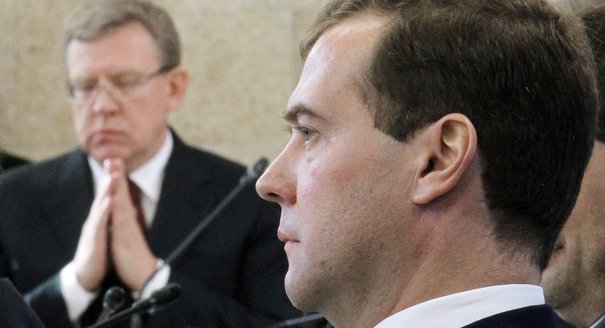
While Prime Minister Vladimir Putin has shown no signs of being willing to leave power after the 2012 presidential elections, it looks increasingly like there will be no role for President Dmitry Medvedev in the post-election era.
Source: The Moscow Times

During the interval between those two statements, the Justice Ministry confirmed the registration of the Congress of Russian Communities, a nationalist public association without party affiliation, and billionaire Mikhail Prokhorov said he would lead the Right Cause party, giving him a status that almost rivals that of the ruling tandem of Putin and Medvedev.
Complicating matters, as Medvedev held his news conference, A Just Russia’s former leader Sergei Mironov was fired as Federation Council speaker.
Why all the sudden political activity? The problem is that interest is already waning over who will serve a six-year term as Russia’s next president. While at one time it was the most intriguing question in politics, it now seems to have lost any special meaning, with pure inertia driving the buzz among journalists and observers over the issue.
The fact is that Putin has given no signs of planning to leave power. In any system built on the personal authority of a single individual, the leader only makes an unexpected departure as a result of a revolution or coup d’etat.
Is there any reason to believe that the business and political elite are worried enough over the country’s economic future to give up their current comforts and risk full-scale modernization? They might have been scared two years ago. But with oil prices at over $100 a barrel, there is no reason to worry anymore. Given a choice between divvying up the country’s natural resource wealth or doing the work necessary to modernize the country, the elite would definitely prefer the former. The best proof of this is a huge state project to build oil pipelines in all directions and a pledge to spend 20 trillion rubles ($710 billion) on re-equipping the army.
With Putin fixed firmly in place, the political and economic model also remains unchanged. The only real question remaining is whether it would make political sense to retain the ruling tandem. The answer is probably not. The tandem has already played out its role of boosting Russia’s image at home and abroad. Serious political reforms — either democratic or authoritarian — are practically impossible as long as you have two leaders, one nominal and one in fact.
The tandem was only able to accomplish a portion of the unpleasant tasks that it had planned. It did manage to retire the most powerful and relatively independent regional governors last year. But fearing the possibility of widespread protests, it postponed implementing planned but painful social reforms to the pension system, health care and budgetary affairs. But now the time has come to tackle those reforms. Rather than take full responsibility for unpopular measures, Putin would prefer to find someone to do the dirty work and then step down. At least four people are suitable for this role: Prokhorov, First Deputy Prime Minister Igor Shuvalov, Rusnano CEO Anatoly Chubais and Finance Minister Alexei Kudrin.
Here’s how it could play out: Putin returns to the Kremlin and concerns himself with political matters, only to express “shock” one day that his liberal prime minister has gone too far. Putin summarily dismisses him, makes a show of trying to put things back in order, but then declares that “what’s done is done.”
Of course, other variations on this theme are also an option. But none of them includes a role for Medvedev. From the beginning, his job was to play the “disposable president,” and it would seem that nothing has happened to alter that fate.
Medvedev’s supporters can console themselves with the knowledge that the country would not develop even if Putin were to retain him. Modernization can never come from above at the initiative of a “benevolent tsar.” What we will see instead is reactionary modernization — increasing the sophistication of the still-primitive political system for the sake of the authorities’ survival, not for the sake of the people.
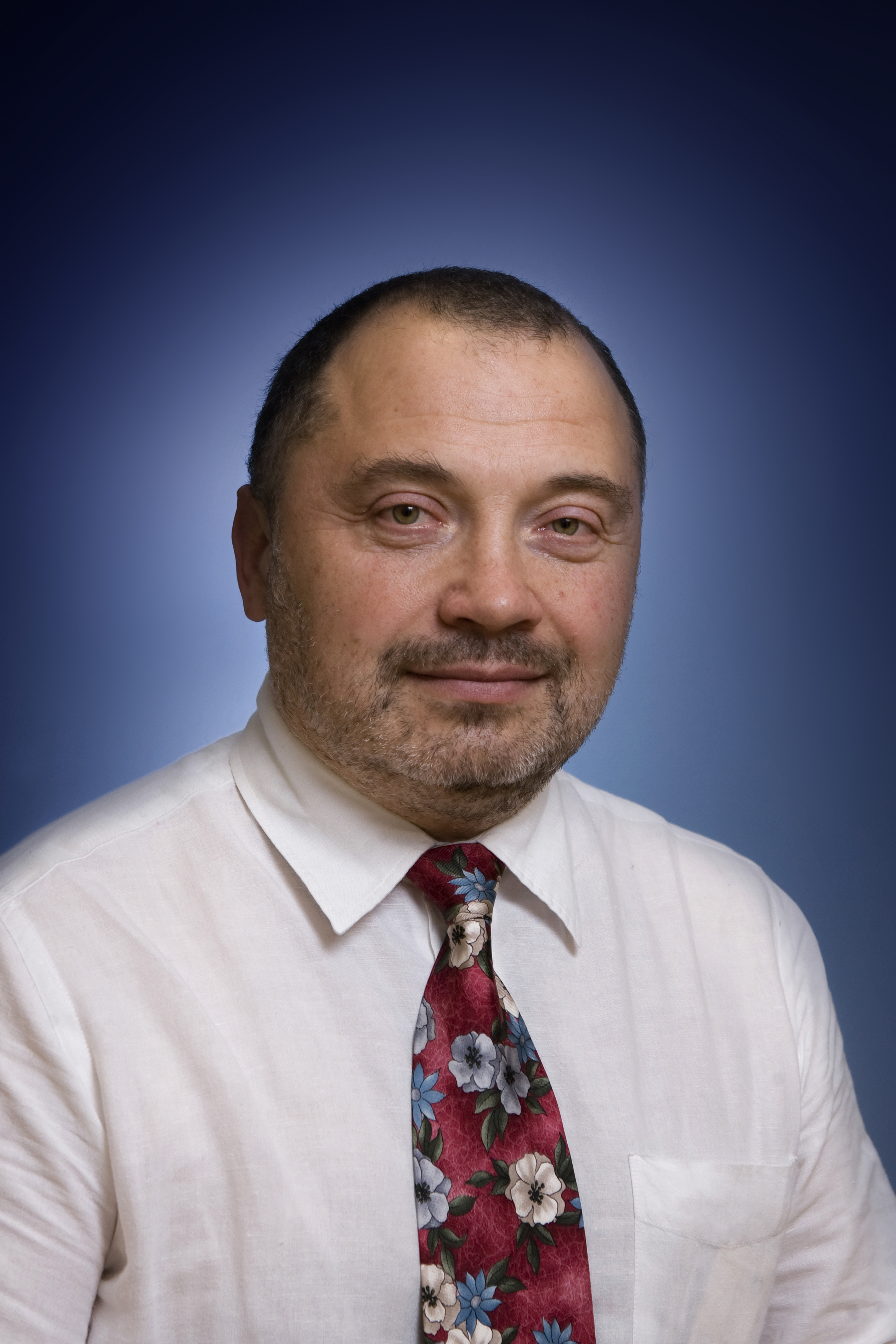
Former Scholar-in-Residence, Society and Regions Program, Moscow Center
Nikolay Petrov was the chair of the Carnegie Moscow Center’s Society and Regions Program. Until 2006, he also worked at the Institute of Geography at the Russian Academy of Sciences, where he started to work in 1982.
Recent Work
Nikolay Petrov
Nikolay Petrov
Carnegie does not take institutional positions on public policy issues; the views represented herein are those of the author(s) and do not necessarily reflect the views of Carnegie, its staff, or its trustees.