

Research
- +10
Rosa Balfour, Frances Z. Brown, Yasmine Farouk, …
{
  "authors": [
    "Moisés Naím"
  ],
  "type": "legacyinthemedia",
  "centerAffiliationAll": "",
  "centers": [
    "Carnegie Endowment for International Peace"
  ],
  "collections": [],
  "englishNewsletterAll": "",
  "nonEnglishNewsletterAll": "",
  "primaryCenter": "Carnegie Endowment for International Peace",
  "programAffiliation": "",
  "programs": [],
  "projects": [],
  "regions": [
    "North America",
    "United States"
  ],
  "topics": [
    "Political Reform",
    "Economy",
    "Security",
    "Military",
    "Foreign Policy"
  ]
}
Source: Getty
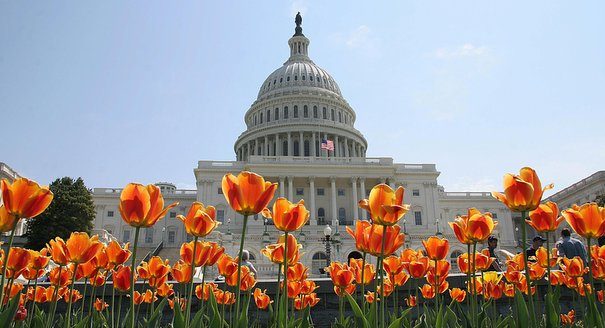
Although the United States faces enormous problems—underscored by the recent downgrade of its credit rating and renewed economic worries—it will remain the most powerful country in the world.
Source: Fox News Latino

According to the well-known author Christopher Hitchens, "the U.S. financial crisis is just the latest example of the trend that threatens to put the country on a par with Zimbabwe, Venezuela and Equatorial Guinea."
Not only that, counters Nicholas Kristof, the New York Times columnist: "It is the unequal distribution of wealth that puts the United States on the same level as banana republics like Nicaragua, Venezuela or Guyana.” Russian President Vladimir Putin goes even further: “In fact, the U.S. is a parasite that lives off of the global economy."
American political leaders, meanwhile, respond with finger-pointing. For Mitt Romney, one of the leading Republican presidential hopefuls, the problem is that the U.S. is "...only inches away from ceasing to be a free market economy." And President Barack Obama regrets that his country "does not have an AAA political system to match its AAA credit."
It is too easy, these days, to conclude that the United States is a political and economic disaster-zone and that it may not remain the most powerful country in the world. For those who already had doubts about American supremacy, the shameful negotiations about the debt ceiling were the final confirmation that the superpower is in freefall.
And, of course, the collapse of the stock market and the possibility that the economy is diving back into recession are yet further manifestations of an unstoppable American debacle.
This conclusion, so obvious to so many, is wrong. Here’s why:
1) Some of the main pillars of America’s international dominance are still the world’s strongest. Wall Street, the Pentagon, Hollywood, Silicon Valley, universities and many other sources continue to be unmatched by their foreign rivals. The stock market is taking a beating and budget cuts will weaken many sectors, including, for the first time in decades, the Armed Forces.
Still, the current U.S. advantage over its rivals is so large that these cuts will not threaten its position at the top. For example: America’s Coast Guard has more ships than the entire fleets of the 12 largest navies in the world. It is not for nothing that the U.S. spends more on defense than any other country. And in other strategic areas, U.S. supremacy, while under stress and challenged, is still strong.
2) Absolute power does not matter. What matters is relative power compared to rivals. Although the U.S. may be declining in absolute power, its closest competitors also have grave problems and face difficult internal and external threats, both political and economic. These problems weaken them as much or more than those besetting the U.S.
3) Demographics. In almost all rich countries the population is growing slowly or declining. In the U.S. it is increasing. In addition, it remains a magnet for the world's most talented and entrepreneurial people. It is also a country that not only integrates immigrants quickly but it also knows better than most others how to give them opportunities and use them more productively, especially those who are more skilled and better educated.
4) When there’s a global financial panic and investors are seeking a safe haven for their savings, where do they turn? To the United States. As all stock markets are tumbling, the appetite for buying U.S. Treasuries continues unabated. Such was the demand for these bonds, last week that their yields fell to their lowest level in history. The first Monday of trading after the Standard and Poor's downgrade, the demand for U.S. treasury bonds soared.
Investors did not care that they would get a minimal return on their capital, their priority was to ensure that they were investing in the bonds of a government that would keep their capital safe.
Amazing, huh? We are talking about the same government and the same bonds whose solvency is being fiercely contested. Even a downgrading by the rating agency Standard & Poor's of U.S. sovereign bonds did not produce capital flight from that market.
The global financial market gave a resounding answer to those who maintain that the unfortunate debate in Washington over the debt ceiling did irreversible damage to U.S. credit. That idea may play well in editorials and talk shows, but it has been dismissed by those who know about money.
Investors speak with deeds, not words. And their decisions show that they believe the U.S. government bonds still offer the safest investment in the world. In the long run the S&P downgrade may end up hurting the credibility of S&P more than the credit of the United States government.
5) The influence of radical and destructive political factions will be temporary. The rise of extremist groups with ideas, which suddenly dominate the political scene only to disappear just as quickly as they appeared, is a recurrent phenomenon in the U.S. McCarthyism and the various populist movements are examples of this. Ross Perot is another. And the Tea Party will be just one more.
This will become clear as the practical consequences of the Tea Party ideology will become better known and, more importantly, felt. This includes the groups that have been so easily energized by the Tea Party's anti-Washington rhetoric.
Is the United States facing enormous problems? Yes. Does it have more global competitors challenging its supremacy? Of course. Has it been weakened? Yes. More than other countries? No. Will it remain, for the foreseeable future, the most powerful country in the world? Yes.

Distinguished Fellow
Moisés Naím is a distinguished fellow at the Carnegie Endowment for International Peace, a best-selling author, and an internationally syndicated columnist.
Recent Work



Rosa Balfour, Frances Z. Brown, Yasmine Farouk, …
Moisés Naím
Carnegie does not take institutional positions on public policy issues; the views represented herein are those of the author(s) and do not necessarily reflect the views of Carnegie, its staff, or its trustees.

The Plaza Accord was not an externally imposed punishment of Japan but part of a broader restructuring that Japanese economists and policymakers themselves recognized was necessary. Its effects were undermined, however, when Tokyo responded to the resulting slowdown with policies that exacerbated investment, credit expansion, and the very imbalances the adjustment was intended to resolve.

Michael Pettis

Trump has promised Belarus a massive potash deal. But Minsk is seeking something greater: restored Western transit and greater room for maneuver from Russia.

Balázs Jarábik

Before the next wave of EU enlargement takes place, the union needs to grapple with thorny questions of how power is distributed among its members.


Emil Sondaj Hansen, Ditte Brasso Sørensen

The real test may come after the leaders leave the room.



Sheena Chestnut Greitens, Oriana Skylar Mastro, Yukon Huang, …

The Horn of Africa countries are among those facing a new security calculus.


Andrew Leber, Lesley Anne Warner