• Research
  • Emissary
  • About
  • Experts
Carnegie Global logoCarnegie lettermark logo
DemocracyIran
  • Donate
{
  "authors": [],
  "type": "other",
  "centerAffiliationAll": "",
  "centers": [
    "Carnegie Endowment for International Peace"
  ],
  "collections": [],
  "englishNewsletterAll": "",
  "nonEnglishNewsletterAll": "",
  "primaryCenter": "Carnegie Endowment for International Peace",
  "programAffiliation": "",
  "programs": [],
  "projects": [],
  "regions": [
    "North Africa",
    "Egypt"
  ],
  "topics": []
}

Source: Getty

Other

Asala Party

A backgrounder on the Asala Party.

Link Copied
Published on Sep 20, 2011

This resource was published on 09/20/2011 and is not updated to reflect changing circumstances.

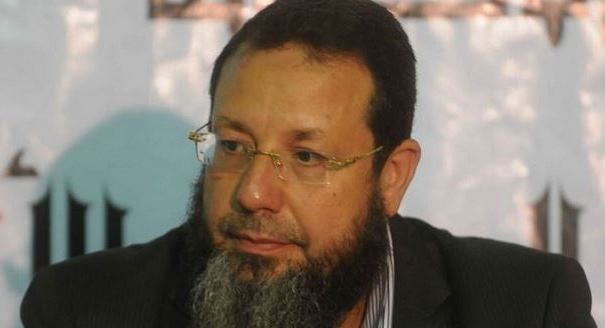
Al-Asala is a Salafi party founded by Adel Abd al-Maqsoud Afify following the January 2011 uprising. It is the second Salafi party after al-Nour to gain official recognition in Egypt. Al-Asala was a member of the Democratic Alliance.

Major Party Figures

General Doctor Adel Abd al-Maqsoud Afify: Founder and President
Mamdouh Ismael: Vice President
Ihab Mohamed Ali Sheeha: Founder
Mohamed Ibrahim Abdel Fattah Sultan: Founder

Background

In July 2011, Adel Abd al-Maqsoud Afify, then president of the al-Fadila Party, announced his resignation and founded al-Asala. A number of prominent Salafi preachers have declared their support for al-Asala, including Sheikh Mohamed Hassan, Mohamed Abd al-Maqsoud, Mohamed Abd al-Salaam, Sheikh Mostafa Mohamed, and Sheikh Mamdouh Gaber. The party’s stated goal is to spread the values of justice and equality, and to restore Egypt’s leading role in the world in conformity with the principles of Islamic law. The al-Asala Party gained official recognition as a political party on August 28, 2011.

Platform

Political Issues

  • Supporting an Islamic religious state in Egypt
  • Supporting reforms that will move the Egyptian state and society toward Islam
  • Treating all Egyptian individuals with justice regardless of their religious or political views
  • Fighting corruption
  • Prosecuting anyone who commits a crime against the Egyptian people
  • Affirming the freedom of the media but only under the restrictions of Islamic law

Socioeconomic Issues

  • Supporting a fair distribution of wealth
  • Working to raise the quality of life through social solidarity and the promotion of investment

Foreign Policy Issues

  • Working to return Egypt to its leading position in the Islamic world through an Islamic renaissance
  • Unifying the ranks of the Islamic world and pushing it to fight against injustice
  • Rejecting the Camp David Accords and peace with or recognition of Israel
North AfricaEgypt

Carnegie does not take institutional positions on public policy issues; the views represented herein are those of the author(s) and do not necessarily reflect the views of Carnegie, its staff, or its trustees.

More Work from Carnegie Endowment for International Peace

  • Teenagers hold a large banner reading "stop pollution in Gabes, stop pollution everywhere, save Gabes'' in English and Arabic
    Article
    Civil Society Restrictions in North Africa: The Impact on Climate-Focused Civil Society Organizations

    For climate-focused civil society in countries like Morocco, Algeria, and Tunisia to be most effective, organizations should work together to develop networks that extend their reach beyond their local area and connect across borders to share best practices and amplify each other’s work.

      • Sarah Yerkes

      Sarah Yerkes

  • Commentary
    Diwan
    When Football Is More Than Football

    The recent African Cup of Nations tournament in Morocco touched on issues that largely transcended the sport.

      Issam Kayssi, Yasmine Zarhloule

  • Research
    Russia in Africa: Examining Moscow’s Influence and Its Limits

    As Moscow looks for opportunities to build inroads on the continent, governments in West and Southern Africa are identifying new ways to promote their goals—and facing new risks.

      • Nate Reynolds
      • +1

      Nate Reynolds, ed., Frances Z. Brown, ed., Frederic Wehrey, ed., …

  • Photo of Duma Boko in a gray suit waving at a crowd.
    Article
    Africa’s Democratic Kaleidoscope: Trends to Watch in 2026

    Supporters of democracy within and outside the continent should track these four patterns in the coming year.

      Saskia Brechenmacher, Frances Z. Brown

  • Commentary
    Strategic Europe
    Taking the Pulse: What Issue Is Europe Ignoring at Its Peril in 2026?

    2026 has started in crisis, as the actions of unpredictable leaders shape an increasingly volatile global environment. To shift from crisis response to strategic foresight, what under-the-radar issues should the EU prepare for in the coming year?

      Thomas de Waal

Get more news and analysis from
Carnegie Endowment for International Peace
Carnegie global logo, stacked
1779 Massachusetts Avenue NWWashington, DC, 20036-2103Phone: 202 483 7600Fax: 202 483 1840
  • Research
  • Emissary
  • About
  • Experts
  • Donate
  • Programs
  • Events
  • Blogs
  • Podcasts
  • Contact
  • Annual Reports
  • Careers
  • Privacy
  • For Media
  • Government Resources
Get more news and analysis from
Carnegie Endowment for International Peace
© 2026 Carnegie Endowment for International Peace. All rights reserved.