• Research
  • Emissary
  • About
  • Experts
Carnegie Global logoCarnegie lettermark logo
DemocracyIran
  • Donate
{
  "authors": [],
  "type": "other",
  "centerAffiliationAll": "",
  "centers": [
    "Carnegie Endowment for International Peace"
  ],
  "collections": [],
  "englishNewsletterAll": "",
  "nonEnglishNewsletterAll": "",
  "primaryCenter": "Carnegie Endowment for International Peace",
  "programAffiliation": "",
  "programs": [],
  "projects": [],
  "regions": [
    "North Africa",
    "Egypt"
  ],
  "topics": []
}

Source: Getty

Other

Asala Party

A backgrounder on the Asala Party.

Link Copied
Published on Sep 20, 2011

This resource was published on 09/20/2011 and is not updated to reflect changing circumstances.

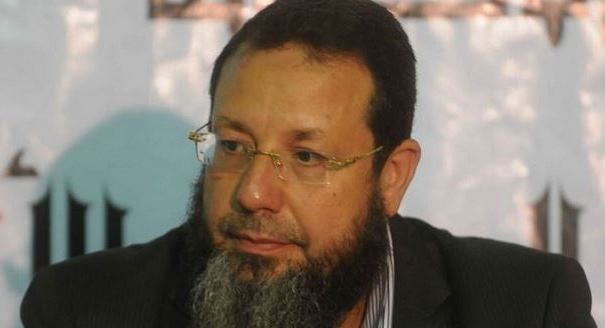
Al-Asala is a Salafi party founded by Adel Abd al-Maqsoud Afify following the January 2011 uprising. It is the second Salafi party after al-Nour to gain official recognition in Egypt. Al-Asala was a member of the Democratic Alliance.

Major Party Figures

General Doctor Adel Abd al-Maqsoud Afify: Founder and President
Mamdouh Ismael: Vice President
Ihab Mohamed Ali Sheeha: Founder
Mohamed Ibrahim Abdel Fattah Sultan: Founder

Background

In July 2011, Adel Abd al-Maqsoud Afify, then president of the al-Fadila Party, announced his resignation and founded al-Asala. A number of prominent Salafi preachers have declared their support for al-Asala, including Sheikh Mohamed Hassan, Mohamed Abd al-Maqsoud, Mohamed Abd al-Salaam, Sheikh Mostafa Mohamed, and Sheikh Mamdouh Gaber. The party’s stated goal is to spread the values of justice and equality, and to restore Egypt’s leading role in the world in conformity with the principles of Islamic law. The al-Asala Party gained official recognition as a political party on August 28, 2011.

Platform

Political Issues

  • Supporting an Islamic religious state in Egypt
  • Supporting reforms that will move the Egyptian state and society toward Islam
  • Treating all Egyptian individuals with justice regardless of their religious or political views
  • Fighting corruption
  • Prosecuting anyone who commits a crime against the Egyptian people
  • Affirming the freedom of the media but only under the restrictions of Islamic law

Socioeconomic Issues

  • Supporting a fair distribution of wealth
  • Working to raise the quality of life through social solidarity and the promotion of investment

Foreign Policy Issues

  • Working to return Egypt to its leading position in the Islamic world through an Islamic renaissance
  • Unifying the ranks of the Islamic world and pushing it to fight against injustice
  • Rejecting the Camp David Accords and peace with or recognition of Israel
North AfricaEgypt

Carnegie does not take institutional positions on public policy issues; the views represented herein are those of the author(s) and do not necessarily reflect the views of Carnegie, its staff, or its trustees.

More Work from Carnegie Endowment for International Peace

  • Photo of commercial ship anchored near the Strait of Hormuz.
    Article
    In the Middle East and North Africa, America and China Converge More Than They Diverge

    Middle powers in the region will keep hedging between Washington and Beijing. It’s in the great powers’ interests to play along.

      • Photo of Kathryn Selfe.

      Amr Hamzawy, Kathryn Selfe

  • Commentary
    Diwan
    The West’s Climate Colonialism in the Greater Middle East

    There is a disturbing structural parallel between the old global energy economy and the new green transition.

      • Angie Omar

      Angie Omar

  • Commentary
    Strategic Europe
    The Climate Blind Spot in Europe’s New Migration Pact

    The EU’s new migration policy is not suited to today’s realities. With climate change increasingly becoming a driver of displacement, Europe needs to rethink its deterrence-focused approach.

      • Shana Tabak headshot

      Shana Tabak

  • Commentary
    Diwan
    World Cup 2026: A Middle East and North Africa Primer

    This will be the region’s most representative tournament, amid broad changes in its footballing landscape.

      Issam Kayssi

  • Fertile river valley in Morocco
    Article
    Parallel Climate Reckonings: Colonial Water Legacies and Indigenous Adaptation, from Morocco to the American West

    If Indigenous land and water dispossession is ignored, climate adaptation strategies risk reproducing inequalities and worsening acute climate vulnerability.

      Frederic Wehrey, Charles H. Johnson

Get more news and analysis from
Carnegie Endowment for International Peace
Carnegie global logo, stacked
1779 Massachusetts Avenue NWWashington, DC, 20036-2103Phone: 202 483 7600
  • Research
  • Emissary
  • About
  • Experts
  • Donate
  • Programs
  • Events
  • Blogs
  • Podcasts
  • Contact
  • Annual Reports
  • Careers
  • Privacy
  • For Media
  • Government Resources
Get more news and analysis from
Carnegie Endowment for International Peace
© 2026 Carnegie Endowment for International Peace. All rights reserved.