

Research
- +5
Alper Coşkun, Fatih Ceylan, Tacan İldem, …
{
  "authors": [
    "Sinan Ülgen"
  ],
  "type": "legacyinthemedia",
  "centerAffiliationAll": "",
  "centers": [
    "Carnegie Endowment for International Peace",
    "Carnegie Europe"
  ],
  "collections": [
    "Turkey’s Transformation"
  ],
  "englishNewsletterAll": "",
  "nonEnglishNewsletterAll": "",
  "primaryCenter": "Carnegie Europe",
  "programAffiliation": "",
  "programs": [],
  "projects": [],
  "regions": [
    "Middle East",
    "Europe"
  ],
  "topics": []
}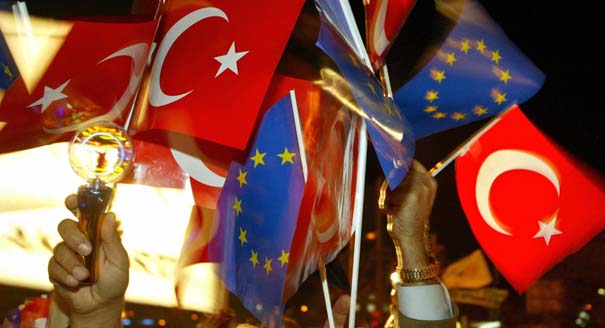
Source: Getty
Should tensions over Cyprus remain unsettled, Turkey's relationship with the EU is likely to undergo a fundamental transformation that might mark an end Turkey's accession dreams and force the EU to deal with a much more assertive regional power.
Source: European Voice

This warning is a manifestation of Turkey's policy of focusing EU member states' attention on the importance of settling the Cyprus dispute. UN-sponsored negotiations on the island are entering a critical phase, with UN Secretary-general Ban Ki-moon to host Turkish and Greek Cypriot leaders for what diplomats portray as make-or-break talks in October. At that meeting, the secretary-general will decide whether enough progress has been made in the negotiations to warrant the transition to the next phase, which will involve a multi-party peace conference.
Last week, Turkey again reminded the EU about the consequences of a failure to settle the Cyprus dispute, in its response to an emerging crisis on gas exploration in the eastern Mediterranean.
Having signed an agreement to delineate its territorial waters with Israel, Cyprus decided to start exploration for oil and gas off the island's southern shores, which Nicosia claims is part of the island's continental shelf. Ankara took a different view, declared that Cyprus had no right to start exploration on behalf of an island that remains divided, and sent warships to the region. A direct confrontation was averted only when Turkish Prime Minister Recep Tayyip Erdogan promised US President Barack Obama that Turkey would not intervene to prevent the exploration work.
Ankara's counter-move, however, proved barely any more conciliatory. Within days, Turkey signed an agreement with the Turkish Republic of Northern Cyprus to start its own oil and gas exploration. Turkey declared that this exploration would extend to a region of up to 200 nautical miles from the Turkish shore – a zone that overlaps with the region where Greek Cypriots have started exploration. Finally, Erdogan stated that Turkey would cancel this initiative only if the Greek Cypriots would do the same.
The growing row between Turkey and Israel adds a further twist to this already complex story. Israel supports the Greek Cypriot initiative. To counter the prospect of Israeli airplanes harassing Turkish ships sent to the region, Turkey decided to dispatch its own F16s to be stationed in northern Cyprus.
These events illustrate the potentially explosive nature of the situation in the eastern Mediterranean. They are the result of two interlinked dynamics whose impact on Turkey-EU relations is significant.
The EU's inability to reach a consensus on Turkish accession has eventually, but irrevocably, led to a loss of leverage over Turkey. From being the main act, the EU has now become – at best – a sideshow for Ankara. At the same time, with its growing economy and increasing regional influence, Turkey has acquired a new assertiveness and ambition. The vision of transforming Turkey into a regional power has replaced the vision of EU membership. Turkey sees itself as more than an EU candidate country. Turkey is also refuting and challenging the asymmetrical power relationship inherent in the accession process. Thus, while fully conscious that this crisis may damage its accession prospects, Turkey will not shy away from a direct confrontation with an EU member state.
Despite these trends, hope remains. Turkey is interested in a solution to the Cyprus problem. The UN-sponsored negotiations are perhaps the last opportunity.
But these events also suggest that should the Cyprus problem remain unsettled, Turkey's relationship with the EU will undergo a fundamental transformation that will reflect the shifting balance of power in the region. This transformation may end Turkey's accession dreams, but it will also force the EU to deal with a much more assertive regional power.

Senior Fellow, Carnegie Europe
Sinan Ülgen is a senior fellow at Carnegie Europe in Brussels, where his research focuses on Turkish foreign policy, transatlantic relations, international trade, economic security, and digital policy.
Recent Work

Alper Coşkun, Fatih Ceylan, Tacan İldem, …
Carnegie does not take institutional positions on public policy issues; the views represented herein are those of the author(s) and do not necessarily reflect the views of Carnegie, its staff, or its trustees.
Despite myriad challenges and occasional stumbles, the new Hungarian government is moving ahead with energy and conviction to uproot years of illiberalism and corruption and rebuild Hungarian democracy.

Thomas Carothers

European Commission President Ursula von der Leyen is about to give her annual address on the state of the EU. Here’s what she won’t—but should—say.

Rym Momtaz
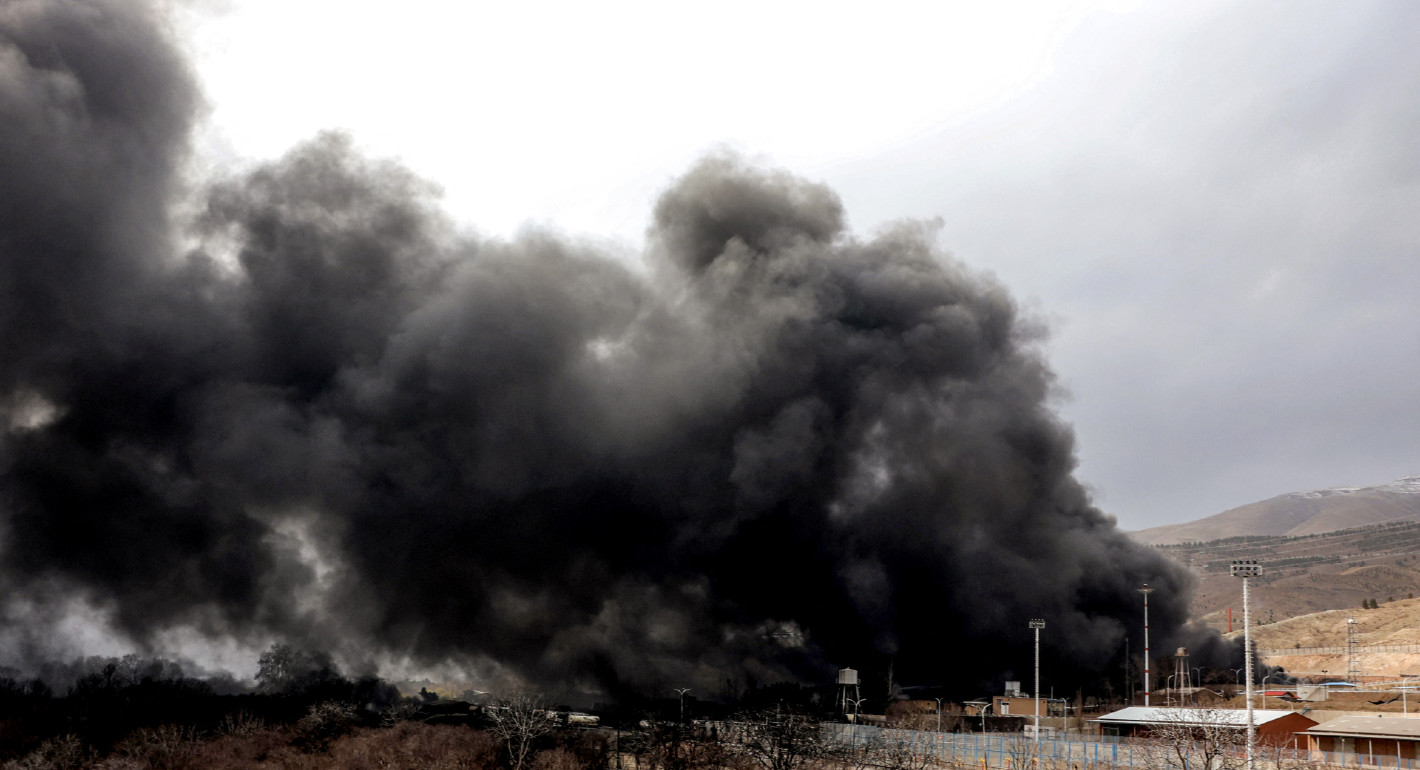
Understanding the climatic pain points is necessary for policymakers hoping to minimize the war’s negative environmental consequences.



Alejandro Martin Rodriguez, Joy Arkeh, Sarah Yerkes

Huawei pushed hard to enter the Egyptian data centers market, until the Americans made a better offer.

Angie Omar

Radical-right parties are expected to do well in upcoming elections in four of the EU's biggest member states. If successful, they could prevent the union from addressing key challenges ahead.

Stefan Lehne